



Beyond the Bay of Bengal
For decades, forecasting India’s lifeline—the summer monsoon—involved a familiar cast of characters. Meteorologists at the India Meteorological Department (IMD) and other institutions would closely monitor sea surface temperatures in the Indian Ocean,
track pressure differences across the Pacific, and analyse wind patterns closer to home. These factors have been the bedrock of weather models, helping farmers decide when to sow their seeds and allowing authorities to prepare for floods. But in recent years, despite increasingly powerful models, the monsoon has become more erratic and unpredictable. This has sent scientists searching for missing pieces of the puzzle, and their quest has led them to the planet’s farthest, coldest corners.
A Planet-Sized Domino Effect
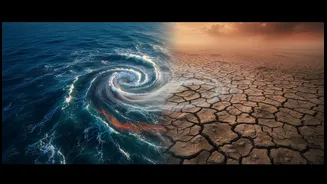
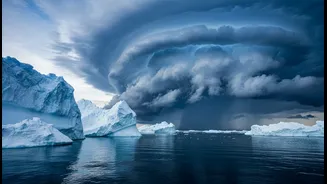
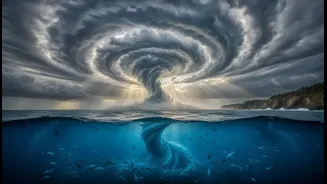
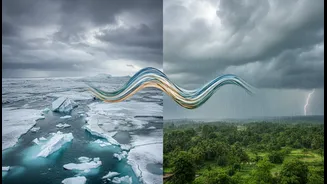
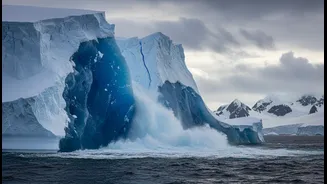
The new variable that has entered India’s weather conversation is polar research. Scientists have established a crucial link, known as a 'teleconnection,' between the climate systems of the polar regions and weather patterns thousands of kilometres away in the tropics. Think of it as a planet-sized domino effect. The Arctic is warming faster than almost anywhere else on Earth, leading to a significant decline in sea ice. This isn't just a problem for polar bears; it changes the planet's energy balance. Less ice means less sunlight is reflected away, leading to a warmer ocean. This extra heat in the Arctic disrupts large-scale atmospheric circulations, like the jet stream, and these disruptions ripple across the globe, eventually influencing the strength, timing, and distribution of the Indian monsoon.
India's Eyes on the Ice
India is not just a passive observer in this field; it is an active participant. Through the National Centre for Polar and Ocean Research (NCPOR), India operates multiple research stations in the extreme latitudes. The Himadri station in Ny-Ålesund, Norway, has been India’s perch in the Arctic since 2008. In the south, the Maitri (since 1989) and Bharati (since 2012) stations in Antarctica serve as critical hubs for research. At these remote outposts, Indian scientists gather year-round data on atmospheric conditions, glaciology, and marine biology. This first-hand data is invaluable, allowing researchers to build and refine climate models that can accurately incorporate the complex variables of the polar regions. The collaboration between NCPOR and institutions like the Indian Institute of Tropical Meteorology (IITM) is central to this effort.
From Melting Ice to Monsoon Rains
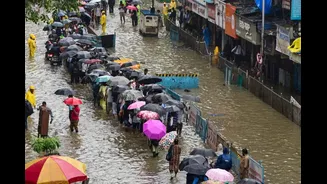
So, how exactly does a melting patch of ice in the Arctic affect a farmer in Maharashtra? Research has shown a strong link between declining Arctic sea ice in the early summer (June-July) and rainfall patterns later in the monsoon season (August-September). One key finding is that reduced sea ice can lead to a westward shift in monsoon rainfall, bringing more rain to western and northwestern India. The mechanism involves changes in atmospheric pressure and wind patterns. For example, a warmer Arctic can alter pressure systems over Europe and Central Asia, which in turn impacts the atmospheric stability over the Indian subcontinent and steers moisture-laden winds. Studies have even traced these connections back over a thousand years, showing that warm spells in the Arctic have historically correlated with more intense monsoons in India.
Smarter Predictions, Safer Lives
The ultimate goal of this research is to create more accurate and reliable long-range weather forecasts. By incorporating data on Arctic sea ice and other polar variables into next-generation prediction models, scientists hope to improve forecasts for the monsoon's onset, its overall strength, and the likelihood of extreme rainfall events. This is not just an academic exercise. Better forecasts have profound real-world implications. They can help farmers make crucial decisions about planting and harvesting, enable better water resource management for cities and industries, and give disaster management agencies more time to prepare for floods or droughts. As our climate becomes more volatile, looking to the poles may be one of the most effective ways to secure our future here in the tropics.