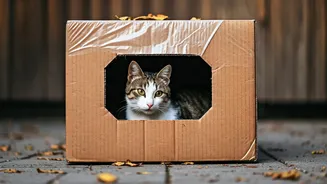






Why a Simple Shelter Can Save a Life
Across India's cities and towns, community cats—also known as stray or feral cats—are a common sight. While they are resilient survivors, harsh weather, especially cold nights and monsoon rains, poses a significant threat. Hypothermia and frostbite are real
dangers for animals without adequate shelter. A simple, well-placed hut can mean the difference between life and death, providing a dry, warm refuge where a cat can preserve its body heat and rest safely. This small act of kindness doesn't just offer comfort; it provides a crucial survival tool for the most vulnerable animals in our communities.
Choosing the Right Materials
The headline mentions a cardboard box, and it’s a great starting point, but on its own, it won’t last. Cardboard disintegrates when wet and offers poor insulation against damp ground. The key is to use the cardboard box as an *inner* layer. For a sturdy, weatherproof shelter, you’ll want a large plastic storage bin with a lid (around 50-60 litres is a good size). For insulation, straw is the gold standard. Do not use hay, blankets, or towels. Hay can mold easily, and fabrics absorb moisture, which then freezes and makes the cat colder. Straw, on the other hand, repels moisture and allows cats to burrow in and stay warm. You will also need a box cutter or strong scissors and some duct tape.
Step-by-Step: Build Your Cat Hut
Building a shelter is easier than you think. Follow these simple steps: 1. **Prepare the Bin:** Start with your large plastic storage bin. Towards the bottom of one of the long sides, carefully cut a small, round entrance hole about 15 cm (6 inches) in diameter. A cat-sized hole is big enough for them but small enough to keep out larger predators and retain heat. Smooth any sharp edges with sandpaper or by wrapping them in duct tape. 2. **Insulate the Interior:** If you have a styrofoam cooler, place it inside the plastic bin. If not, you can line the floor and walls of the bin with a layer of sturdy cardboard. This creates an insulated box-within-a-box. Cut a corresponding hole in the inner layer that lines up with the entrance you made in the bin. 3. **Add Bedding:** Loosely pack the bottom of the shelter with a generous amount of straw, at least a few inches deep. This allows the cat to nestle in and create a warm pocket. 4. **Secure the Shelter:** Place the lid firmly on the plastic bin. To make it extra waterproof, you can seal the edges of the lid with duct tape. Consider placing a heavy stone or brick on top to prevent the lid from blowing off in strong winds.
Smart Placement is Everything
Where you put the shelter is just as important as how you build it. Look for a quiet, unobtrusive location. The goal is to make the cat feel safe. Place the shelter away from heavy foot traffic and roads. Good spots include under a porch, in a quiet corner of a garden, behind shrubs, or against the side of a building. Face the entrance away from prevailing winds, or even facing a wall, to prevent rain and wind from getting inside. If you are placing it on property that isn't yours, such as in a community park or a neighbour’s complex, it’s always best to get permission first. Explain that it’s a temporary, humane solution to help an animal survive the cold.
Beyond the Shelter: Food and Water
A cat using your shelter will also need sustenance. If you decide to provide food and water, place the bowls a short distance from the shelter itself. This prevents spills from dampening the bedding and discourages pests from trying to enter the shelter. During cold weather, water can freeze quickly. You can use a deep, dark-coloured plastic bowl placed in a sunny spot to slow the freezing process. For food, dry kibble is better than wet food, as it won't freeze. Providing a regular source of food and water will help the cat conserve the energy it needs to stay warm.
Connect with Local Animal Welfare
Providing a shelter is a wonderful first step. To make a lasting impact, consider connecting with local animal welfare organizations. Many cities have Trap-Neuter-Return (TNR) programs that humanely manage community cat populations. By getting involved or alerting these groups to the cats in your area, you can help ensure they are sterilized and vaccinated, preventing future generations of homeless kittens and improving the overall health of the entire cat colony. Your cardboard box hut can be the start of a much larger, community-wide effort to care for our feline neighbours.