
Get Ready: Essential Stargazing Tips
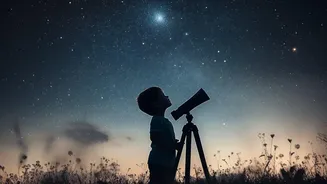
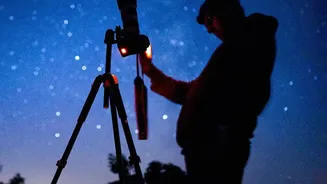
Before you head out, a little preparation goes a long way. First, find a location away from city lights. Light pollution is the biggest obstacle to a clear view of the night sky, so a rural spot or a designated dark-sky park is your best bet. Second,
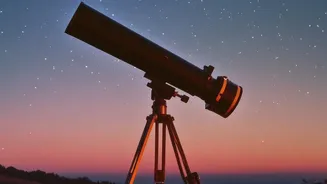
pack for comfort. A cozy blanket, some pillows, and a flask of a warm beverage will make the experience much more enjoyable. While many events are visible to the naked eye, a pair of binoculars can dramatically enhance your view of planets and the Moon's surface. Finally, download a stargazing app. These apps use your phone's GPS to create a real-time map of the sky, helping you identify constellations, planets, and satellites with ease.
September 9: A Sprinkle of Shooting Stars
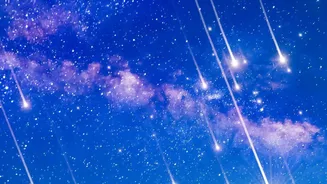
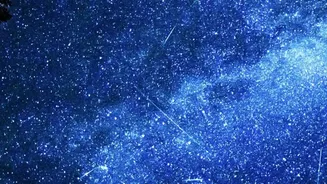
Mark your calendar for the peak of the September Epsilon Perseid meteor shower. While not as famous or prolific as the August Perseids, this shower offers a great excuse to get outside. The shower is active from September 5 to 21, but it's expected to peak on the night of September 9. With the New Moon just two days later, the sky will be wonderfully dark, creating ideal conditions for spotting these fleeting streaks of light. You might see up to five to eight meteors per hour under perfect conditions. Find a comfortable spot, lie back, and be patient—the best views are often after midnight.
September 11: The New Moon's Dark Canvas
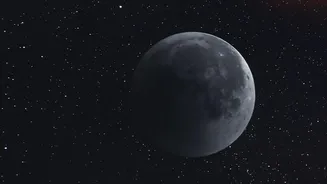
The New Moon on September 11 is the absolute best time of the month for deep-sky stargazing. During this phase, the Moon is on the same side of the Earth as the Sun, making it invisible in the night sky. The lack of moonlight creates a perfect dark canvas, allowing faint objects like the Milky Way, distant galaxies, and star clusters to shine through. This is your prime opportunity to see the core of the Milky Way before it disappears from Northern Hemisphere skies for the season. If you have access to a truly dark location, this is the night to go.
September 14-18: The Brilliance of Venus
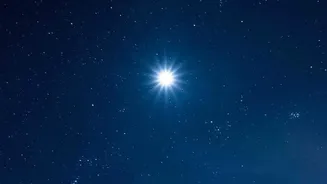
The planet Venus, often called the 'Evening Star', will be a stunning sight in the western sky just after sunset. On September 14, look for a beautiful pairing as a slim crescent Moon appears close to the dazzling planet. Then, on September 18, Venus reaches its peak brightness for the year. It will be so luminous that it will be easily visible even from light-polluted cities. Its brilliant, steady light makes for a truly romantic sight as twilight deepens. This is an easy and rewarding target for any budding stargazer.
September 23: The Autumnal Equinox
While not a visual event in itself, the autumnal equinox on September 23 marks a celestial milestone. On this day, the Sun shines directly on the equator, and day and night are of nearly equal length across the globe. For those in the Northern Hemisphere, it's the official start of autumn and the promise of longer nights for stargazing ahead. The period around the equinox is also known to increase the chances of seeing aurora (Northern Lights) at higher latitudes, so keep an eye on space weather forecasts if you're located further north.
September 26: The Full Harvest Moon
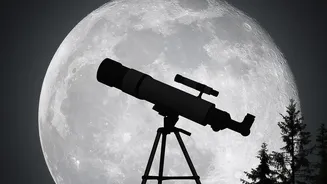
September's full moon, known as the Harvest Moon, will rise on the evening of September 26. This is the full moon that occurs closest to the autumnal equinox. Historically, its light helped farmers gather their crops late into the evening. For a romantic date, watch it rise around sunset. Near the horizon, an optical effect called the 'moon illusion' can make it appear dramatically large and golden-orange. While its bright light will wash out fainter stars, the sheer beauty of the Harvest Moon is a celestial event in its own right. As a bonus, the planet Saturn will be trailing nearby, appearing as a bright, steady 'star' accompanying the Moon across the sky.