




An Icon's Grand Finale
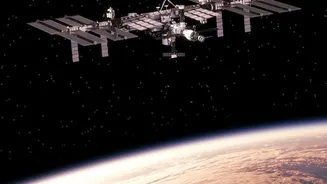
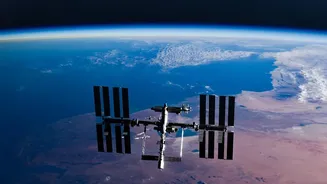
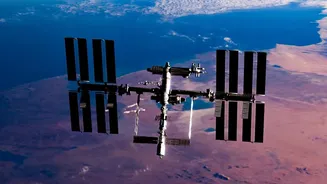
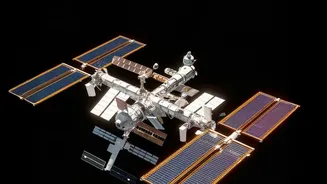
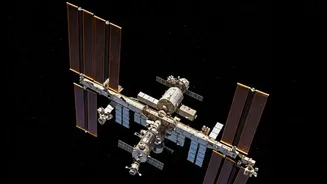
The International Space Station stands as one of humanity's greatest engineering marvels, a symbol of global cooperation that has hosted over 3,000 research investigations since its assembly began in 1998. For more than 25 years, it has been continuously
occupied, a constant human presence in low Earth orbit (LEO). However, like all complex machines, the ISS is aging. Facing rising maintenance costs and structural fatigue after decades of service, NASA and its international partners are planning for its controlled deorbit. The plan involves using a purpose-built U.S. Deorbit Vehicle, contracted to SpaceX, to safely guide the 430-tonne structure into a remote area of the South Pacific Ocean known as Point Nemo, likely in early 2031. This careful decommissioning prevents a gap in orbital presence and, more importantly, acts as a deliberate handover, passing the torch of LEO operations from governments to a burgeoning commercial sector.
NASA's Shift in Strategy
Instead of building a multi-billion-dollar successor, NASA is pivoting its strategy. Through its Commercial LEO Destinations (CLD) program, the agency is actively funding and supporting private companies to develop their own space stations. The goal is for NASA to transition from being an owner and operator to becoming just one of many customers in a vibrant LEO marketplace. This model mirrors the success of the Commercial Crew and Cargo programs, which saw companies like SpaceX take over the transportation of astronauts and supplies to the ISS, ultimately reducing costs for the government. By purchasing services from multiple commercial providers, NASA can ensure continued access to microgravity for its research and astronaut training needs, while redirecting its own focus and resources toward more ambitious deep-space missions to the Moon and Mars under the Artemis program.
Meet the New Neighbourhood in Orbit
Several companies are racing to build the ISS's successors, each with a unique approach. Axiom Space is developing Axiom Station, a modular habitat whose first components are scheduled for launch in the late 2020s. The initial plan involved attaching its modules to the ISS before detaching to become a free-flying station, but recent plans could see it flying independently as early as 2028. Another major contender is Orbital Reef, a collaboration between Blue Origin and Sierra Space, envisioned as a "mixed-use business park" in space. It aims to offer services to a wide range of clients, from national space agencies to industrial researchers and tourists. A third key player is Starlab, a joint venture between Voyager Space and Airbus. Starlab is designed for efficiency, with a plan to launch the entire station in a single flight aboard SpaceX's Starship, making it operational much faster than the ISS, which required numerous assembly missions.
Innovation Beyond a Single Station
This new ecosystem of commercial habitats promises a wave of innovation. Unlike the government-built ISS, these private stations are designed with specific business models in mind. Their modular designs allow for customization and expansion based on market demand. Orbital Reef, for instance, will feature large, expandable LIFE modules from Sierra Space, while Starlab will host an advanced science park. These platforms are being built to serve a diverse clientele, enabling everything from in-space manufacturing and pharmaceutical development to media production and space tourism. This competition is expected to drive down costs and dramatically increase access to orbit for a wider array of organisations and even individuals, creating a self-sustaining economy in LEO that was never the ISS's primary purpose.