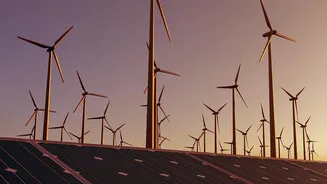





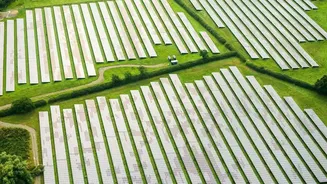
What if a single piece of land could yield both crops and clean energy? India is betting big on this idea, known as agrivoltaics, with new policies designed to transform farms into powerhouses of rural prosperity and green energy.
A Field of Dual Harvests
Imagine a farm where
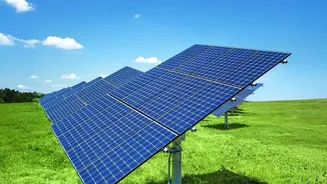
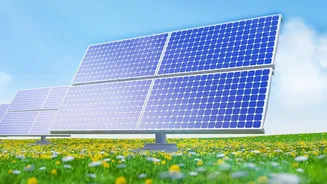
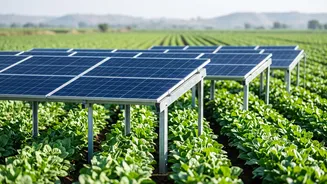
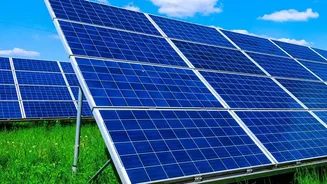
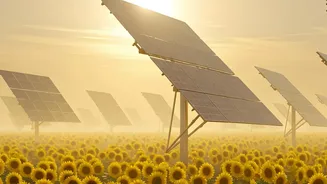
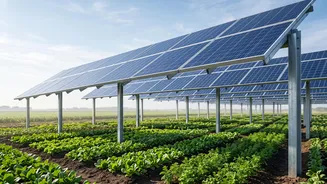
crops grow under the partial shade of elevated solar panels. This is the core concept of agrivoltaics, or solar farming. It's an innovative approach that allows the same parcel of land to be used for both agriculture and solar power generation simultaneously. For a country like India, which faces the dual challenge of ensuring food security for a growing population and meeting ambitious renewable energy goals, this model offers a compelling solution. It addresses the critical issue of land scarcity, which often pits energy projects against agricultural needs. By mounting solar panels on structures high enough to allow farming activities underneath, agrivoltaics turns a potential conflict over land into a synergistic partnership.
The Policy Powering the Change
The Indian government is actively promoting this synergy through new policy initiatives. Recent announcements in October 2026 revealed plans for a national policy to scale up agrivoltaics, with an initial target of 5 gigawatts (GW) of capacity. This push is expected to be integrated into the next phase of the Pradhan Mantri Kisan Urja Suraksha evam Utthaan Mahabhiyan (PM-KUSUM) scheme. The original PM-KUSUM scheme already supports farmers by providing subsidies for solar pumps and helping them sell surplus power to the grid. The upcoming 'PM-KUSUM 2.0' is expected to feature a dedicated component for agrivoltaics, potentially for 10 GW, encouraging the installation of solar panels on stilts over cultivated fields. This framework aims to transform farmers from simply food providers ('annadatas') to energy providers ('urjadatas') as well.
A Win-Win for Farmers and the Nation
For India's farmers, especially the 85% who are small and marginal landholders, agrivoltaics promises a crucial second stream of income. Instead of letting land lie fallow or choosing between farming and leasing land for a solar park, they can do both. Selling electricity to the grid offers a stable revenue source, insulating them from the unpredictability of crop yields and market prices. This reduces dependence on unreliable rural power grids and expensive diesel generators for irrigation, cutting operational costs. For the nation, this distributed model of energy generation helps meet its goal of achieving 500 GW of non-fossil fuel capacity by 2030 and its net-zero commitments. Furthermore, studies suggest agrivoltaic systems can improve yields for certain crops by providing shade and reducing water evaporation.
Challenges on the Ground
Despite its immense potential, the path to widespread adoption is not without obstacles. The most significant barrier is the high upfront cost. Agrivoltaic projects can cost 25–30% more than conventional ground–mounted solar plants due to the need for elevated structures. This could put the technology out of reach for the very small and marginal farmers it aims to benefit, making government subsidies and access to affordable credit crucial. There are also technical challenges to consider. Not all crops are suitable for growing in the partial shade cast by solar panels; while leafy vegetables and some fruits may thrive, staple crops like rice have been deemed less suitable. The design of these systems must also allow for the movement of farm machinery, and there is a need for greater awareness and technical training among farmers to ensure proper maintenance.