




Get Started: Simple Tips for a Great Night
Planet watching is one of the most accessible hobbies you can pick up. The first step is to find a spot with a clear view of the sky, ideally away from the glare of city lights. Give your eyes about 15-20 minutes to adjust to the darkness; you'll be amazed
at how many more stars become visible. While a telescope is a fantastic tool, many of this month's highlights are visible to the naked eye. A simple pair of binoculars can dramatically enhance your view, revealing details like the moons of Jupiter or the shape of a star cluster.
Saturn Takes Center Stage
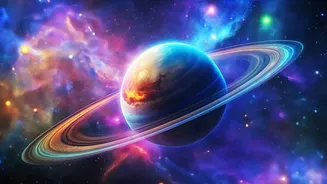
October's main event features the stunning ringed planet, Saturn. On October 4, it reaches opposition, meaning Earth passes directly between Saturn and the Sun. This alignment makes Saturn appear at its brightest and largest for the year. You can see it for most of the night, as it rises in the east around sunset and remains visible until dawn. Look for a bright, steady, yellowish-white point of light. Even with binoculars, you might be able to discern that it's not just a simple star. A small telescope will begin to reveal its famous, majestic rings.
Jupiter and Mars in the Morning
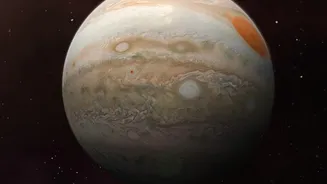
If you're an early riser, you're in for a treat. The pre-dawn sky features two prominent planets: Jupiter and Mars. Throughout October, the very bright, white Jupiter will rise in the middle of the night and be high in the eastern sky before sunrise. Reddish Mars will be visible nearby, rising in the late night and continuing to gradually brighten as Earth gets closer. Keep an eye out on October 6, when a thin crescent Moon will appear close to Jupiter, creating a beautiful pairing in the morning sky. In some parts of North and Central America, the Moon will even pass in front of Jupiter in an event called an occultation.
Catch a Few Shooting Stars
October hosts two meteor showers. The first is the Draconids, peaking on the evening of October 8-9. This is a minor shower, but best viewed in the early evening. The main attraction is the Orionid meteor shower, which peaks on the night of October 21 into the early morning of October 22. These meteors are actually tiny pieces of debris left behind by the famous Halley's Comet. At its peak, you could see 15 to 25 meteors per hour under ideal dark sky conditions. This year, a bright Moon will interfere with the show, washing out fainter meteors. Your best bet is to watch in the few hours before dawn, after the Moon has set.
A Visit to the Seven Sisters
Beyond the planets, NASA's guide points to another beautiful sight. On the nights of October 27 and 28, look for the Moon passing close to a famous star cluster known as the Pleiades, or the Seven Sisters. To find it, look to the east in the evening as the Moon and the cluster climb higher in the sky. To the naked eye, the Pleiades appears as a small, fuzzy dipper-like group of six or seven stars. This cluster is a stunning sight through binoculars, revealing dozens more stars and offering a perfect target for beginner stargazers.