




A Changing of the Guard
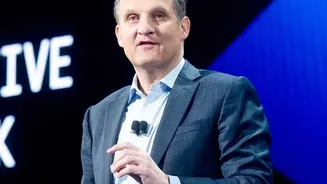
In early 2027, Santosh Janardhan, Meta’s long-serving head of infrastructure and a key architect of its global data center fleet since 2009, will step down. He will be succeeded by David Brown, a former senior vice president from Amazon Web Services (AWS)
who joined Meta in July 2026. Janardhan will remain through the first quarter to ensure a smooth transition, after which he will serve in an advisory role. The handover is significant not just for who is leaving, but for who is arriving. Brown brings nearly two decades of experience from AWS, where he oversaw the vast compute and machine-learning services that form the backbone of the world's largest cloud provider. His appointment signals a strategic pivot: Meta is bringing in an expert in building and operating dependable, massive-scale systems precisely as its own infrastructure needs are escalating to an unprecedented level.
A Bet Measured in Billions
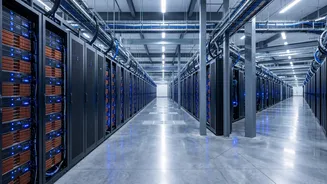
The context for this leadership shift is a capital expenditure plan of staggering proportions. For 2026, Meta has forecasted spending between $135 billion and $145 billion, with the vast majority earmarked for AI infrastructure. This includes specialized data centers, custom chips, and high-performance networking. The spending is so intense that the company reported negative free cash flow of $2.12 billion in the third quarter, prompting S&P to revise its credit rating outlook to negative. These are not just numbers on a spreadsheet; they represent a physical build-out of historic scale. Projects include the massive Hyperion data center in Louisiana, which is being expanded from a 2-gigawatt to a 5-gigawatt facility with a projected cost of $50 billion. For perspective, until recently, even the largest data centers were measured in the hundreds of megawatts, not thousands. This massive investment is aimed at building the computational power for everything from Meta's core advertising business to its long-term vision of personal AI assistants for its billions of users.
The Unique Challenge of AI Factories
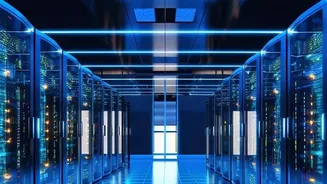
Building data centers for AI is a fundamentally different challenge than for traditional cloud computing. AI workloads require racks of GPUs and other accelerators that consume immense amounts of power, with densities reaching 50-100 kW per rack, compared to 5-10 kW for conventional servers. This extreme power draw creates immense heat, making traditional air-cooling insufficient and forcing a shift to advanced liquid-cooling technologies. Securing enough power in the first place is the primary bottleneck. A large-scale AI data center can consume as much electricity as a small city, straining local utility grids and requiring years of advance planning and collaboration with power companies. Beyond power and cooling, the sheer weight of these high-density racks can challenge the structural integrity of standard data center floors. These facilities are less like data centers and more like 'AI factories'—heavy industrial engineering projects where the design is dictated by the chip, not the other way around.
An Arms Race for AI Supremacy
Meta’s infrastructure blitz is not happening in a vacuum. It is a direct response to the escalating AI arms race among tech giants. With rivals like Google, Microsoft, and OpenAI also investing hundreds of billions, the ability to build and control massive computing capacity has become a primary competitive advantage. To that end, Meta is pursuing a diversified strategy. While it is spending tens of billions on chips from Nvidia and AMD, it is also aggressively developing its own custom silicon, with an in-house chip codenamed 'Iris' intended to reduce its long-term dependence on a few key suppliers. The leadership transition to an AWS veteran like Brown, who has deep experience in hyperscale operations, is a clear sign that Meta is preparing for the next phase of this competition. The company is not just building infrastructure for its own needs; reports suggest it is also exploring plans to sell excess AI compute capacity, potentially turning its largest cost center into a new revenue stream and competing directly with AWS and Google Cloud.