








Beyond the Purchase Price
At its simplest, recipe costing is the process of calculating the exact cost of every ingredient in a dish to determine its total cost and, consequently, a profitable menu price. The standard practice involves adding up the cost of ingredients for a specific
recipe. Many operators stop here, looking at the 'as purchased' (AP) price — what they paid for a kilogram of onions or a case of chicken. However, this overlooks a crucial factor that dramatically alters the final cost: waste. Between 4% and 10% of food purchased by restaurants is wasted before it even reaches a customer, representing a huge, often invisible, cost.
Understanding Your True Yield
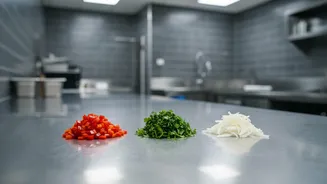
The key to unlocking the real cost of an ingredient lies in understanding its yield. Yield is the amount of usable product you get from an ingredient after it has been prepped — peeled, trimmed, deboned, or cooked. The 'As Purchased' (AP) weight is what you receive from your supplier, but the 'Edible Portion' (EP) weight is what you can actually use. For example, a 10-kilogram bag of potatoes is the AP weight. After peeling and trimming, you might only have 8 kilograms of usable potato, which is the EP weight. This means the potato has an 80% yield. The cost of that lost 2 kilograms doesn't disappear; it gets absorbed into the cost of the usable portion, making your 'true cost' per kilogram higher than what you initially paid.
A Tale of Two Ingredients
Let's imagine you have two options for carrots. Supplier A offers a bag for ₹50 per kilogram. They require significant peeling and trimming, giving you a yield of 70%. Supplier B offers higher-quality, pre-peeled carrots for ₹65 per kilogram with a 95% yield.
At first glance, Supplier A seems cheaper. But let's calculate the Edible Portion cost. For Supplier A, the true cost per usable kilogram is ₹50 divided by 0.70 (the yield), which equals ₹71.43. For Supplier B, the true cost is ₹65 divided by 0.95, which equals ₹68.42.
Suddenly, the more expensive initial price from Supplier B is actually the more economical choice. This simple calculation reveals how focusing only on purchase price can be misleading. The 'cheaper' product, due to its higher waste, ends up costing more per usable gram and also requires more labour to prepare.
Where Waste Hides in Plain Sight
This principle extends beyond initial preparation waste. True costing must also account for other sources of loss. Spoilage from over-ordering, kitchen errors that lead to discarded dishes, over-portioning on plates, and food left on customers' plates all contribute to the real cost of waste. Studies show that restaurants can lose significant revenue due to these factors. In fact, the total cost of waste includes not just the ingredient value but also the labour used to prepare it and the energy consumed to cook and store it. A comprehensive waste audit, tracking what gets thrown away and why, can provide eye-opening insights into where profits are being eroded.
From Costing to Strategy
Understanding the true, waste-adjusted cost of ingredients transforms recipe costing from a simple accounting task into a powerful strategic tool. This data-driven approach allows chefs and managers to make smarter purchasing decisions, opting for ingredients with better yields even at a higher initial price. It informs menu engineering, helping you price dishes more accurately and identify items that are less profitable than they appear. Furthermore, it highlights opportunities for staff training in areas like precise knife skills to reduce trim waste, proper storage techniques to minimise spoilage, and consistent portion control to prevent over-serving. By focusing on waste, you shift from simply managing costs to actively controlling them.