



The Old Hunt for Alien Fingerprints
For decades, the search for extraterrestrial life has been a hunt for 'biosignatures.' These are the clues life leaves behind—think of them as cosmic fingerprints. They can be specific molecules like amino acids, unusual concentrations of gases like the phosphine
briefly thought to be in Venus's atmosphere, or even fossilized microbes. Missions have been designed to look for these individual signs. The problem, as the scientific community has come to realize, is that nature is a master mimic. Many processes that have nothing to do with biology can create chemicals or structures that look tantalizingly like the handiwork of life. A single piece of evidence is no longer enough; it carries too high a risk of a false alarm.
The Danger of a False Positive
Imagine the global impact of announcing we've found alien life, only to retract it later. The scientific and cultural fallout would be immense, potentially setting back the field of astrobiology for generations. This isn't just a theoretical concern; history offers cautionary tales. In 1996, scientists announced that a Martian meteorite, Allan Hills 84001, seemed to contain fossilized bacteria. The news was monumental, but further analysis showed that non-biological processes could have created the same features. This experience, among others, has fostered a deep sense of caution. An abiotic, or non-living, process could create oxygen on a world without any life, or geological activity could produce complex organic molecules. The consensus now is that any claim of life must be held to the highest possible standard of proof.
A New Rulebook for Finding Life
In response, the scientific community, with leadership from NASA, has been developing a more rigorous framework. One of the most prominent ideas is the 'Confidence of Life Detection' (CoLD) scale. Proposed in 2021, CoLD is a seven-level scale designed to standardize how scientists evaluate and communicate evidence for life. Level 1 is the initial hint of a biosignature, while reaching Level 7 requires multiple, independent lines of evidence that not only point to life but also systematically rule out any and all non-biological explanations. This framework is similar in spirit to the Technology Readiness Level (TRL) scale NASA uses to vet new hardware, ensuring a methodical, step-by-step confirmation process. It's a move away from a single 'eureka' moment and toward building an unshakeable scientific case.
Rethinking Our Robotic Explorers
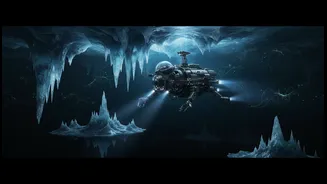
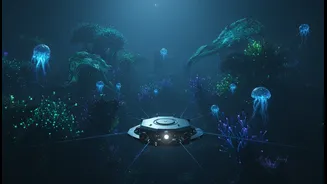
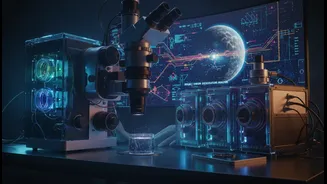
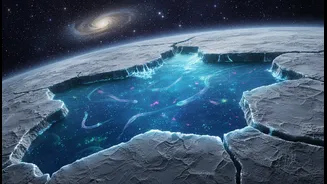
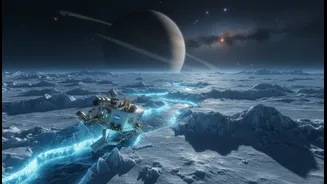
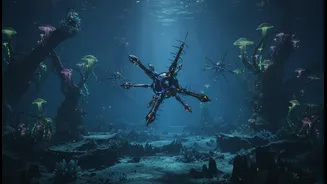
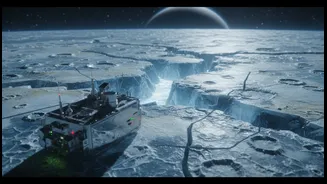
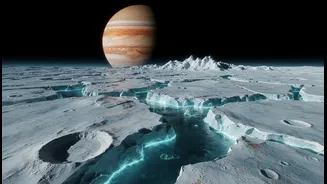
This shift in strategy has profound implications for how we explore worlds like Jupiter's moon Europa and Saturn's moon Enceladus. Both are thought to have vast liquid water oceans beneath their icy shells, making them prime targets. Future missions, like the upcoming Europa Clipper, will be armed with sophisticated instruments, but the new standards demand more than just detection. They demand corroboration. Instruments will need to work together to gather different types of data that all point to the same conclusion. A future lander might need a mass spectrometer to identify organic molecules, a microscope to search for cell-like structures, and chemical sensors to analyze the context of the surrounding environment. The goal is to build a web of evidence so strong that it becomes the only logical explanation. This means mission design must now prioritize not just finding a clue, but proving what it means.
The Search Goes On, But Smarter
This new rigor doesn't make finding life less likely; it simply makes the process more robust. Groups like NASA's Network for Life Detection (NfoLD) are working to build a cohesive community and strategy around these principles. Recent research continues to bolster the case that evidence of life, such as amino acids, could survive near the surfaces of these icy moons, making them accessible to future landers. By raising the bar for proof, scientists are ensuring that the search for life is not just a hopeful quest, but a rigorous scientific discipline. The ultimate prize isn't just finding something that looks like life, but finding something that can be nothing else.