




From Government Monopoly to Private Partnership
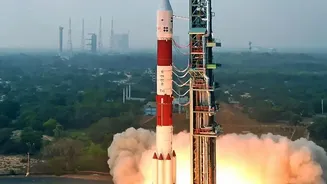
For decades, the Indian Space Research Organisation (ISRO) was the sole custodian of India's space aspirations. However, a landmark shift began in 2020 with reforms designed to open the sector to private enterprise. The introduction of the Indian Space Policy
in 2023 formalized this new era, clearly defining roles for private companies and establishing the Indian National Space Promotion and Authorisation Centre (IN-SPACe) as a single-window agency to facilitate their participation. The goal is to move ISRO's focus towards research and development for deep space missions, while allowing private players to take over end-to-end activities like satellite manufacturing and launch services. This policy is not just about offloading work; it's a strategic move to grow India's share of the global space economy from around 2% to a projected 8-10% by 2033, with the domestic industry expected to reach a value of $44 billion.
The Rise of India's 'Space-preneurs'
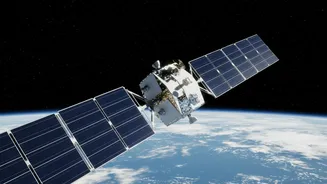
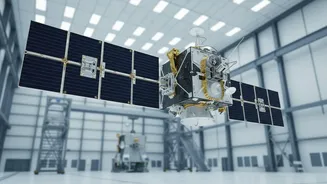
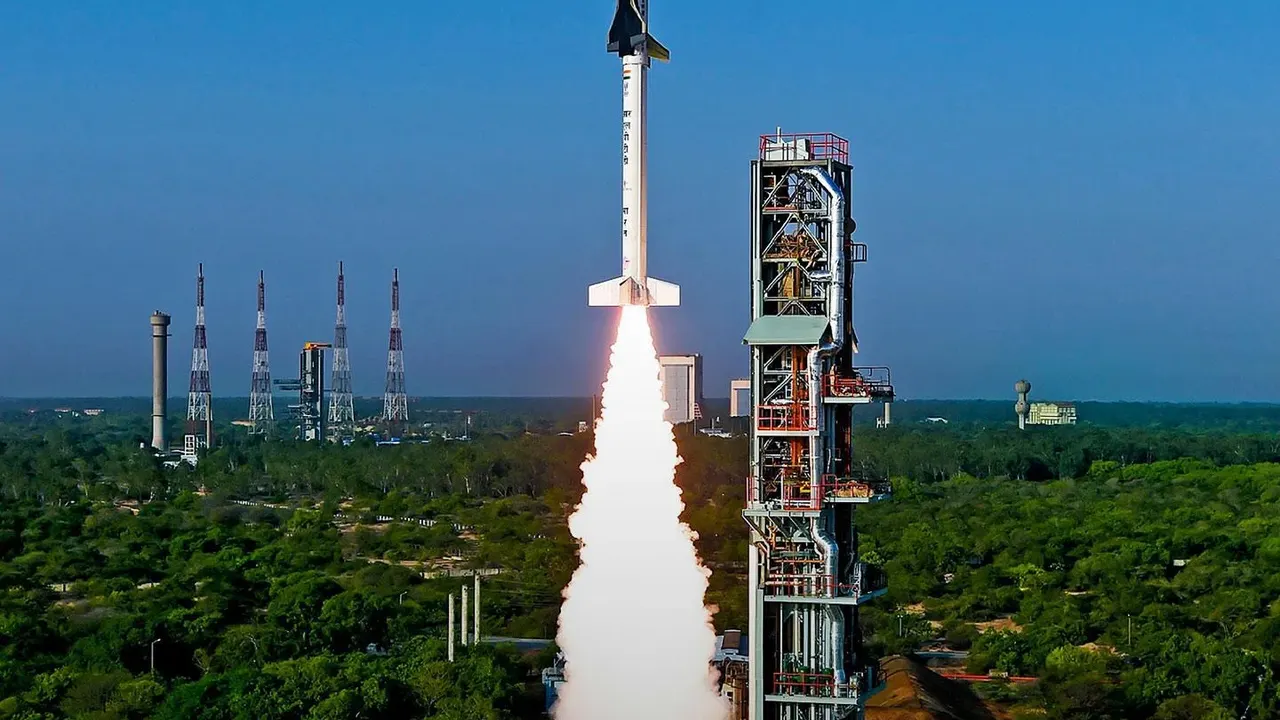
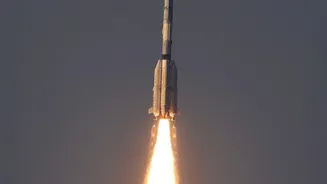
The policy changes have ignited a startup boom. From just a handful in 2020, India is now home to over 400 space-tech startups. These companies are not just peripheral suppliers; they are building launch vehicles, designing satellite constellations, and providing sophisticated data analytics services. Companies like Skyroot Aerospace, which successfully launched its Vikram-1 rocket, and AgniKul Cosmos, known for its 3D-printed rocket engines, are pioneering private launch capabilities in India. Meanwhile, firms like Pixxel are deploying constellations of hyperspectral imaging satellites to provide valuable data for agriculture and climate monitoring, and Dhruva Space offers full-stack solutions including satellites and ground services. This surge has been fuelled by significant investment, with private funding crossing $871 million by mid-2026. The government is also providing support through initiatives like a ₹1,000 crore venture capital fund to nurture this growing ecosystem.
Mapping the New Career Galaxy
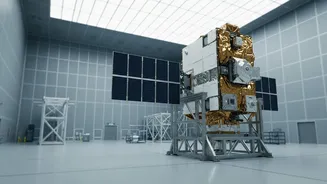
This expanding ecosystem has created a diverse range of new career paths that extend far beyond traditional government jobs at ISRO. While ISRO continues to recruit for scientific, technical, and administrative roles, the private sector is generating demand for a new set of skills. Broadly, these careers can be broken into three tracks. The first involves building hardware, employing aerospace, mechanical, and propulsion engineers to design and manufacture rockets and satellites. The second track focuses on electronics and software, requiring RF engineers, mission software developers, and control systems experts to manage spacecraft. The third, and rapidly growing, track is about using the data collected from space. This includes roles like satellite data scientists, GIS analysts, and remote sensing specialists who turn raw satellite imagery into actionable intelligence for various industries.
Your Launchpad into the Space Sector
For students and professionals looking to enter this field, the pathways are more varied than ever. A B.Tech in fields like Aerospace Engineering, Electronics, or Computer Science remains a primary entry point for technical roles. However, the growth in downstream applications means that degrees in data science, geology, and environmental science are also becoming highly relevant. Aspiring professionals should focus on gaining practical skills through internships and learning industry-standard tools for design, simulation, and data analysis. Beyond the startups, established corporations are also expanding their aerospace divisions, offering further employment opportunities. While most technical jobs are currently concentrated in hubs like Bengaluru and Hyderabad, the growth of remote work and new manufacturing clusters is expected to distribute these opportunities more widely across the country. The expanding private sector offers dynamic career progression, with salaries for experienced professionals in specialised roles becoming increasingly competitive.