




A New Level of Ambition: The Sample-Return
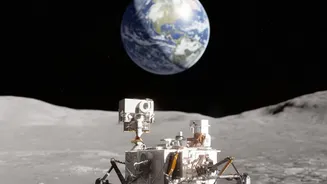
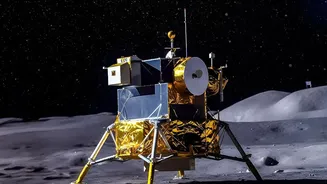
While Chandrayaan-3 celebrated a flawless soft landing and rover exploration, Chandrayaan-4 represents a monumental leap in technological complexity. Its primary objective is to execute India's first-ever lunar sample-return mission. This means landing on the
Moon, collecting several kilograms of rock and soil (regolith), and returning it safely to Earth for detailed scientific analysis. Scheduled for around 2028, this mission will elevate India into an elite club of nations—joining the United States, the former Soviet Union, and China—that have successfully brought back materials from another celestial body. This elevates the program from in-situ exploration to bringing the frontier back to our labs.
The Intricate Dance of a Lunar Round Trip
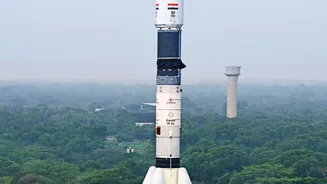
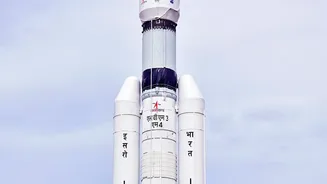
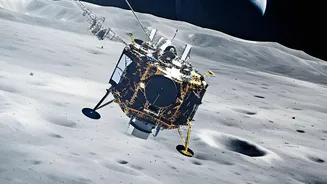
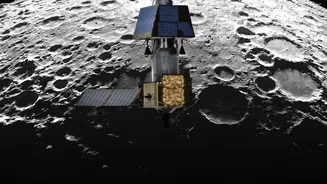
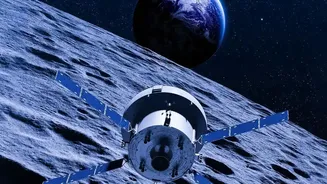
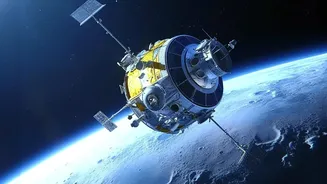
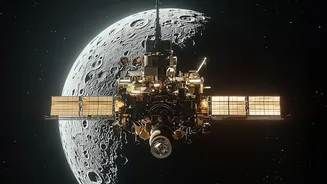
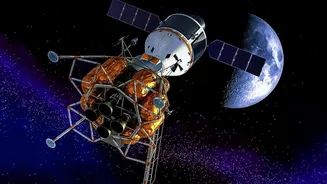
A sample-return mission is one of the most challenging feats in space exploration. Chandrayaan-4 will be significantly more complex than its predecessor, involving five distinct modules: a Propulsion Module, a Lander (Descender), an Ascender, a Transfer Module, and a Re-entry Module. The mission will likely require two separate, heavy-lift LVM3 rocket launches to get all the components into space. The process involves landing on the surface, using a robotic arm to scoop up samples, and transferring them to the Ascender vehicle. This Ascender then launches from the Moon's surface, docks with the Transfer Module waiting in lunar orbit, transfers the precious cargo, and sends it on its way back to Earth for a fiery, high-speed atmospheric re-entry. Each step, from the lunar launch to the orbital rendezvous, is a critical test of ISRO's technological prowess.
Why the South Pole's Ice Is So Crucial
The mission's focus remains on the Moon's enigmatic South Pole, the same region where Chandrayaan-3 made history. This area is of immense global interest because of its permanently shadowed regions (PSRs)—craters that haven't seen sunlight in billions of years. These ultra-cold traps are believed to hold vast quantities of water ice. This ice is more than just frozen water; it's a potential game-changer for the future of space exploration. It could provide drinking water and breathable oxygen for astronauts, and be broken down into hydrogen and oxygen to create rocket fuel. This concept, known as In-Situ Resource Utilization (ISRU), could turn the Moon into a refuelling station for more ambitious missions to Mars and beyond, and Chandrayaan-4 is key to assessing its feasibility.
Bringing the Moon to the Laboratory
On-site analysis by rovers is incredibly valuable, but it has limitations. The instruments must be small, light, and robust enough to survive launch and the harsh lunar environment. Bringing physical samples back to Earth allows scientists to use the full power of advanced, state-of-the-art laboratory equipment that is far too large and sensitive to send to space. By studying these returned samples, researchers can definitively determine the quantity, composition, and purity of the water ice. They can also analyze the regolith to understand the Moon's geology, its volcanic history, and the timeline of asteroid impacts in the early solar system. These physical samples hold clues to the origin of water not just on the Moon, but potentially on Earth as well.
Cementing India's Place in the Cosmos
Successfully completing the Chandrayaan-4 mission will be a major strategic and scientific victory for India. It serves as a vital stepping stone for even grander ambitions, including the Gaganyaan human spaceflight program, the establishment of the 'Bharatiya Antariksh Station' (Indian Space Station) by 2035, and landing an Indian astronaut on the Moon by 2040. Technologically, it will validate critical capabilities like automated docking and lunar ascent, which are essential for future crewed missions. Geopolitically, it solidifies India's role as a leader in a new era of collaborative and competitive lunar exploration, demonstrating its capacity for highly complex deep-space missions and contributing invaluable knowledge to all of humanity.