






What Does 'Below-Normal' Mean?
When the IMD forecasts the monsoon, it isn't just about whether it will rain, but how much. The benchmark is the Long Period Average (LPA), the average rainfall received between 1971 and 2020, which stands at 87 cm. A 'normal' monsoon means rainfall between 96%
and 104% of this average. For several years, India has enjoyed this stable predictability. The latest forecast, however, points to a 'below-normal' season, defined as rainfall between 90% and 96% of the LPA. While this may seem like a small statistical change, it marks the first time in nearly eight years that such a possibility has been officially flagged, breaking a welcome spell of good monsoons. The last time India experienced a truly 'deficient' monsoon (below 90% of LPA) was back in 2018.
The Prime Suspect: El Niño's Return
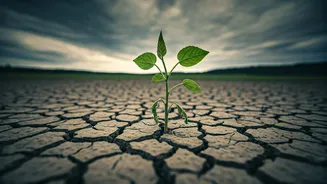
The primary reason for this cautious outlook is the expected development of El Niño conditions. In simple terms, El Niño is a climate pattern characterised by the unusual warming of surface waters in the eastern Pacific Ocean. This seemingly distant phenomenon has a powerful, disruptive effect on global weather, and its historical correlation with the Indian monsoon is strong and well-documented. A strong El Niño often creates atmospheric conditions that suppress the formation of rain clouds over India, leading to weaker monsoon winds and reduced rainfall. While not every El Niño year results in a drought in India, the connection is significant enough to be the single biggest factor influencing the IMD's forecast. It is the big, unpredictable variable that meteorologists will be watching most closely.
From the Farm to Your Kitchen
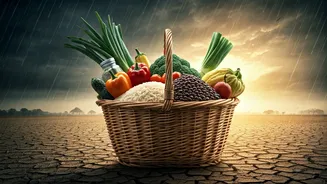
The monsoon is often called India's 'real finance minister', and for good reason. Nearly half of India's farmland is rain-fed, making the June-September rains critical for the Kharif (summer) crops like rice, pulses, sugarcane, and oilseeds. A below-normal monsoon can spell trouble. It means delayed sowing, lower crop yields, and increased stress on farmers who are already operating on thin margins. The ripple effect quickly reaches urban households. Lower agricultural output tightens supply, which can lead to a spike in food prices — from your daily vegetables to the dal on your plate. This food inflation puts pressure on household budgets and poses a major challenge for the Reserve Bank of India in its fight to control overall inflation.
Beyond Agriculture: Water and Power
The monsoon's impact extends far beyond the fields. The rains are crucial for replenishing the country's major reservoirs. These reservoirs are the lifeline for cities, providing drinking water and supplying water for industries. Lower-than-normal rainfall means reservoir levels dip, potentially leading to water rationing in urban areas during the subsequent dry months. Furthermore, these reservoirs are also a key source of hydropower, which contributes a significant portion of India's electricity. Deficient rains can reduce power generation, putting more pressure on the grid and potentially leading to power cuts at a time when demand is high. A weak monsoon, therefore, creates a domino effect that touches every aspect of the economy.
Is a Bad Monsoon Guaranteed?
Not necessarily. While El Niño is a major concern, it isn't the only factor at play. Meteorologists are also monitoring other phenomena, such as the Indian Ocean Dipole (IOD). A 'positive' IOD, characterised by warmer sea surface temperatures in the western Indian Ocean, can sometimes counteract the negative effects of El Niño and bring good rains to parts of India. The final outcome of the monsoon often depends on the complex interplay of these large-scale weather patterns. The IMD's forecast is a probabilistic assessment based on current models. It is a crucial warning that allows for preparation, but the exact performance and distribution of the monsoon will only become clear as the season unfolds.