

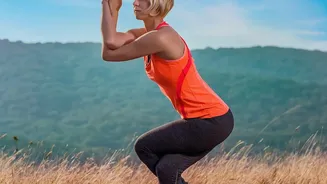
Feeling stiff? A desire for greater flexibility is one of the main reasons people start yoga. You don't need to be able to touch your toes to begin. A simple, consistent home practice is an accessible way to unlock a more mobile body.
Start with a Gentle Warm-Up
Before you begin
stretching, it's important to warm up your muscles to prevent injury and improve circulation. Simple joint-loosening exercises, known in yoga as Sukshma Vyayam, are perfect for this. Spend a few minutes gently rotating your neck, shoulders, wrists, hips, and ankles. This prepares your body for the deeper stretches to come, reducing stiffness and helping your joints move more comfortably. Think of it as waking up your body and getting it ready to move.
Cat-Cow Pose (Marjaryasana-Bitilasana)
This is a foundational movement for improving spinal flexibility and is one of the most beginner-friendly poses. Start on your hands and knees in a 'tabletop' position, with your wrists directly under your shoulders and knees under your hips. As you inhale, drop your belly toward the mat, lifting your chest and tailbone to create an arch in your back (Cow Pose). As you exhale, round your spine toward the ceiling, tucking your chin to your chest (Cat Pose). This dynamic movement warms up the spine, improves posture, and helps relieve tension in the back and neck.
Downward-Facing Dog (Adho Mukha Svanasana)
This iconic yoga pose is a full-body stretch, particularly targeting the hamstrings, calves, and spine while building strength in the arms and shoulders. From your hands and knees, tuck your toes and lift your hips up and back, forming an inverted 'V' shape with your body. Press firmly into your hands, keep your head relaxed between your upper arms, and work on lengthening your spine. It's okay if your heels don't touch the ground; bending your knees is a great modification to reduce strain on tight hamstrings.
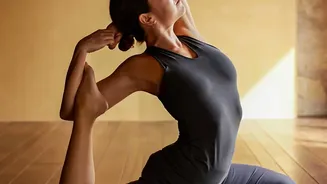
Low Lunge (Anjaneyasana)
Modern life often involves a lot of sitting, which can lead to tight hip flexors. The Low Lunge is a fantastic counter-pose for this. From a tabletop position, step one foot forward between your hands, ensuring your front knee is stacked directly over your ankle. Slide your back knee slightly further behind you until you feel a comfortable stretch in the front of your hip and thigh. This pose is vital for increasing hip flexibility, which can help alleviate lower back discomfort.
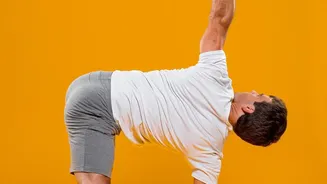
Standing Forward Bend (Uttanasana)
This pose provides a deep stretch for the entire back of your body, especially the hamstrings and calves. From a standing position with feet hip-width apart, hinge forward from your hips, not your waist. Allow your torso to hang heavy toward your legs, and let your hands rest wherever they comfortably reach—your shins, ankles, or the floor. To protect your lower back, keep a slight bend in your knees, especially if your hamstrings feel tight. This pose not only improves flexibility but can also help calm the mind.
Bridge Pose (Setu Bandhasana)
Bridge Pose is a gentle backbend that helps to open the chest, stretch the spine and neck, and strengthen the glutes. Lie on your back with your knees bent and feet flat on the floor, hip-width apart and close enough that you can touch your heels with your fingertips. Press into your feet and lift your hips off the floor. This pose is an excellent counteraction to slouching and prolonged sitting, improving posture and spinal mobility.
Child's Pose (Balasana)
Child's Pose is a restorative posture that offers a gentle stretch for the lower back, hips, and thighs. It's a perfect way to end your practice or to take a rest at any point. From your hands and knees, bring your big toes to touch, spread your knees wide, and sit back on your heels. Fold your torso forward, resting your forehead on the mat. This pose calms the nervous system, can help relieve stress and fatigue, and encourages mindful breathing.