




Why This Simple Setup Works
You might think you need a powerful telescope to see details in the night sky, but for Jupiter's brightest moons, that's not the case. Basic binoculars, even a standard 7x50 or 10x50 pair, are excellent at gathering light, making faint objects appear
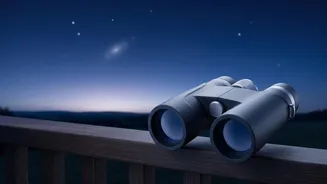
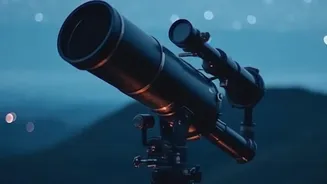
brighter. The challenge isn't magnification; it's stability. Our hands naturally shake, and when you're looking at something millions of kilometres away, the slightest tremor turns pinpricks of light into blurry streaks. That's where a tripod comes in. By providing a stable, unmoving platform, the tripod eliminates the shakes and allows your binoculars to do what they do best: reveal the hidden sights of the cosmos, transforming a wobbly view into a clear, steady window onto the solar system.
The Gear You Need
The good news is you might already own most of what you need. Any decent pair of binoculars with a magnification of 7x or higher will work. Models like 7x50 or 10x50 are considered ideal for beginners in astronomy because they offer a great balance of magnification and light-gathering ability. The numbers simply mean 7x magnification and a 50mm lens diameter. To connect your binoculars to a standard camera tripod, you will likely need a special L-shaped adapter. Most binoculars have a hidden threaded socket for this purpose, usually concealed under a small cap at the front, between the two barrels. These adapters are inexpensive and widely available online or at camera shops.
The All-Important Setup
First, locate the tripod mount socket on your binoculars by unscrewing the cap between the lenses. Screw your L-adapter into this socket until it's snug, but don't overtighten it. Next, attach the other end of the adapter to your tripod's quick-release plate, just as you would a camera. Secure the plate onto the tripod head. Once mounted, adjust the tripod's height and the angle of the head so you can look through the eyepieces comfortably, whether you're standing or sitting in a chair. A little time spent getting the setup right will save you from neck strain and make the entire experience more enjoyable.
Finding Jupiter and its Moons
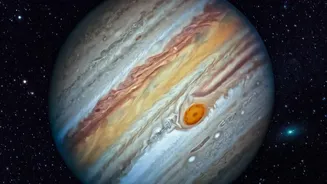
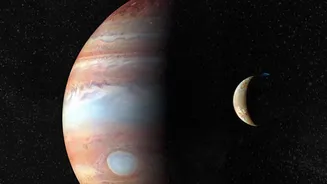
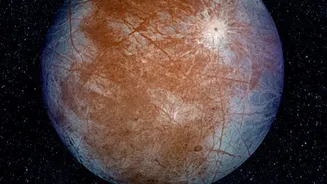
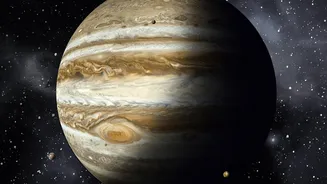
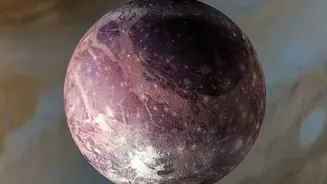
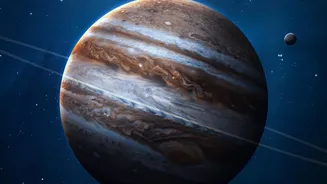
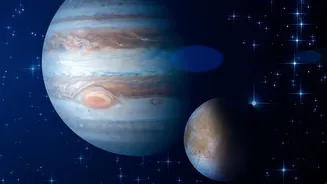
Jupiter is one of the brightest objects in the night sky, so you won't have trouble finding it. Tonight, September 25, 2026, look towards the eastern sky before sunrise. The brilliant planet will be unmistakable. Once you have it centred in your tripod-mounted binoculars, you may be momentarily surprised. Instead of a mere point of light, Jupiter will appear as a small, distinct disc. Now, look closely on either side of the planet. You are searching for up to four tiny, star-like dots arranged in a rough line. These are the Galilean moons: Io, Europa, Ganymede, and Callisto. Be patient; allow your eyes to adjust. Because of their orbits, you might not see all four — some may be hidden behind or in front of Jupiter.
Tips for the Best Viewing Experience
To make the most of your stargazing session, try to get away from the glare of city lights. Even a park or a darker corner of your neighbourhood can make a difference. Give your eyes at least 15-20 minutes to fully adapt to the darkness; this will dramatically increase your ability to see faint details. Avoid looking at your bright phone screen, which will ruin your night vision. If you need a little light, use a red torch. Several astronomy apps can show you the exact position of Jupiter and its moons in real-time, helping you identify which moon is which. The most important tip, however, is to simply take your time and enjoy the view. You are witnessing a miniature solar system in motion, a sight that has captivated astronomers for centuries.