



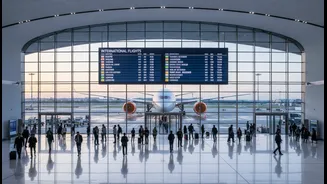


A New Gateway to the World
For decades, international travel for anyone living outside India's largest metros meant a two-step journey: a domestic flight to a hub like Mumbai or Delhi, followed by a long layover before the actual overseas leg. This is rapidly changing. The expansion
of international services from Tier-2 cities like Indore and the launch of major new hubs like Navi Mumbai International Airport are redrawing India's aviation map. These developments are not just about adding new routes; they represent a fundamental upgrade to India's infrastructure that promises to unlock immense potential. The focus is shifting from simply connecting cities to creating integrated economic corridors that fuel growth from the ground up. This shift matters because it democratises access to global opportunities, bringing them closer to millions of people.
A Direct Path for Academic Dreams
India is a global leader in sending students abroad for higher education, and a significant portion of these aspiring minds come from states like Maharashtra and Madhya Pradesh. Previously, a student from Bhopal or Pune faced a tiring and expensive journey, often involving multiple bookings and transfers. Direct international flights from nearby airports dramatically lower this barrier. The ease of a single, seamless journey reduces stress and costs for students and their families. It simplifies not only the initial departure but also return trips during holidays and family visits for graduation. This improved connectivity makes studying abroad a more accessible dream for a wider pool of talent, especially as students from Tier-2 and Tier-3 cities now constitute the majority of Indians studying overseas. It signals that world-class education is just one direct flight away, not a complex logistical puzzle.
Connecting Families, Bridging Continents
One of the most powerful drivers of international travel is the desire to visit friends and relatives (VFR). For India's vast diaspora, and for their families back home, direct flights are a game-changer. The emotional and practical benefits are immense. An elderly parent in Indore can now contemplate visiting their children in the Gulf without the daunting prospect of navigating a chaotic hub airport transfer. Similarly, the launch of international operations from Navi Mumbai, starting with routes to the Middle East, directly serves the huge population in the Mumbai Metropolitan Region, Pune, and beyond, for whom VFR travel is a regular part of life. These flights reduce travel time, lower the physical strain on travellers, and make spontaneous or urgent family trips more feasible, strengthening the personal bonds that connect Indian families across the globe.
Powering Regional Economies and Trade
The most significant long-term impact of these new international gateways will be on trade and commerce. An airport is an economic engine, and a globally connected one runs on high-octane fuel. For an industrial hub like Indore, home to the Pithampur industrial belt, direct flights to trade centres like the UAE open up massive opportunities for exports, particularly for time-sensitive cargo. For Navi Mumbai, the story is even bigger. Designed from the ground up as a cargo-centric hub, the new airport is set to ease the crippling congestion at Mumbai's existing airport and work in tandem with the nearby JNPT port. This creates a powerful sea-air logistics ecosystem that can slash transit times for key exports like pharmaceuticals, textiles, and agricultural produce. This efficiency attracts foreign investment, helps small and medium enterprises connect to global supply chains, and creates a ripple effect of job creation across logistics, warehousing, and manufacturing.