






Understanding the New Reality
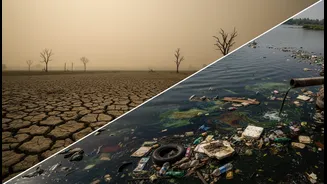
India is on the front lines of a changing climate. More than 75% of Indian districts are hotspots for extreme climate events, a dramatic increase since 2005. These aren't abstract future threats; they manifest as altered rainfall patterns impacting agriculture,
rising sea levels threatening coastal communities, and severe water scarcity. The government has responded with ambitious targets, including achieving net-zero emissions by 2070 and significantly boosting non-fossil fuel energy capacity. In March 2026, India updated its commitments to reduce the emissions intensity of its GDP by 47% and achieve 60% non-fossil electricity capacity by 2035. For young readers, preparing means developing climate literacy—understanding these policies, questioning their ambition, and tracking their implementation. It means looking beyond reactive headlines and seeking out consistent, evidence-based reporting on overlooked issues.
For Students: Building Skills for a Green Economy
The climate crisis is also an economic transformation. India has the potential to create 35 million green jobs by 2047, but currently faces a significant skills gap. For students, this is a massive opportunity. Preparation involves aligning education with the demands of a green economy. This means moving beyond traditional courses and seeking skills in renewable energy, sustainable agriculture, waste management, and climate-resilient infrastructure design. Fields like energy auditing, electric vehicle design, and AI applications for climate monitoring are set to grow. Organizations and government initiatives like the Green Skill Development Programme (GSDP) are emerging to provide training in areas from solar panel installation to eco-tourism. Students should actively seek out these programs, push for sustainability modules in their universities, and participate in hands-on projects that bridge the gap between theory and real-world problem-solving.
For Storytellers: The Power of the Local Narrative
Global climate jargon often fails to connect with the lived realities of those most affected. This is where local climate storytellers become essential. The most powerful narratives are not about abstract data but about human experience—how shifting seasons affect festivals, how forest-dependent communities are losing their livelihoods, or how farmers are adapting to drought with traditional wisdom. Effective storytelling moves beyond portraying communities as mere victims and instead focuses on resilience, adaptation, and community-led solutions. Preparing for this role means learning to listen and creating safe spaces for people to share their experiences. It involves using accessible formats, from videos and social media in regional languages to folk theatre and music, to bridge the gap between policy and people. By grounding the climate crisis in local culture and everyday life, storytellers can turn passive spectators into active stakeholders.
From Readers to Leaders: Pathways to Action
Eco-anxiety among Indian youth is high, with a majority feeling that climate change is already affecting their lives. The next step is channeling this concern into effective action. Youth-led movements across India, inspired by global initiatives like Fridays for Future, are already making an impact through community-focused efforts such as clean-up drives, afforestation projects, and digital campaigns. Students and readers can join or support these existing networks, like the Indian Youth Climate Network (IYCN) or local advocacy groups. Action can also be embedded in municipal planning, as seen with youth labs in Bengaluru collaborating on city-level resilience projects. Preparing for the future means moving from individual awareness to collective participation, whether through campus clubs, policy advocacy, or community-based projects that build resilience from the ground up.