






A Demand-Driven Sky
The driving force behind this potential fleet expansion is the unprecedented growth in air travel demand across India. As the world's third-largest domestic aviation market, the sector is expanding at one of the fastest rates globally. Projections estimate
the commercial aircraft fleet will grow at an annual rate of 7.1% over the next decade. This surge is fueled by a growing middle class, rising disposable incomes, and increased travel to and from smaller, regional cities. The government's regional connectivity scheme, UDAN, has been instrumental, doubling the number of operational airports from 74 in 2014 to 159 in 2024 and making air travel more accessible. This explosive growth has created what Commerce and Industry Minister Piyush Goyal recently described as an 'acute' shortage of aircraft, pushing airlines to rapidly scale up their capacity.
Airlines in Expansion Mode
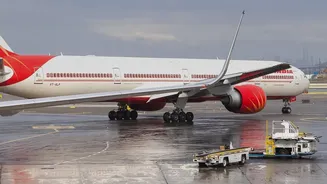
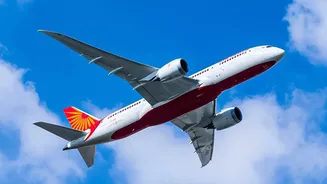
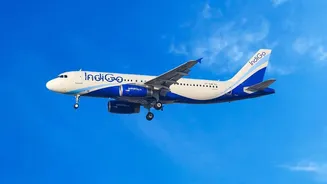
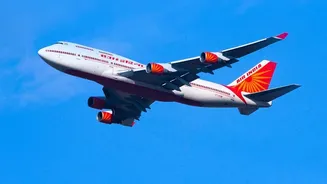
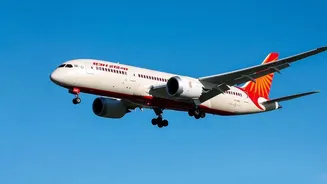
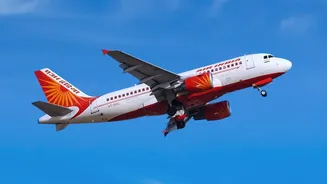
India's leading airlines are already in the midst of a historic expansion phase. IndiGo, Air India, and the newer Akasa Air have a combined order book of over 1,200 aircraft from global manufacturing giants Airbus and Boeing. The talk of another 1,000 planes indicates that the country's total requirement is expected to exceed 2,000 aircraft to keep pace with demand over the next decade. Air India, under its new ownership, is aggressively modernizing, with plans to induct a new wide-body aircraft every six weeks throughout 2026 and 2027. This push is not just about adding more planes; it's a strategic move to build a world-class fleet capable of competing on both domestic and international routes.
The National Aviation Strategy
These massive orders are aligned with a broader government vision to transform India into a global aviation hub by 2047. A key part of this is the 'hub-and-spoke' model, launched in 2026, which aims to channel passengers from smaller 'spoke' airports like Varanasi and Amritsar through major 'hub' airports like Delhi for seamless international connections. This strategy is designed to reduce Indian passengers' reliance on overseas hubs like Dubai or Singapore, keeping transit traffic within the country. By developing robust hubs, India not only aims to improve connectivity for its own citizens but also to attract international transit passengers, which is projected to contribute significantly to GDP and job creation.
Challenges on the Horizon
While the ambition is clear, the path to adding over 2,000 new aircraft is fraught with challenges. A significant bottleneck is the manufacturing and supply chain capacity of Boeing and Airbus. Indian airlines are already urging manufacturers to expedite deliveries, but global backlogs mean some planes already ordered may not arrive until as late as 2034. Beyond acquiring aircraft, the ecosystem required to support them needs to grow in parallel. This includes expanding airport infrastructure to avoid congestion, developing a domestic Maintenance, Repair, and Overhaul (MRO) industry, and training a massive workforce of pilots, cabin crew, and technicians. Addressing these infrastructure and manpower gaps will be critical to ensuring the growth is sustainable and efficient.