

A Major Celestial Event
The total solar eclipse of August 12, 2026, is a significant astronomical event, marking the first time totality will be visible from mainland Europe since 1999. The path of the Moon's shadow, where the Sun is completely obscured, will travel across parts
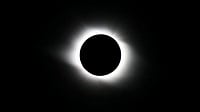
of Greenland, Iceland, the Atlantic Ocean, and northern Spain. For those in the direct path, the sky will darken, temperatures may drop, and the Sun's magnificent outer atmosphere, the corona, will become visible for a brief period of up to 2 minutes and 18 seconds. This eclipse is particularly dramatic as it will occur just before sunset for observers in Spain, potentially creating stunning horizon views.
Why It's an Online Event for India
Unfortunately, the path of this solar eclipse does not cross over India, meaning it will not be directly visible anywhere in the country. The entire event unfolds during the night for the Indian subcontinent. According to Indian Standard Time (IST), the partial phase of the eclipse will begin at 9:04 PM on August 12 and conclude at 1:28 AM on August 13. The moment of maximum eclipse will happen around 11:16 PM IST on August 12. Because the Sun will be below the horizon, the only way for Indian skywatchers to witness the spectacle is through live online broadcasts.
How to Watch: NASA's Official Live Stream
NASA is providing a front-row seat to everyone, regardless of location. The agency will host a live, commentary-filled broadcast featuring expert interviews and multiple real-time telescope feeds from locations along the path of totality. This offers a curated experience, explaining the science as it happens. The official NASA live stream is scheduled to begin at 1:15 p.m. EDT, which translates to 10:45 PM IST on August 12. You can tune in via NASA's official website, its YouTube channel, and the NASA app, ensuring easy and free access for all.
More Options for Your Viewing Party
Beyond NASA, other major space organisations are also broadcasting the event. The European Space Agency (ESA) will be streaming live from the Observatorio Astrofísico de Javalambre in Spain, one of the prime viewing locations. The ESA broadcast begins at 19:30 CEST, which is 11:00 PM IST, and will be available on ESA Web TV and its YouTube channel. Additionally, the Exploratorium museum in San Francisco, a long-time partner of NASA for eclipse broadcasts, will also feature live telescope feeds from Spain. Having multiple streams available allows you to switch between different views and commentaries.
What to Expect on Screen
When you tune into the live streams, you will witness the entire eclipse sequence unfold. The broadcast will show the partial phases as the Moon begins to take a 'bite' out of the Sun. As totality approaches, you may see phenomena like Baily's Beads—beads of sunlight streaming through the Moon's valleys. Then comes the 'diamond ring' effect, a final flash of light before the Sun is completely covered. During the brief moments of totality, the streams will focus on the Sun's ethereal corona, a sight normally invisible to the naked eye. Expert commentary will guide you through each of these breathtaking stages.
The Safest Way to Watch an Eclipse
The headline is not wrong: for this eclipse, your viewing experience is perfectly safe. While anyone watching an eclipse directly must use certified eclipse glasses or specialised solar filters to prevent severe and permanent eye damage, you need no such equipment for watching online. You can enjoy the stunning visuals on your phone, laptop, or television without any risk. This makes it an accessible and worry-free way for families and astronomy newcomers to participate in a global celestial event. What's more, the eclipse coincides with the peak of the Perseid meteor shower, so after the broadcast, you can step outside and look for shooting stars in the moonless night sky.