






A Planet of Paradoxes
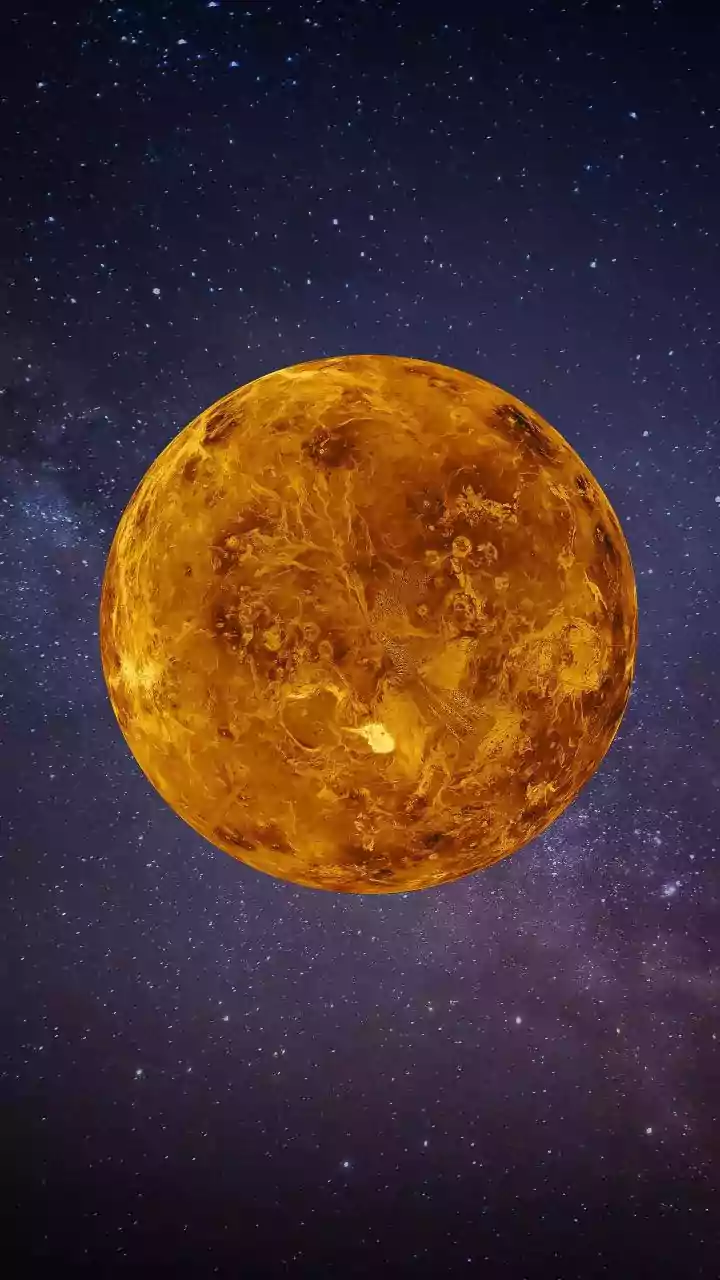
Let's get the mind-bending numbers out of the way. Venus takes approximately 225 Earth days to complete one full orbit around the Sun. This is its year. However, it rotates on its axis incredibly slowly, taking a staggering 243 Earth days to complete one full spin.
This means a Venusian 'sidereal day' (one full rotation) is about 18 days longer than its 'year'. If you could stand on its surface, you would experience a year pass by before a single day-night cycle is complete. To make things even stranger, Venus rotates 'retrograde'—backwards compared to Earth and most other planets. On Venus, the Sun would appear to rise in the west and set in the east.
Earth's 'Evil Twin'
For a long time, astronomers called Venus Earth’s twin sister. On the surface, the comparison makes sense. The two planets are nearly identical in size, mass, and are made of similar rocky material. They are also neighbours in the solar system. But this is a family resemblance that ends abruptly. While Earth is a haven for life, Venus is a vision of hell. Its atmosphere is a thick, toxic blanket of carbon dioxide, about 90 times denser than Earth’s, creating a runaway greenhouse effect. This traps heat and sends surface temperatures soaring to an average of 465°C—hot enough to melt lead. The surface pressure is equivalent to being 900 metres deep in our ocean. It's less of a twin and more of an 'evil twin' cautionary tale.
The Science of the Slow Spin
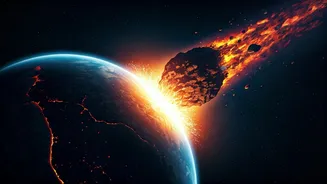
So why is Venus so stubbornly slow? Scientists don't have a single, definitive answer, but there are two leading theories. The first involves a cataclysmic event in the planet’s distant past. Some models suggest that a massive asteroid or planetary body slammed into Venus billions of years ago. Such a colossal impact could have not only slowed its rotation to a crawl but also knocked it over, causing it to spin in the opposite direction. The second theory is more gradual and points to Venus's crushing atmosphere. The planet's dense, heavy air is thought to create powerful 'atmospheric tides'. As the planet heats under the Sun, this thick atmosphere churns and drags against the surface, acting like a planetary-scale brake that has slowed its spin over billions of years. It's possible a combination of both an ancient impact and atmospheric braking led to the Venus we see today.
A 'Day' in the Life on Venus
While a full rotation takes 243 Earth days, the time from one sunrise to the next—what we’d call a 'solar day'—is actually shorter, at about 117 Earth days. This is because the planet is also moving in its orbit around the Sun. Imagine trying to live through this. You would experience nearly four Earth months of scorching daylight, followed by four months of darkness, all while being crushed by immense pressure and baked at oven-like temperatures. The sky would be a perpetual, hazy yellow-orange due to clouds of sulfuric acid. There are no seasons, no cool nights, and no relief from the oppressive environment. The slow rotation ensures that one side of the planet bakes for months while the other side radiates heat into space, but the thick atmosphere is so efficient at circulating heat that the 'night' side is just as hot as the 'day' side.
Why This Strange World Matters
Studying Venus isn’t just about satisfying cosmic curiosity. It provides a crucial natural laboratory for understanding planetary climate. Venus is the ultimate example of a greenhouse effect gone wild. By studying how and why it became an uninhabitable furnace, scientists can refine their climate models for Earth. It helps us understand the 'tipping points' where a climate can be altered irreversibly. This is why space agencies like NASA and the ESA are planning new missions to Venus, such as DAVINCI+ and VERITAS. These probes will dive through its atmosphere and map its surface in high resolution, helping us piece together the history of this strange, slow-spinning world and, in turn, better understand the past, present, and future of our own.