


The Sun’s Unseen Temper
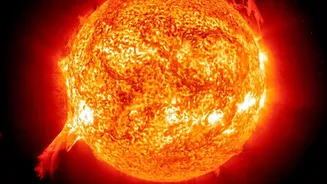
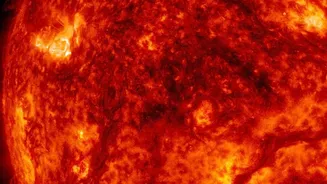
The Sun is not a calm, steady ball of light. It's a turbulent star that periodically erupts, spewing enormous amounts of energy and matter into space. The two main culprits that threaten our technology are solar flares and coronal mass ejections (CMEs).
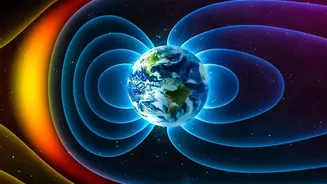
A solar flare is an intense burst of radiation, while a CME is a massive bubble of plasma and magnetic fields hurled into space. When these events are directed at Earth, they can trigger geomagnetic storms, creating what is known as 'space weather'. While these storms produce beautiful auroras, they can be devastating for the technology we depend on.
How Solar Storms Disrupt Our Orbiting Lifelines
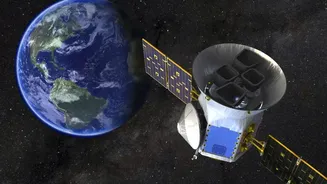
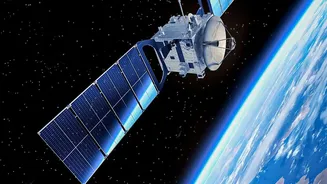
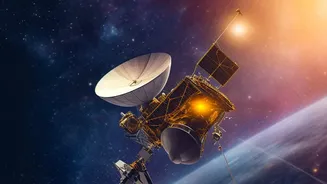
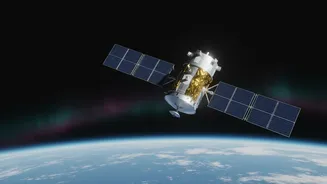
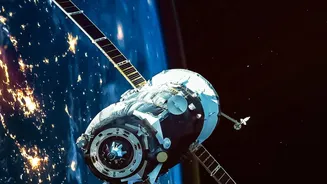
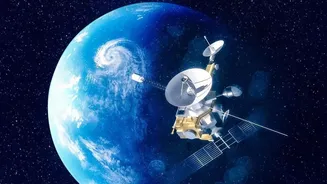
Satellites are particularly vulnerable because they operate outside the protection of most of Earth's atmosphere. A powerful solar storm can affect them in three primary ways. First, increased solar radiation can heat the Earth's upper atmosphere, causing it to expand. This increases the atmospheric drag on satellites in low-Earth orbit, slowing them down, altering their trajectory, and potentially causing them to burn up prematurely. Second, high-energy particles can damage or destroy a satellite's sensitive electronics, much like a power surge fries a home appliance. Third, the storms can interfere with the radio signals that travel between satellites and ground stations, disrupting communication and corrupting GPS data, which is vital for navigation and timing.
What's at Risk for India?
The economic and social consequences of a major satellite disruption are immense. In India, our rapidly growing digital economy is heavily reliant on space-based services. The Unified Payments Interface (UPI), which processes billions of transactions, depends on precise timing signals from GPS satellites. Ride-hailing services like Ola and Uber, and food delivery platforms like Zomato and Swiggy, would be rendered useless without accurate location data. Direct-to-Home (DTH) television, which serves millions of households, would go dark. Beyond consumer services, a geomagnetic storm could disrupt critical infrastructure, including aviation, shipping, disaster management communications, and even the stability of the power grid. The potential economic losses from a severe event are estimated to be in the trillions of dollars globally.
The Race for a Celestial Weather Report
Just as we forecast weather on Earth, scientists are working to predict weather in space. Agencies like the US National Oceanic and Atmospheric Administration (NOAA) already provide space weather alerts. A critical part of this effort involves placing observatories in strategic locations. India has become a key player with its Aditya-L1 mission, launched by ISRO in 2023. Positioned 1.5 million kilometers from Earth at a special observation point called Lagrange Point 1 (L1), Aditya-L1 can monitor the Sun continuously and provide an early warning of Earth-directed CMEs. This gives us crucial lead time—from hours to a few days—before a storm hits.
From Warning to Action
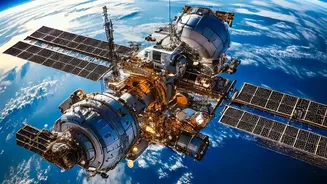
An accurate forecast is useless without a plan of action. With advance warning from missions like Aditya-L1, satellite operators can take defensive measures to mitigate damage. They can put satellites into a 'safe mode,' temporarily powering down sensitive electronics to protect them from electrical surges. For satellites in low-Earth orbit, operators can fire thrusters to boost their altitude, counteracting the increased atmospheric drag. Communication traffic can also be rerouted through less affected satellites. These protective actions are vital to ensuring the longevity and reliability of our increasingly crowded orbital infrastructure.