





What is a PUC Certificate?
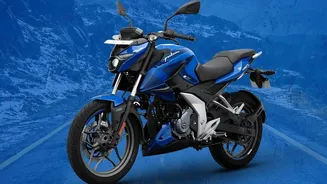
A Pollution Under Control (PUC) certificate is an official document that verifies your vehicle's emissions are within the permissible limits set by the government. Mandated under the Central Motor Vehicles Act, 1988, this certificate serves as proof that your car
or bike is not contributing excessively to air pollution. The test measures pollutants like Carbon Monoxide (CO) and Hydrocarbons (HC) for petrol vehicles, and smoke density for diesel vehicles. If the emissions are within the prescribed norms, an authorised testing centre issues the certificate, which includes your vehicle's registration number, emission readings, and validity date. This data is uploaded in real-time to the national Vahan database, allowing authorities to verify its status digitally.
New Validity Rules From November 2026
In November 2026, the Ministry of Road Transport and Highways revised the validity periods for PUC certificates, especially for newer vehicles. For private (non-transport) BS-VI vehicles, the rules are now linked to age. Vehicles up to six years old require a PUC certificate renewal only once every three years. For those between six and ten years old, the renewal is required annually. If your private BS-VI vehicle is over ten years old, you must renew the certificate every six months. For older BS-IV vehicles, the validity remains six months, while BS-I, BS-II, and BS-III vehicles need renewal every three months. These new rules aim to ease the compliance burden on owners of newer, less polluting vehicles.
How to Get and Renew Your Certificate
Obtaining or renewing a PUC certificate is a straightforward process that takes only a few minutes. You must take your vehicle to an authorised testing centre, which can be found at many petrol pumps, licensed private centres, or service stations. The operator will insert a probe into your vehicle’s exhaust pipe while the engine is running to analyse the emissions. You only need to provide your vehicle's registration certificate (RC). If your vehicle passes the test, the centre will issue a printed and digitally registered certificate on the spot. The cost is nominal, typically ranging from ₹60 to ₹100, depending on the vehicle and state. While the test must be done physically, you can download a digital copy of your valid certificate from the Parivahan Sewa portal.
Penalties for Non-Compliance
Driving without a valid PUC certificate can lead to significant penalties. Under Section 190(2) of the Motor Vehicles Act, the fine for a first-time offence can be up to ₹10,000. In some cases, it may also lead to imprisonment for up to three months or suspension of your driving licence. It's important to note that these penalties can be issued even without a physical stop, as authorities use automated systems to check for compliance. Furthermore, a valid PUC certificate is now mandatory for renewing your vehicle's insurance policy, as directed by the Insurance Regulatory and Development Authority of India (IRDAI). Some regions, like Delhi, have implemented a 'No PUC, No Fuel' rule, where petrol pumps can refuse service to vehicles without a valid certificate.