
More Than Just Waste
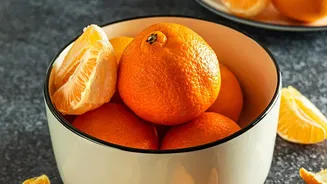
Every time we peel an orange, we create waste. But what if we viewed those peels not as leftovers, but as the primary ingredient for something new? Repurposing orange rinds is a fantastic step towards a zero-waste kitchen. It’s an old-world practice of
frugality meeting modern sensibilities around sustainability. Beyond just saving them from the landfill, you’re unlocking a concentrated source of citrus flavour that is often more potent and complex than the juice or flesh itself. This simple act of transformation turns a forgotten scrap into a culinary asset, proving that some of the best things in the kitchen come from the parts we’re used to throwing away.
The Gut-Friendly Connection
The term "gut-friendly" isn't just a buzzword here. Orange peels, including the white pith, are exceptionally rich in a type of soluble fiber called pectin. While our bodies don't digest this fiber, it serves as a crucial food source—or prebiotic—for the beneficial bacteria living in our gut. When these microbes feast on pectin, they produce short-chain fatty acids, which help fuel the cells lining our colon and support a healthy intestinal barrier. In essence, this preserve does more than just taste good; it helps nourish the complex ecosystem within you, contributing to overall digestive wellness. Research has highlighted pectin's role in promoting gut microbiota diversity, which is critical for good health.
A Simple Method for Orange Peel Preserves
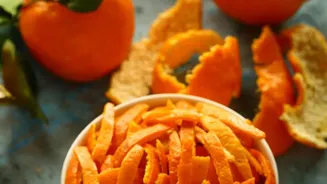
The word "effortlessly" is a promise, and while this process isn't instant, it is surprisingly straightforward and requires no special skills. The key is to reduce the natural bitterness of the pith. A common technique involves blanching the peels. First, slice your orange rinds into thin strips. Place them in a pot, cover with cold water, bring to a boil, and then drain. Repeating this process two or three times can significantly mellow out any bitterness. This step, while taking a little time, is crucial for a perfectly balanced flavour and is a tip used by seasoned chefs.
The Recipe: From Peel to Jar
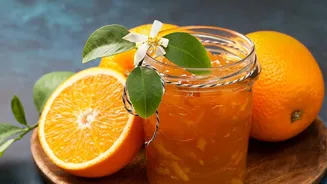
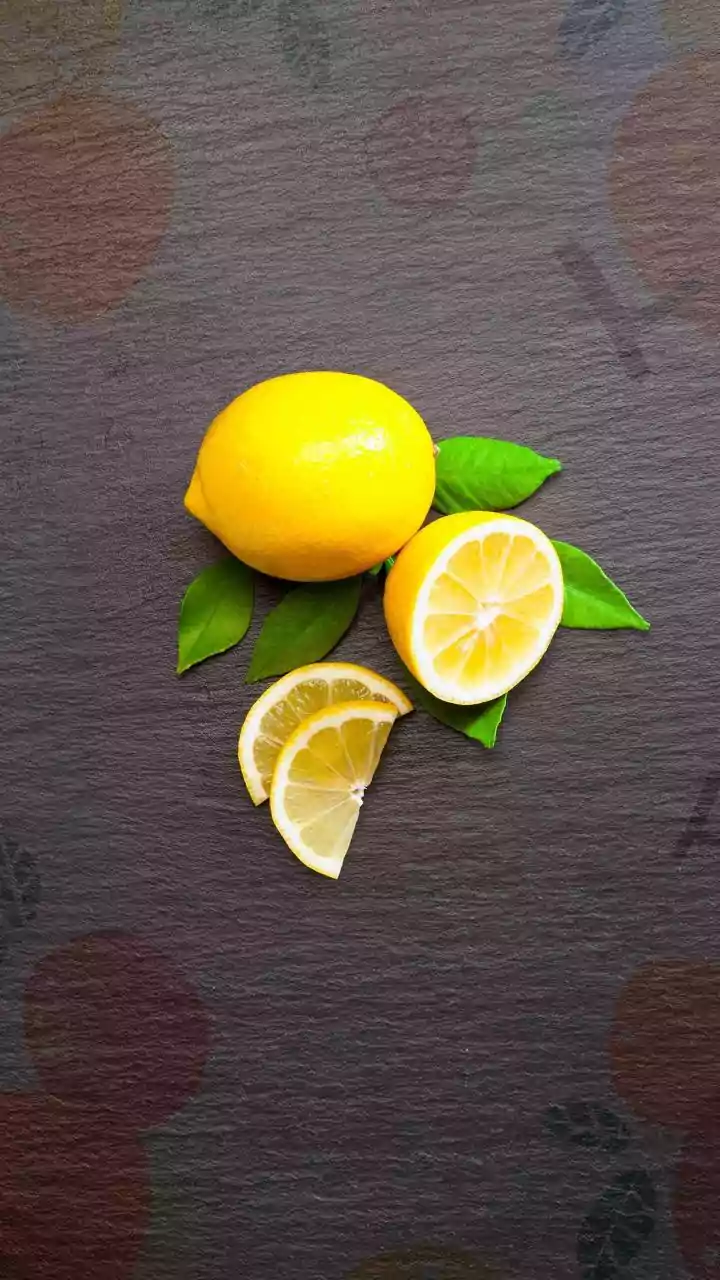
Once your peels are blanched and tender, the rest is simple. For every two cups of prepared orange peel strips, you’ll need about one-and-a-half cups of sugar and a cup of water, plus the juice of one lemon. The lemon juice not only adds a bright tang but also helps the natural pectin to set. Combine the blanched peels, sugar, water, and lemon juice in a heavy-bottomed pot. Bring the mixture to a simmer over medium heat, stirring until the sugar dissolves completely. Reduce the heat and let it gently bubble away for 45 minutes to an hour, or until the syrup has thickened and the peels are translucent. Stir occasionally to prevent sticking.
How to Store and Enjoy Your Preserves
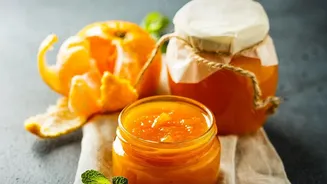
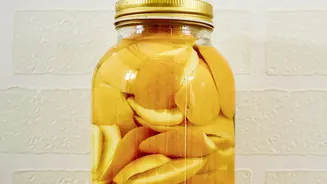
To check if your preserve is ready, perform a simple 'plate test'. Before you start cooking, place a small plate in the freezer. When you think the preserve is done, spoon a small amount onto the cold plate and let it sit for a minute. If it wrinkles when you nudge it with your finger, it’s ready. Carefully ladle the hot preserve into sterilised glass jars, leaving a small amount of headspace at the top. Seal the jars tightly. Once cooled, they can be stored in the refrigerator for several weeks. This tangy creation is incredibly versatile. Swirl it into plain yogurt, spread it on warm toast with butter, use it as a glaze for roasted chicken or pork, or spoon it over vanilla ice cream for a simple yet elegant dessert.