





The Himalayan Queen: Kalka to Shimla
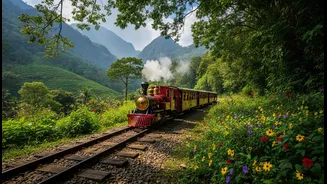
A journey on the Kalka-Shimla Railway is like stepping back in time. This UNESCO World Heritage site, built in 1903, is a marvel of engineering that navigates a dramatic, mountainous landscape. The narrow-gauge toy train slowly winds its way up from Kalka,
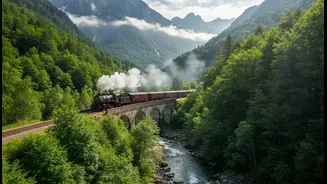
ascending into the Himalayan foothills towards the former summer capital of British India, Shimla. Over a span of 96 kilometres, the train crosses more than 800 bridges and passes through 102 tunnels, offering panoramic views of pine forests, terraced fields, and charming colonial-era stations. The slow pace of the train, chugging along at around 20-25 km/h, allows passengers to fully immerse themselves in the breathtaking scenery. Key stops like Barog, with its quaint station and impressive viaduct, add to the nostalgic charm of this unforgettable five-hour ride.
The Toy Train: Darjeeling Himalayan Railway
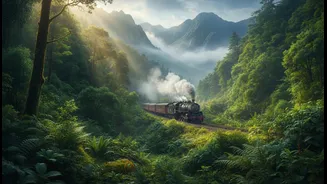
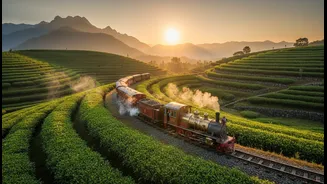
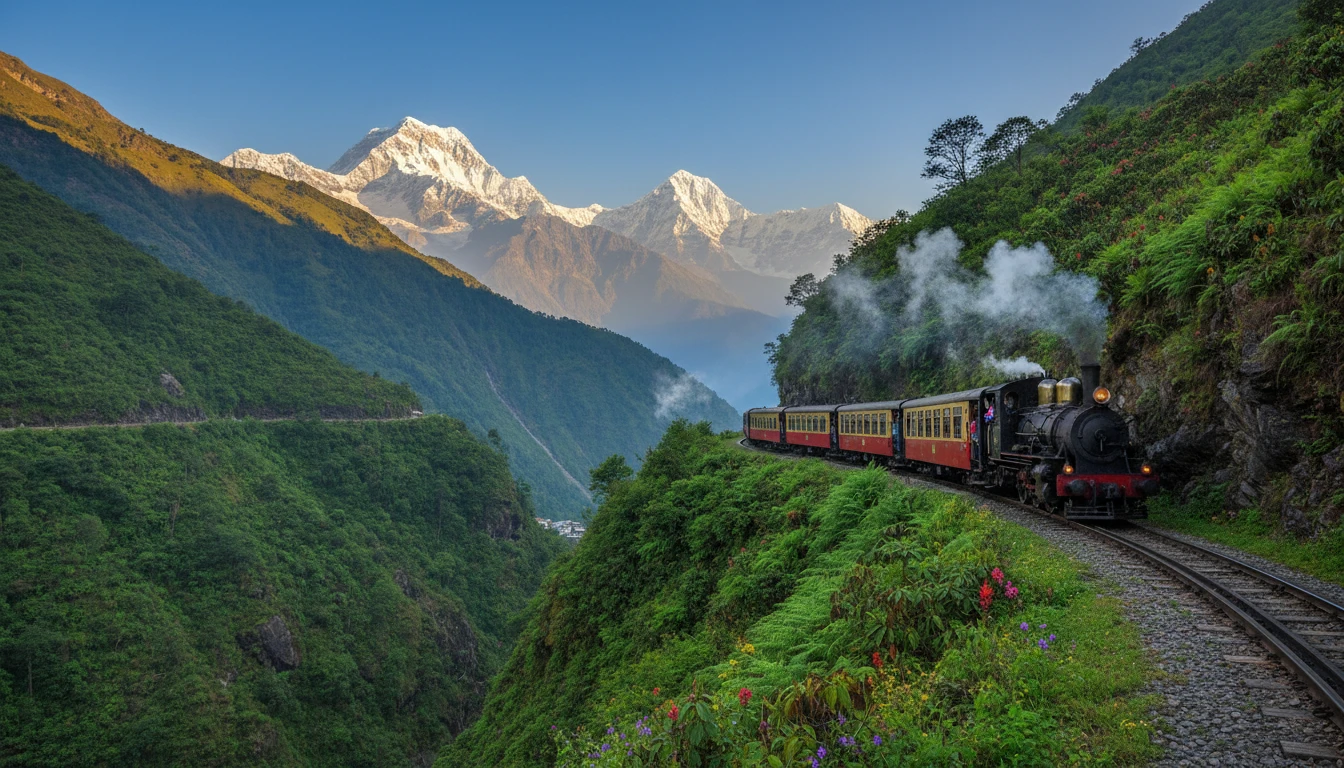
Another gem in India's crown of mountain railways, the Darjeeling Himalayan Railway (DHR) is an iconic UNESCO World Heritage site. Known affectionately as the 'Toy Train', it travels an 88-kilometre route from New Jalpaiguri to the misty hills of Darjeeling. Built between 1879 and 1881, its two-foot gauge track is a testament to ingenious engineering, employing clever loops and zig-zags to conquer the steep Himalayan gradients. The journey takes you through vibrant markets, dense forests, and sprawling tea gardens with the magnificent Kanchenjunga peak often visible in the distance. A highlight of the trip is the Batasia Loop, an engineering feat that offers a 360-degree view of Darjeeling, and the stop at Ghum, India's highest railway station.
The Blue Mountain Express: Nilgiri Mountain Railway
Connecting Mettupalayam to the popular hill station of Ooty in Tamil Nadu, the Nilgiri Mountain Railway is the only rack railway in India and a UNESCO World Heritage site. This unique system allows the train to climb the steepest track in Asia. The 46-kilometre journey is a slow, rhythmic ascent through the lush Nilgiri Hills, also known as the Blue Mountains. The train, with its iconic blue and cream carriages, passes through 16 tunnels, crosses 250 bridges, and navigates 208 curves, offering stunning views of dense forests, eucalyptus groves, and verdant tea estates. The five-hour ride is a serene and picturesque experience, capturing the old-world charm of hill station travel.
The Coastal Marvel: Konkan Railway
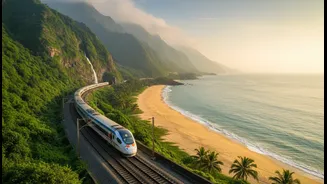
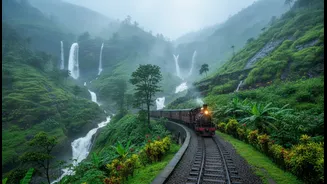
Stretching over 740 kilometres from Maharashtra down to Karnataka, the Konkan Railway is a modern engineering marvel celebrated for its stunning coastal views. Unlike the colonial-era mountain lines, this route was built in the 1990s, carving a path between the Arabian Sea and the Sahyadri mountains. The journey, particularly the stretches between Mumbai and Goa, is a visual feast of lush green landscapes, sparkling rivers, and dense forests. The route features over 2,000 bridges and 91 tunnels, a testament to the incredible effort required to build it. During the monsoon season, the scenery is especially dramatic, with waterfalls like the famous Dudhsagar Falls cascading near the tracks. Trains like the Mandovi Express offer a perfect way to witness the raw beauty of India's western coastline.
The Sea Bridge Adventure: Mandapam to Rameswaram
Perhaps one of the most thrilling and unique rail journeys in India is the short but spectacular ride to Rameswaram Island in Tamil Nadu. The highlight of this trip is crossing the Pamban Bridge, India's first sea bridge, which opened in 1914. For about 15 minutes, the train travels over the 2.3-kilometre-long bridge, suspended just above the turquoise waters of the Palk Strait. With the sea visible on both sides, it feels like you are gliding on water. The bridge itself is an engineering marvel, featuring a central section that can be raised to allow ships to pass underneath. While the bridge has faced service suspensions, the experience of crossing it remains a bucket-list item for many travellers, offering a hair-raising and unforgettable memory.