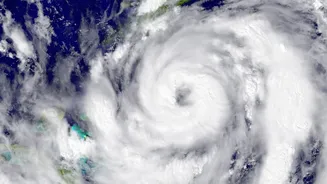








As 'Very Severe Cyclonic Storm Arnab' made landfall on India’s east coast early Wednesday morning, authorities are on high alert. Beyond the immediate danger of wind and flooding, a critical threat looms: the widespread failure of power supply networks.
Arnab's Path and Impact
Cyclone Arnab crossed the Andhra Pradesh and Yanam coasts on October 28 with sustained wind speeds of 125-135 kmph, gusting up to 150 kmph. The India Meteorological Department (IMD) has issued red alerts for heavy rainfall in coastal Andhra Pradesh, Odisha, and Chhattisgarh. The storm's impact is extensive, with strong winds and torrential rain affecting states from Tamil Nadu and Kerala in the south to West Bengal, Jharkhand, and even parts of Uttar Pradesh in the north. Authorities have been on high alert, evacuating tens of thousands of people from low-lying coastal areas and deploying National Disaster Response Force (NDRF) teams.
Why Power Grids Are So Vulnerable
A cyclone's dual assault of extreme wind and water is a severe threat to electrical infrastructure. High-velocity winds place immense force on transmission towers, which can buckle or collapse. More commonly, winds snap the wooden or concrete poles that carry local distribution lines, while flying debris acts like shrapnel, severing wires. Uprooted trees are a primary cause of outages, falling onto power lines and bringing them down. Simultaneously, storm surges and flooding from heavy rain can inundate ground-level substations, forcing operators to shut them down to prevent catastrophic short circuits and equipment damage. Saltwater from a storm surge is particularly corrosive, capable of ruining transformers and control panels, which then require complete replacement.
The Ripple Effect of Blackouts
A prolonged power outage quickly cascades into a multi-faceted crisis. Communication networks fail as mobile towers lose power. Water supply systems that rely on electric pumps can shut down. Hospitals are forced onto backup generators, which have limited fuel supplies, putting patients at risk. Financial services halt as ATMs and banks go offline. For individuals and families, the loss of refrigeration can lead to food spoilage, and the inability to charge phones cuts off a vital link to emergency services and information. In Andhra Pradesh, storm-related electrocutions have already been reported from snapped live wires, highlighting the immediate public safety danger.
What Authorities Are Doing
State governments and central agencies like the National Disaster Management Authority (NDMA) began preparations well before landfall. Power distribution companies have pre-positioned repair crews and equipment to begin restoration work as soon as conditions are safe. In some vulnerable areas, power is preemptively shut down to prevent accidents. Railways and aviation authorities have also taken steps, clearing fallen trees from tracks and cancelling flights at affected airports like Visakhapatnam. The government's stated objective is to ensure zero loss of life and to restore essential services as quickly as possible once the storm passes.
How You Can Prepare Right Now
Your personal preparedness can make a significant difference. Before an outage, fully charge all your electronic devices, including mobile phones, laptops, and portable power banks. Keep a supply of flashlights with fresh batteries ready. If you have a refrigerator, set it to its coldest setting to keep food fresh longer if the power goes out. Unplug nonessential appliances to protect them from potential power surges when electricity is restored. Create a simple emergency kit with nonperishable food, bottled water, a firstaid kit, and any necessary medications. It is also wise to have some cash on hand and to ensure your vehicle has a full tank of fuel.