






The Final Countdown: Uncrewed Test Flights
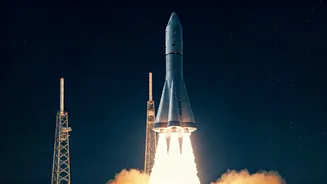
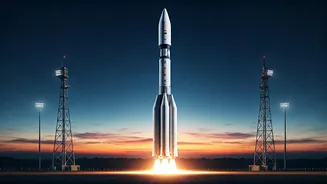
Before Indian astronauts embark on their historic journey, a series of uncrewed missions are meticulously planned to validate every system and procedure. The first of these, the G1 mission, is slated for the second half of 2026 and will be a crucial dress
rehearsal. It will launch aboard the human-rated LVM3 rocket, a reliable heavy-lift vehicle from ISRO that has been modified for crew safety. Onboard this first flight will be 'Vyommitra', a sophisticated humanoid robot designed to mimic human functions, test the life support systems, and provide invaluable data on the crew module's environment. Following G1, at least one more uncrewed flight is planned to ensure the utmost safety and reliability before the crewed mission, which is targeted for 2027.
Building a Human-Ready Spacecraft
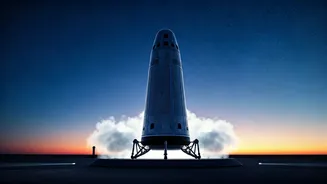
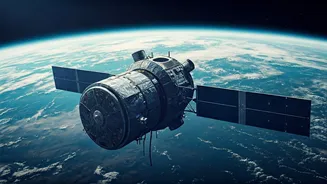
The Gaganyaan programme is a monumental undertaking, involving the development of numerous critical technologies from the ground up. At its heart is the Orbital Module, which consists of the Crew Module (CM) and the Service Module (SM). The Crew Module is a double-walled, pressurised habitat where the astronauts will live, providing an Earth-like environment in the harshness of space. It's equipped with advanced life support, avionics, and deceleration systems for re-entry. The Service Module supports the crew module with propulsion, power, and other necessities while in orbit. A key safety feature is the Crew Escape System, which can quickly pull the crew module away from the rocket in an emergency, a technology that has been successfully tested multiple times.
More Than a Mission: A National Endeavour
Gaganyaan is far more than a single spaceflight; it's a national catalyst. The mission is set to create an estimated 15,000 new employment opportunities and will source nearly 60% of its components from the Indian private sector, giving a significant boost to domestic industries. It represents a massive collaboration between ISRO, academia, and private companies, fostering a new ecosystem for advanced technological research and development in the country. By successfully launching its own human spaceflight mission, India will join an exclusive club of nations — after Russia, the USA, and China — capable of this incredible feat, cementing its status as a major global space power.
Laying the Groundwork for a Future in Space
The technologies and capabilities being validated by the Gaganyaan tests have profound implications for India's long-term space ambitions. The experience gained is a direct stepping stone towards building the Bharatiya Antariksh Station (BAS), India's own space station, with the first module planned for deployment by 2028. Furthermore, the successful demonstration of human spaceflight will open up possibilities for space tourism, a market ISRO hopes to enter by 2030. These tests are also driving advancements in critical areas like rendezvous and docking, which are essential for complex future missions like returning samples from the moon (Chandrayaan-4) and interplanetary travel.