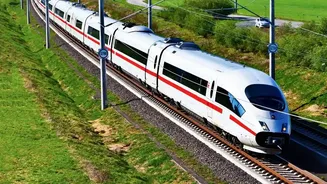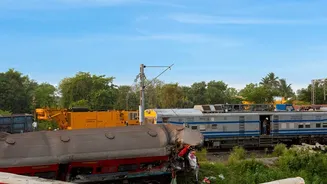





A devastating crash on Spain's vaunted high-speed rail line has sent shockwaves through the global transport industry. In an era of 'bullet trains', how can such a tragedy occur? The answer lies in the complex gap between man and machine.
A System Built on Layers of Safety
High-speed rail,
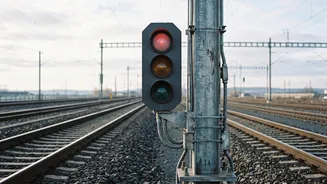
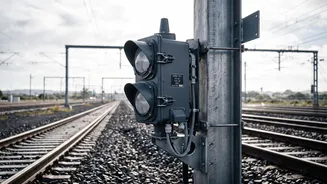
known in Spain as Alta Velocidad Española (AVE), is renowned for its remarkable safety record. These systems are designed with multiple layers of protection to make catastrophic accidents, in theory, nearly impossible. At speeds where drivers cannot rely on line-side signals, sophisticated automatic train protection (ATP) systems take over. These technologies monitor the train's position and speed, and are designed to automatically apply the brakes if a driver fails to act or a dangerous situation is detected. The goal is to create a fail-safe environment where technology provides a crucial backstop to human operation. However, a recent tragedy has exposed the limits of this philosophy.
The Tale of Two Systems: ERTMS and Legacy Controls
At the heart of the issue are the different, and sometimes overlapping, train control systems used across Europe. The most advanced is the European Rail Traffic Management System (ERTMS), the modern standard for high-speed, interoperable travel across the continent. ERTMS continuously supervises the train, effectively creating a digital bubble of safety around it. However, many lines, or sections of lines, still rely on older, national legacy systems. In Spain, this system is called ASFA (Anuncio de Señales y Frenado Automático). While effective, ASFA is less comprehensive than ERTMS, providing intermittent checks at specific points (balises) on the track rather than continuous oversight. A third system, the German-designed LZB, is also used on some older high-speed lines like the Madrid-Seville route. The transition between these different systems is a known point of potential risk.
When Automation Fails: The Human Factor
The recent disaster appears to have occurred not because of one single technical failure, but at the precise moment when technology handed control back to humans. Preliminary reports suggest that a failure in the primary automated signaling system caused trains on the line to halt as a safety precaution. A control center operator then reportedly gave one driver clearance to proceed, but under 'normal operations' rather than at a greatly reduced speed with extreme caution, as protocol would require during a system outage. This instruction was given without confirming the track ahead was clear, leading to a collision with a stationary train. This highlights the critical vulnerability in rail safety: the seam between automated safeguards and necessary human intervention. Research shows that human factors—including miscommunication, fatigue, or procedural errors—are the leading cause of rail accidents.
A Tragic Echo of Past Warnings
This was not an unknown risk. The 2013 Santiago de Compostela derailment, Spain's worst rail disaster in decades, occurred when a driver, distracted by a phone call, failed to manually brake before a sharp curve. The train was transitioning from a section of track covered by a high_speed control system to one that was not, leaving the critical braking action solely in the driver's hands. In another incident in 2024, a high_speed train passed a stop signal, which was only caught when a second controller reviewed the records after the fact. These events, and now the latest crash, underscore that even the most advanced systems have boundaries. When these boundaries are crossed, the responsibility falls squarely on procedures and people, and it is here that failures can have the most devastating consequences.
The Way Forward: Closing the Gaps
In the wake of the crash, the focus is now on how to close these dangerous gaps. For Spain and the broader European network, it accelerates the urgency to replace legacy systems like LZB and ASFA with a universal ERTMS standard across all lines. This would reduce the number of handovers and create a more seamless safety net. The incident has also triggered an immediate review of operational protocols, particularly the instructions given to drivers when automated systems fail. Unions representing rail workers have pointed to staff shortages and high pressure at control centers as contributing factors, arguing that the system relies on flawless human performance without providing adequate support. The path forward involves not just technological upgrades, but a deeper investment in the human side of the safety equation.