



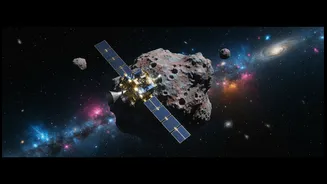


A New Test for an Accomplished Explorer
Japan’s Hayabusa2 probe is a seasoned veteran of deep space. After launching in 2014, it rendezvoused with asteroid Ryugu, deployed rovers, and even created an artificial crater to collect pristine subsurface samples. In December 2020, it successfully
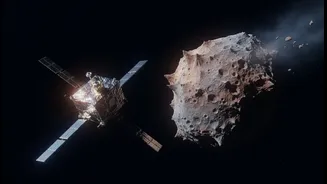
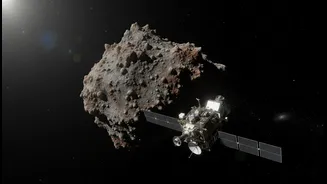
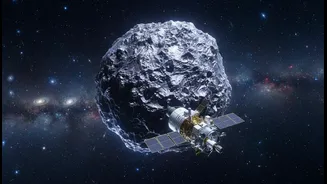
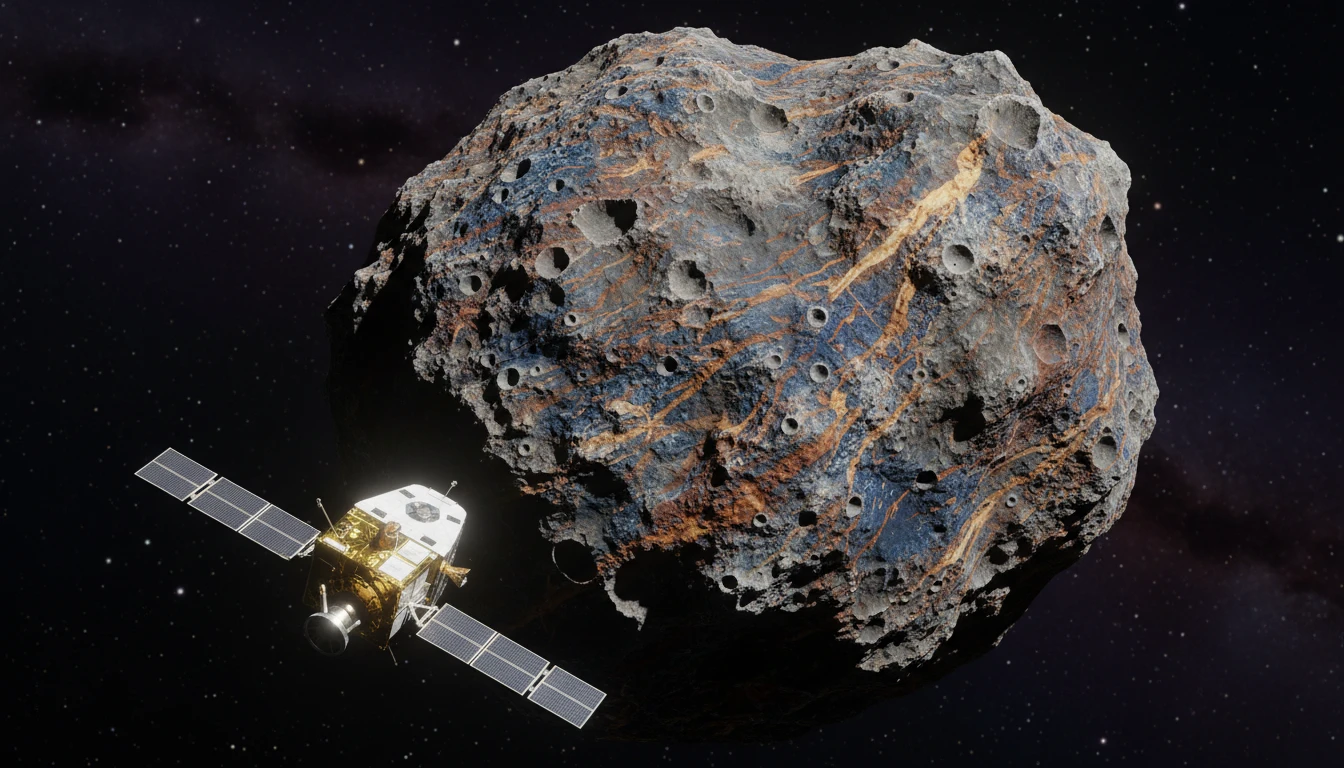
delivered these precious materials—containing water-bearing minerals and organic molecules—to Earth, offering scientists a direct look at the building blocks of our solar system. But with half its xenon fuel remaining, the Japan Aerospace Exploration Agency (JAXA) sent the resilient craft on a new journey. This extended mission includes a flyby of asteroid Torifune (also known as 2001 CC21) in July 2026 and a rendezvous with the tiny, fast-spinning asteroid 1998 KY26 in 2031. The recent Torifune encounter was the first major test of this new phase, designed to gather data that could be crucial for the future of space exploration and for protecting our own planet.
Redefining Precision Navigation
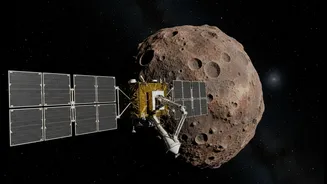
The Torifune flyby was a masterclass in precision navigation. The spacecraft passed the asteroid at a relative speed of about 18,000 kilometers per hour. At such speeds, the slightest miscalculation could lead to a collision or a missed opportunity. Unlike missions to planets, asteroids are small, dark, and their orbits can have uncertainties, meaning they are often only visible a few days before an encounter. This requires the spacecraft to make its own decisions. Hayabusa2 uses a suite of Optical Navigation Cameras (ONCs), a laser altimeter (LIDAR), and other instruments to autonomously guide itself. The probe had to make its final course corrections on its own, without real-time input from Earth due to the immense distances. Successfully navigating such a high-speed, close-range flyby is a significant technological achievement. This capability is not just about visiting other worlds; it is fundamental to future missions that might need to intercept an object in deep space with pinpoint accuracy.
New Frontiers in Asteroid Science
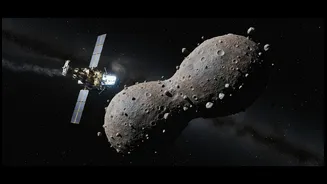
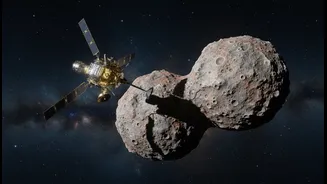
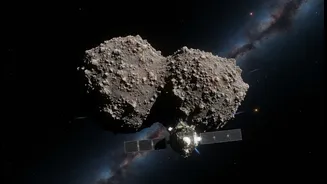
While the primary goal of the Torifune flyby was technological, the scientific returns are still significant. Every asteroid visited adds a new piece to the puzzle of our solar system's formation 4.6 billion years ago. Hayabusa2 captured close-up visible and thermal images of Torifune, revealing details about its two-lobed shape and surface properties. This data helps scientists understand the diversity of near-Earth objects. Torifune is an S-type (stony) asteroid, a different class from the carbon-rich C-type Ryugu. Comparing them helps scientists refine theories about how different materials were distributed in the early solar system. The ultimate destination of the extended mission, 1998 KY26, is even more exotic. It’s an extremely small asteroid, estimated to be only a few tens of meters in diameter, and it spins incredibly fast, completing a rotation in about 10 minutes. Studying such an object will provide unprecedented insights into the physics of small, rapidly rotating bodies.
A Leap for Planetary Defence
Perhaps the most critical application of the technology demonstrated by the Torifune flyby is in planetary defence. The same ultra-precise guidance needed for a high-speed scientific flyby is exactly what’s required to intercept a hazardous asteroid on a collision course with Earth. The ability to get a spacecraft close to a small, fast-moving object is the first step in being able to deflect it. Methods for deflecting an asteroid include kinetic impactors—crashing a probe into it to alter its path, as NASA’s DART mission successfully demonstrated—or using a spacecraft’s gravity to gently tug the asteroid into a safer orbit. Both techniques rely on the ability to reach the target accurately. By proving it can autonomously navigate a close encounter millions of kilometers from home, JAXA has shown it possesses a key technology for future planetary defence efforts. This capability is vital, as even small asteroids can cause significant damage if they strike Earth.