





The Bright Spark of Acidity
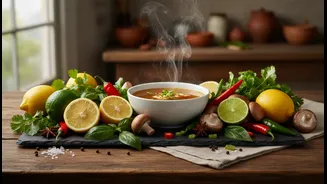
Think of acid as the highlighter pen for your food. If a rich curry or a hearty dal feels heavy or one-dimensional, it likely doesn't need more salt; it needs a lift. Acidity cuts through richness and balances other flavours, making everything taste more vibrant
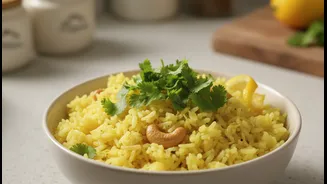
and awake. A simple squeeze of lemon or lime at the end of cooking can transform a dish from good to great. But the world of acid is vast. In Indian cooking, tamarind offers a deep, tangy sweetness, while yogurt in marinades both tenderises and adds a gentle sourness. Vinegars, from apple cider to red wine, can be used to deglaze a pan or brighten a sauce. The key is to think of acid not as a main flavour, but as the element that makes all the other flavours pop. Start by adding a little splash just before serving and taste the difference.
The Foundation of Aromatics
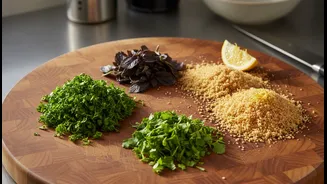
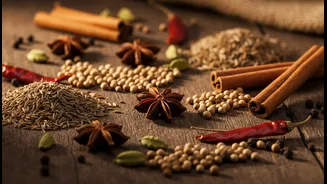
The incredible smell that fills the kitchen when you start cooking? That’s the power of aromatics. These are the ingredients, typically vegetables, herbs, and spices, that are heated in fat at the beginning of a recipe to build a deep, foundational layer of flavour. In India, this is the soul of our cooking—the sizzle of cumin seeds, mustard seeds, and curry leaves in hot oil, the blooming of ginger and garlic paste. These combinations, known as mirepoix in French cuisine or sofrito in Spanish cooking, are the base upon which entire dishes are built. Toasting whole spices before grinding them also awakens their essential oils, making them far more potent and fragrant. Don't underestimate this first step. Rushing the aromatics or adding them to a cold pan is a missed opportunity for building complex, layered taste that no amount of salt can replicate later. Taking a minute to let your onions soften or your spices toast properly is an investment that pays huge dividends in the final dish.
Unlocking the Fifth Taste: Umami
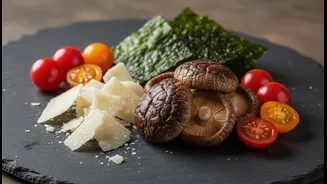
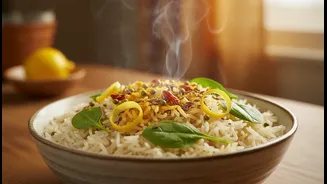
Beyond sweet, sour, salty, and bitter lies a fifth taste: umami. This Japanese term translates to a “pleasant savoury taste” and is often described as meaty, brothy, or deeply satisfying. It's the flavour that makes you want to go back for another bite because it creates a sensation of fullness and complexity. Umami comes from glutamate, an amino acid found naturally in many foods. In the Indian pantry, you'll find it in ingredients like tomatoes (especially when cooked down into a paste), mushrooms, and fermented foods. Globally, soy sauce, aged cheeses like Parmesan, and cured meats are packed with umami. You can boost the umami in your cooking by using these ingredients or through techniques like slow-cooking meats and vegetables, which naturally releases their glutamates. Combining umami-rich ingredients, like mushrooms and tomatoes in a pasta sauce, can amplify the savoury depth even more.
The Crucial Role of Texture
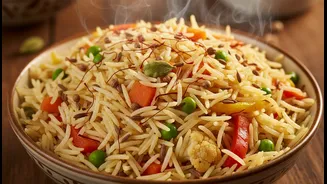
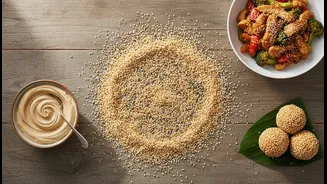
We often focus so much on what food tastes like that we forget what it feels like. Texture is arguably as important as flavour, providing the contrast that keeps our palate engaged. Think about the joy of a crispy pakora, the satisfying crunch of sev on a chaat, or the difference between a creamy soup and that same soup topped with crunchy croutons. Without textural contrast, food can become monotonous and boring. A dish that is uniformly soft can be elevated with something crunchy, like toasted nuts or seeds. A crisp salad can be made more satisfying with something creamy, like a yogurt-based dressing or chunks of paneer. Even something as simple as finishing a dish of soft, slow-cooked lentils with crispy fried onions can create an entirely new experience. Pay attention to the feel of your food. Are you layering different textures? If not, you're missing out on one of the easiest ways to add impact.