






More Than Just a Day
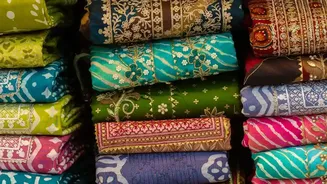
National Handloom Day, observed annually on August 7, is a tribute to India's rich textile heritage and its skilled artisans. The date was chosen to commemorate the Swadeshi Movement, which began on the same day in 1905 and promoted indigenous production
and self-reliance. First established by the government in 2015, the day serves as a crucial reminder of the handloom sector's cultural and economic significance. It's a celebration of the artistry passed down through generations and a call to support the livelihoods of millions of weavers, many of whom are women in rural areas. This year's celebrations, the 12th of their kind, will again highlight the government's commitment to preserving this vital sector through awards and awareness campaigns.
Become a Handloom Detective
In a market flooded with machine-made replicas, telling a genuine handloom piece from a power loom product can be challenging. But a few simple checks can empower you as a buyer. First, look for the Handloom Mark, a government-issued certification of authenticity. Real handloom fabrics often have minor imperfections—a tiny knot, a slight variation in the weave—that are hallmarks of human touch, not flaws. Examine the reverse side of the fabric; in authentic weaves, you can often see the pattern's mirror image or small, loose threads from the design work, unlike the flat, uniform finish of a machine. The texture is another clue: handloom fabrics tend to be softer, more breathable, and have a unique drape that machine-made cloth struggles to replicate.
The Sustainable Choice
Choosing handloom is a powerful statement in favour of sustainable fashion. The traditional handloom process has a minimal carbon footprint, as it runs on manual energy, not electricity. This makes it one of the most eco-friendly methods of textile production. Many weaver communities use natural fibres and dyes, reducing the chemical pollution associated with industrial manufacturing. By its very nature, handloom production is about small-batch quality, not fast-fashion quantity, encouraging a mindset of buying less but better. Supporting handloom helps sustain a circular economy, provides a livelihood for rural communities, and keeps ancient, eco-conscious traditions alive in a modern world.
Understanding the Weaver's Reality
While handloom is a celebrated art, weavers face significant challenges. They contend with intense competition from cheaper power loom products, rising costs of raw materials like yarn and dyes, and low wages that deter the younger generation from taking up the craft. Many weavers still earn less than the minimum wage, making it difficult to sustain their families and their art. They also face challenges in accessing modern markets and getting fair prices for their intricate work, often relying on intermediaries. Government initiatives like the National Handloom Development Programme and new schemes announced in recent budgets aim to provide financial support, skill development, and better market access, but consumer support remains critical.
How You Can Make a Difference
Your role as a consumer extends beyond a single purchase. When you buy handloom, ask questions about its origin. Knowing the story behind a fabric—the region it comes from, the community that wove it—adds to its value and your connection to it. Wear your handloom pieces with pride and share their story on social media using popular hashtags to spread awareness. Encourage friends and family to explore handloom. By choosing authentic, handcrafted textiles, you are not just buying a product; you are investing in an artisan's skill, a community's livelihood, and the preservation of India's cultural fabric. Every conscious choice helps ensure this beautiful heritage continues to thrive for generations to come.