


A Planet of Grand, Slow Seasons
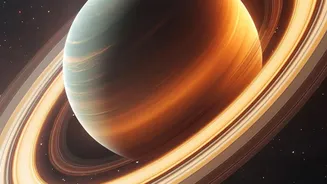
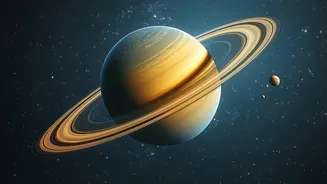
Like Earth, Saturn has seasons because its axis is tilted. With a tilt of 27 degrees, similar to our own 23.5 degrees, different parts of the planet receive more direct sunlight as it completes its long journey around the Sun. But that journey is vastly
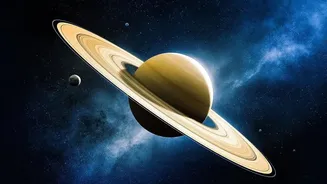
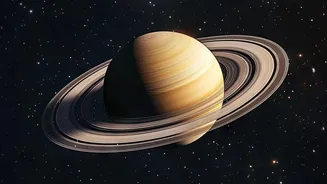
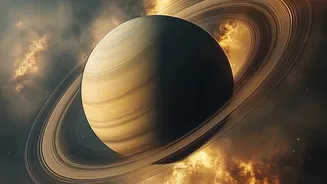
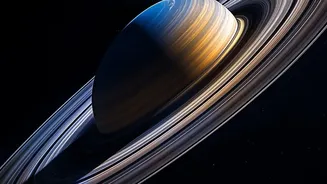
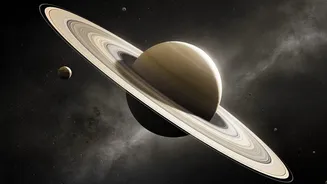
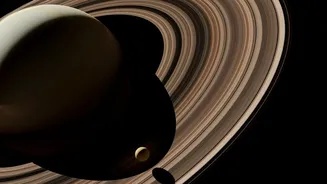
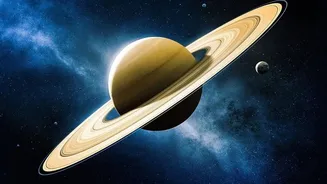
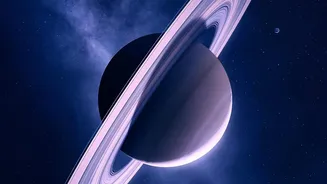
different from ours. Saturn takes a staggering 29.5 Earth years to complete one orbit, meaning each of its four seasons stretches for more than seven years. This creates slow-moving, yet extreme, seasonal shifts. Adding another layer of complexity are the planet’s iconic rings. These vast sheets of ice and rock cast enormous shadows over the planet, blocking sunlight to an entire hemisphere during its winter, which can dramatically influence its atmospheric temperature and chemistry.
Hubble's Tireless Weather Watch
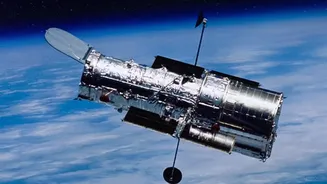
For years, scientists have relied on the Hubble Space Telescope to keep a consistent watch on our solar system's outer planets. Through a long-running project called the Outer Planet Atmospheres Legacy (OPAL) program, Hubble takes annual snapshots of Jupiter, Saturn, Uranus, and Neptune. This has created an invaluable baseline, allowing astronomers to track atmospheric changes over time rather than just seeing isolated moments. For Saturn, OPAL has been instrumental since the end of NASA’s Cassini mission, tracking subtle year-to-year shifts in the colour of its atmospheric bands, which can indicate changes in cloud height and wind patterns. This long-term monitoring is essential to understanding the rhythm of a world where change happens on the scale of decades.
A Powerful New Partnership
The latest chapter in our understanding of Saturn comes from a powerful collaboration. Hubble has been joined by the James Webb Space Telescope (JWST), and their combined vision gives us an unprecedented view. While Hubble observes in visible and ultraviolet light, showing the familiar colours of Saturn’s clouds, Webb sees in infrared. This allows it to peer through the atmospheric haze and sense heat, revealing details about clouds and chemicals at different depths. Scientists describe the synergy as being able to 'slice' through Saturn's atmosphere like an onion. Where Hubble sees the surface of the weather, Webb sees the engine churning underneath. This multi-wavelength approach provides a three-dimensional understanding of how the planet’s vast atmospheric system works.
What the 2024 Images Revealed
In images taken in 2024 and released in early 2026, this powerful duo captured Saturn as its northern hemisphere moves from late summer towards the equinox of 2025. The observations revealed a world buzzing with activity. Webb’s infrared view highlighted a long-lived jet stream meandering across the northern mid-latitudes, a feature influenced by atmospheric waves that are otherwise undetectable. The images also showed the lingering remnants of the massive 'Great Springtime Storm' from over a decade ago, proving just how long these events can affect the atmosphere. By combining Hubble’s long-term context with Webb’s deep view, astronomers can now directly link surface-level weather patterns to the dynamic forces operating in the layers below, providing a more complete picture of seasonal change in action.
Charting a Living, Breathing World
Ultimately, these new observations confirm that Saturn is far from a static, unchanging ball of gas. It is a dynamic world with a complex climate system. The subtle changes in colour bands, the persistence of ancient storms, and the behaviour of its powerful jet streams are all pieces of a giant puzzle. By tracking these features year after year, scientists can test and refine their models of planetary atmospheres. This work isn't just about Saturn; it provides a natural laboratory for understanding the physics of all gas giants, including the thousands of exoplanets discovered orbiting other stars. Each new image helps us better understand the fundamental rules that govern weather on a planetary scale, from our own world to the most distant corners of the galaxy.