
What Exactly is a Frisella?
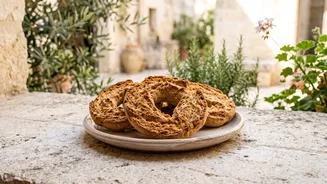
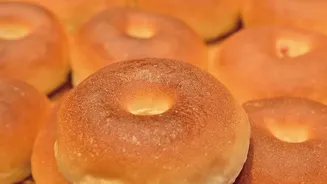
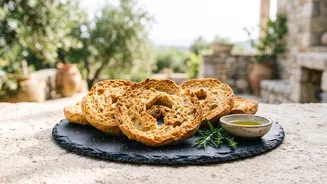
At first glance, a frisella might be mistaken for a stale, bagel-shaped cracker. Made from simple ingredients like durum wheat or barley flour, water, yeast, and salt, these breads are intentionally baked to a jaw-breaking hardness. Their defining characteristic
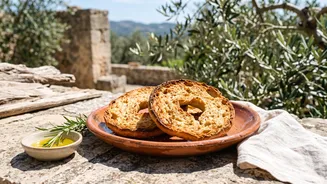
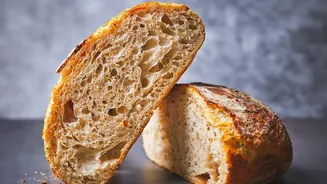
comes from being twice-baked, a process that removes nearly all moisture, rendering them incredibly durable. This method results in a unique texture: a smooth, hard crust on one side and a rough, porous interior on the other, created when the bread is sliced in half between bakes. This isn't just bread; it's a culinary artifact designed for longevity, a food built to last for months, if not longer, when stored correctly.
A History Forged by Necessity
The story of friselle is a story of Southern Italian ingenuity, born from the practical needs of a hot climate and people on the move. Their origins trace back centuries, with some historians suggesting similar twice-baked breads were provisions for Roman sailors, known as 'panis nauticus' or 'bread of the sailor'. In regions like Puglia, Campania, and Calabria, friselle became essential for fishermen, farmers, and shepherds who needed sustenance that wouldn't spoil during long periods away from home. They were even nicknamed the 'bread of the Crusaders' for their reliability on long journeys. The ring shape itself was a practical innovation, allowing the breads to be strung together on a rope for easy transport and storage. Before refrigeration, this was food security in its most elemental form.
The Art of the Double Bake
The secret to the frisella's incredible shelf life lies in its name's linguistic roots. The Italian word 'biscotto' (meaning twice-cooked) and the Latin 'frendere' (to crumble) both hint at the process. Bakers first shape the dough into rings and bake them until firm. Then, while still warm, they are sliced horizontally and returned to a low oven for a second, much longer bake. This crucial second step, known as 'biscottatura', slowly draws out every last bit of moisture. Without water, mold and bacteria cannot thrive, making the frisella exceptionally resistant to spoilage. This is the same fundamental principle behind other long-lasting foods, from hardtack to modern-day survival rations, perfected with rustic simplicity.
From Rock-Hard to Rustic Meal
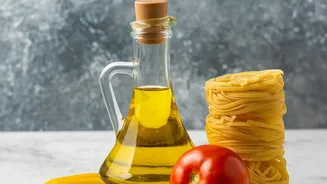
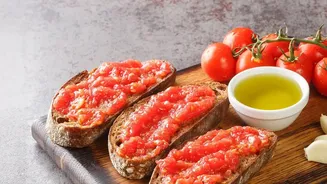
To eat a frisella, one must first perform a simple ritual to bring it back to life. The process, known as 'sponzare', involves a quick dip in cold water—tradition says seawater was once used—for just a few seconds. This is a delicate balance; the goal is to soften the porous interior just enough to be edible while the hard base remains crisp, providing structural integrity. Once softened, the frisella becomes the perfect canvas for simple, fresh toppings. The classic preparation involves chopped ripe tomatoes, a generous drizzle of extra virgin olive oil, a sprinkle of salt, and fragrant oregano. This combination, which soaks into the bread's rough surface, transforms the humble rusk into a refreshing and satisfying meal that is more than the sum of its parts.
A Timeless Tradition in the Modern Kitchen
Today, friselle are no longer just a food of necessity but a celebrated staple of the Mediterranean diet and a beloved summer dish throughout Italy. While they were once divided into barley versions for the poor and durum wheat for the wealthy, all varieties are now appreciated for their unique flavors and textures. In an age where many are looking to reduce food waste and embrace more sustainable practices, the frisella stands as a powerful symbol of resourcefulness. It’s a reminder that some of the most enduring solutions are found not in new technology, but in the preserved wisdom of the past. It teaches a lesson that what was once essential for survival can now be a choice for a simpler, more conscious way of eating.