


More Than Just Waste
In many Indian kitchens, the philosophy of using every part of an ingredient is a long-held tradition born from respect for food and a need for frugality. Today, this principle has found a new name: zero-waste cooking. The idea is simple: minimise what
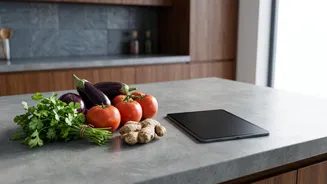
you throw away. This approach not only helps the environment by reducing landfill waste but also offers significant financial savings. The average household wastes a surprising amount of food, which translates directly into wasted money. By rethinking what we consider 'scraps,' we can unlock extra meals and ingredients we’ve already paid for. Items like broccoli stems, cauliflower leaves, and herb stalks, which are often discarded, are perfectly edible and can be transformed into culinary assets. This shift in perspective is not about deprivation; it's about creativity and getting the most value out of your groceries.
The Hidden Nutrition in Scraps
Many people assume that the most nutritious part of a vegetable is the part we typically eat, but that's not always the case. Broccoli stems, for example, are a nutritional powerhouse. While the florets are celebrated for their health benefits, the stems are also packed with goodness. In fact, gram for gram, broccoli stems contain comparable, and sometimes even slightly higher, levels of calcium, iron, and Vitamin C than the florets. The stems are particularly rich in dietary fibre, which is essential for good digestive health. They also provide a good amount of Vitamin A, Vitamin K, potassium, and folate. Similarly, the tender stems of soft herbs like coriander and parsley are full of flavour and nutrients. Discarding these parts means you're throwing away valuable vitamins and minerals along with them.
Unlocking Flavour from Stems and Ends
Beyond nutrition, these overlooked parts of vegetables carry a surprising amount of flavour. The stem of the broccoli has a milder, sweeter taste compared to the more earthy florets. Its texture is crisp and crunchy when raw, becoming tender and almost juicy when cooked. This makes it incredibly versatile. Herb stems, particularly from soft herbs like cilantro, parsley, and dill, are intensely flavourful. While woody stems from rosemary or thyme are too tough to eat directly, they are brilliant for infusing oils or adding a deep, aromatic note to stocks and broths. The softer stems can be finely chopped and used just like the leaves, adding a fresh, pungent kick and a pleasant textural crunch to dishes like salsas, sauces, and dips. By learning how to use these parts, you add new layers of flavour and complexity to your cooking without any extra cost.
From Scrap to Star: Making the Dip
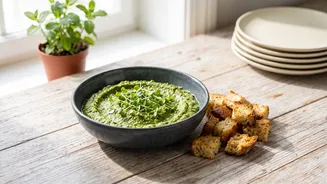
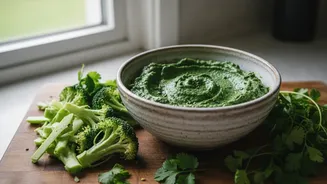
Turning these scraps into a vibrant green dip is surprisingly easy and requires just a blender or food processor. The process starts with preparing your scraps. For broccoli stems, it's best to peel the tough outer layer, especially if the stalk is thick. Then, you can chop them and either steam, blanch, or roast them until tender. Steaming or blanching helps retain their bright green colour. For herb stems, simply wash them and chop them roughly. You can use tender stems from coriander, mint, and parsley directly. These form the flavourful base of your dip. A basic formula involves blending your cooked broccoli stems and herb ends with a creamy element like hung curd (Greek yoghurt), tahini, or even soaked cashews. Add a splash of lemon juice for brightness, a clove of garlic for punch, a drizzle of olive oil for richness, and salt to taste. You can easily adapt this base with whatever you have on hand.
Your Go-To Green Dip Formula
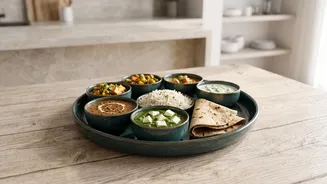
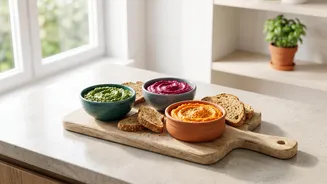
Think of this less as a strict recipe and more as a flexible guide. Start with about one cup of prepared scraps (like steamed broccoli stems and a handful of coriander stalks). Add this to your blender with about half a cup of a creamy base like sour cream or tahini. Squeeze in the juice of half a lemon. Add one small garlic clove, a pinch of salt, and a dash of black pepper. For an Indian touch, consider adding a small piece of ginger or a green chilli. Blend everything until smooth, adding a splash of water or the cooking liquid from the vegetables if needed to reach your desired consistency. Taste and adjust the seasoning. You might want more salt, a little more lemon juice, or even a pinch of roasted cumin powder. This dip is perfect with vegetable sticks, as a spread on sandwiches and rotis, or as a side with dal and rice.