




The Urban Oven Effect
Anyone who has walked across a dark asphalt road on a sunny day knows it can feel like stepping onto a hot pan. This is a key component of the 'urban heat island' effect. Cities, with their dense concentration of buildings and dark pavements, absorb and retain
significantly more of the sun’s heat than surrounding rural areas. Asphalt can absorb up to 95% of the sunlight that hits it. This stored heat is then slowly released back into the air, particularly after sunset, keeping city temperatures elevated throughout the night and increasing health risks. Roads and other paved surfaces can make up around a third of a typical city's surface area, making them a massive contributor to this problem.
How Reflective Pavements Work
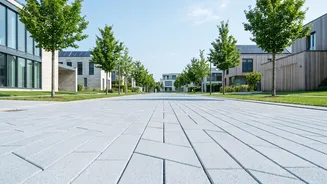
Reflective pavements, often called 'cool pavements', are designed to combat this by doing the opposite of their traditional counterparts: they reflect a large portion of sunlight instead of absorbing it. This property is known as having a high solar reflectance or 'albedo'. While conventional asphalt has a very low albedo, cool pavements can be made using a variety of technologies. These include using lighter-coloured materials like concrete, adding reflective aggregates or special binding polymers to the mix, or applying a thin, light-coloured reflective coating to existing asphalt. By bouncing solar radiation back up towards the atmosphere, the pavement surface stays cooler.
The Cooling Effect in Action
The impact on temperature can be significant. Studies from cities like Phoenix and Los Angeles, which have piloted these technologies, show promising results. Surface temperatures on cool pavements have been measured to be 10 to 12 degrees Fahrenheit (about 5.5 to 6.7 degrees Celsius) lower than traditional asphalt during the hottest parts of the day. While the effect on the surrounding air temperature is more modest, it is still beneficial. Research has shown that at a height of six feet, ambient air temperature can be about 0.5 degrees Fahrenheit (0.3°C) cooler over cool pavements at night. In one comprehensive study, a large-scale application in a Los Angeles neighborhood reduced ambient air temperatures by as much as 3.5 degrees Fahrenheit (1.9°C) during an extreme heat event.
Challenges and Drawbacks
Despite the benefits, cool pavements are not a perfect fix. One of the main concerns is cost, as the materials and installation can be more expensive than conventional asphalt. Another significant issue is glare. By reflecting sunlight, these lighter surfaces can create a brightness that is uncomfortable for pedestrians and potentially dangerous for drivers, similar to the glare from snow. There's also a debate about where the reflected heat goes. Some studies suggest that while the pavement itself is cooler, the reflected radiation can warm up adjacent buildings, potentially increasing the need for air conditioning during the day. Finally, the effectiveness can decrease over time as the surfaces get dirty and darkened by traffic.
Adoption and Potential in India
The concept of surface cooling is gaining traction in India, primarily through 'cool roof' initiatives in cities like Ahmedabad and Hyderabad, where painting roofs white has been shown to reduce indoor temperatures. The application to pavements is still in its early stages but holds significant promise. Urban planning documents for cities like Ranchi have begun to include proposals for upgrading key roads and sidewalks with cool pavers as part of a phased strategy to build climate resilience. Studies have also been conducted to evaluate the potential benefits for Indian cities like Bhubaneswar, confirming a strong link between pavement temperature and local air temperature. Using waste materials like fly ash, glass powder, or marble powder in pavement mixtures is also being explored as an environmentally friendly way to create cool pavements.