





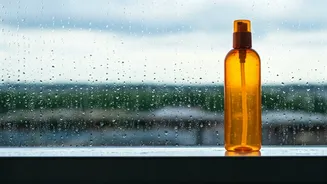



The Great Deception of a Cloudy Sky
On an overcast day, the sun’s warmth and brightness are muted, lulling us into a false sense of security. [8] Because we don't feel the heat, we mistakenly believe we are safe from ultraviolet (UV) radiation. [17, 18] This is a critical error. The perceptible
metrics of light and temperature have little to do with the intensity of invisible UV rays that cause skin damage. [8] Studies show that up to 80% of the sun's UV rays can pass through clouds, meaning your skin is still vulnerable even when the sun is hidden. [1, 4, 9, 10]
Meet the Invisible Culprits: UVA and UVB
To understand the risk, it's important to know the difference between the two main types of UV rays that reach us: UVA and UVB. [7, 18] UVB rays have a shorter wavelength and are the primary cause of sunburn. [1, 7] Clouds are fairly effective at blocking a portion of these, which is why you might not turn red on an overcast day. [9] However, UVA rays have a longer wavelength, allowing them to penetrate clouds, glass, and deeper layers of your skin with ease. [6, 7, 9] These are the rays responsible for premature ageing, wrinkles, and contributing significantly to skin cancer risk. [10, 18] Worryingly, UVA rays account for up to 95% of the UV radiation that reaches the Earth's surface and their intensity remains substantial year-round. [6, 9, 18]
The Surprising 'Broken-Cloud Effect'
Counterintuitively, a partly cloudy day can sometimes be even more dangerous than a completely clear one. [8] This is due to a phenomenon known as the "broken-cloud effect" or "cloud enhancement". [1, 5, 11] When the sun passes through gaps between scattered, fluffy clouds, the edges of those clouds can reflect and scatter the UV rays, actually increasing the intensity of radiation reaching the ground. [1, 8, 11] Some studies have found that partly cloudy skies can increase DNA-damaging UV-B rays by up to 40% compared to a clear sky. [5, 16]
It’s About Cumulative Damage, Not Just Burns
Relying on whether or not you get a sunburn is a poor gauge of skin damage. [8] Chronic, low-level exposure to UVA rays—the kind you get on cloudy days, while driving, or sitting near a window—causes significant cumulative harm over a lifetime. [2, 7] This "incidental" exposure accelerates skin ageing, leading to wrinkles and a leathery texture, and raises the long-term risk for skin cancers like basal cell and squamous cell carcinoma. [2, 20] Any change in skin colour, including a tan, is a sign that UV radiation has damaged your skin. [4] This long-term damage is why daily protection is so crucial, not just for beach days.
Your Year-Round Sunscreen Strategy
The expert consensus is clear: sunscreen is a daily necessity, regardless of the weather. [13, 15] For effective protection, you should use a broad-spectrum sunscreen, which shields you from both UVA and UVB rays, with an SPF of 30 or higher. [3, 13, 15] An SPF of 30 blocks about 97% of UVB rays. [3, 13] The key is consistent and correct application. Apply it as the last step in your morning skincare routine, about 15 minutes before heading out. [15] Remember to cover all exposed skin, including your face, neck, and hands. If you're outdoors for extended periods, reapplication every two hours is essential. [1, 13] The best sunscreen is ultimately the one you will use consistently, so find a formula you like and make it a non-negotiable habit. [13]