




A Perfect Pairing of Cool and Spicy
The magic of Korean cucumber dishes lies in a simple yet brilliant contrast. The cool, crisp, and hydrating crunch of a fresh cucumber provides the perfect canvas for the complex, fiery, and savoury notes of Korean seasonings. While cucumbers are over
95% water, this quality allows them to act as a refreshing counterpoint to heat, cleansing the palate while delivering a satisfying snap. It’s a combination that wakes up the senses and adds a dynamic layer to any meal, whether it's a rich barbecue or a simple bowl of rice.
The Essential Korean Pantry
To unlock these flavours, you’ll need a few key ingredients. Gochugaru, or Korean chili flakes, is the star. Unlike standard chili flakes, it has a fruity, smoky, and moderately spicy profile that provides a vibrant red hue without overwhelming heat. Toasted sesame oil brings a deep, nutty aroma that rounds out the dish. Rice vinegar adds a gentle tang, while soy sauce or fish sauce provides a savoury, umami depth. Minced garlic and chopped scallions are the aromatic foundation, and a touch of sugar is often used to balance all the elements. Some recipes also call for gochujang, a fermented chili paste, which adds a thicker texture and a deeper, sweeter heat.
Meet Oi Muchim: The Famous Spicy Salad
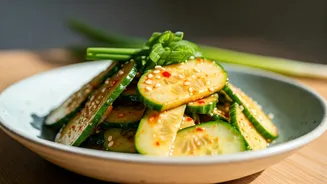
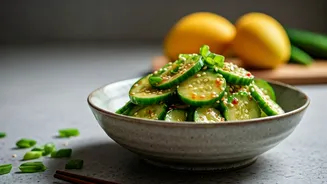
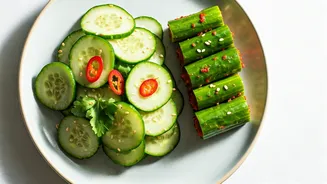
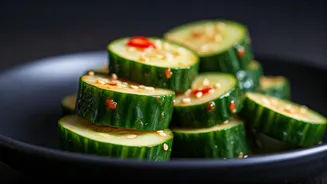
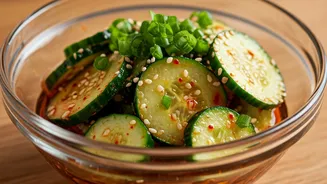
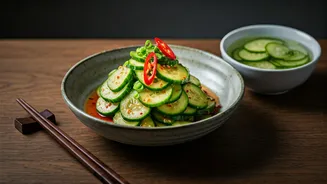
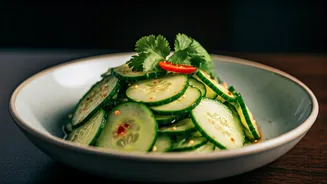
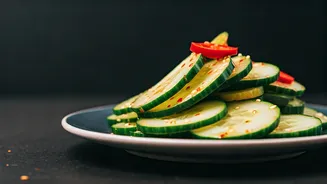
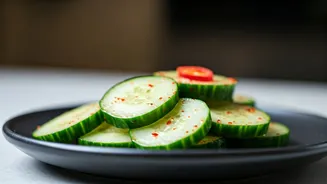
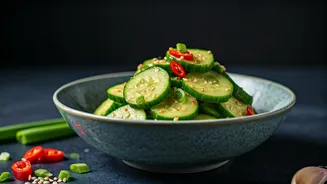
The most popular and accessible Korean cucumber dish is Oi Muchim, a spicy seasoned cucumber salad. This side dish, or banchan, is beloved for how quickly it comes together. Thinly sliced cucumbers are lightly salted to draw out excess water, which is a crucial step to ensure they remain crunchy and the final dish isn't watery. The cucumbers are then tossed with a dressing of gochugaru, sesame oil, garlic, vinegar, and a little sugar. The result is a crisp, spicy, and refreshing salad that can be served immediately. It's the perfect introduction to the world of Korean cucumber preparations.
Going Deeper with Oi Sobagi
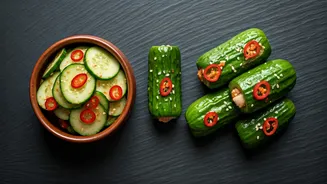
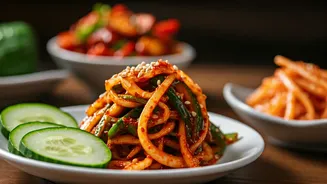
For those who enjoy a more complex flavour, there is Oi Sobagi, or stuffed cucumber kimchi. This dish takes more preparation but offers a deeper, fermented tang. Instead of being thinly sliced, cucumbers are cut to create pockets which are then filled with a spicy paste. This stuffing is typically made from a mixture of gochugaru, garlic, ginger, and Korean chives or scallions. Unlike Oi Muchim, Oi Sobagi is a type of kimchi that can be eaten fresh or left to ferment for a day or two, which develops its signature tangy flavour. It’s a summer favourite in Korea, celebrated for its intense crunch and robust taste.
Tips for Perfect Korean Cucumbers
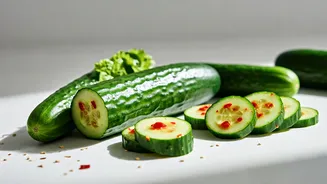
To achieve restaurant-quality results at home, a few simple techniques make all the difference. Start with the right cucumbers; thin-skinned varieties like Persian, Kirby, or English cucumbers work best as they have fewer seeds and don't require peeling. The most important step is salting the cucumbers. After slicing, toss them with salt and let them sit for 15-20 minutes. This process draws out excess moisture, preventing a soggy salad and ensuring a superior crunch. After salting, be sure to drain the liquid well. Some recipes call for a quick rinse if they are too salty. Finally, don't be afraid to mix the salad by hand to ensure every slice is thoroughly coated in the delicious seasoning.