






The Challenge of a Cloudy Day
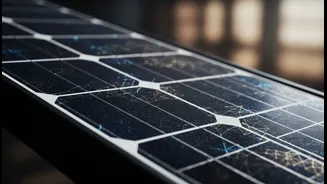
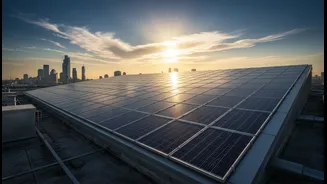
Conventional solar panels, typically made from silicon, are at their best under direct, intense sunlight. While they can still generate some electricity on cloudy days, their output drops significantly, sometimes to as low as 10-25% of their rated capacity.
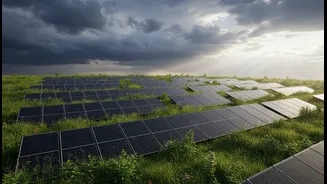
This intermittency is a major hurdle for solar energy adoption, especially in regions with frequent overcast skies or long monsoon seasons. In India, for example, the heavy cloud cover during the monsoon can lead to a substantial dip in solar power generation, creating instability for the grid and financial stress for plant operators. This reliance on perfect weather is the fundamental problem that next-generation solar materials aim to solve.
Enter Perovskites: A New Dawn for Solar
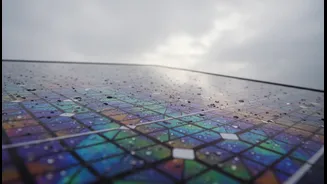
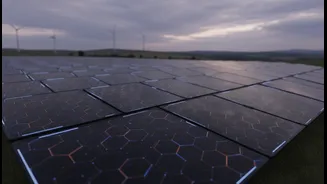
The most promising category of cloud-tolerant materials is a class of compounds known as perovskites. Unlike rigid silicon, perovskites have a unique crystal structure that can be 'tuned' to absorb a wider spectrum of light. This means they are not only good at capturing direct sunlight but are also exceptionally efficient at converting diffused, low-level light—the kind prevalent on cloudy days or even indoors—into electricity. Their structure helps them work effectively even under low-light conditions, maintaining a relatively high voltage where traditional silicon cells would see a much sharper drop-off. This superior electronic property is what makes them a game-changer for all-weather energy generation.
Solving India’s Monsoon Problem
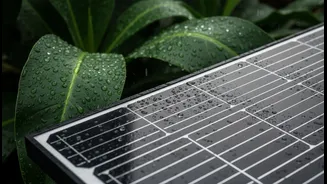
For a country like India with ambitious solar targets, the monsoon season represents a significant challenge. For several months a year, reduced sunlight and heavy cloud cover impact the country's solar output, sometimes causing sudden, massive drops in generation that can destabilize the power grid. Cloud-tolerant materials offer a direct solution to this seasonal bottleneck. Panels that can maintain a higher, more consistent output during cloudy and rainy months would make India's solar infrastructure far more robust and dependable year-round. This would not only enhance grid stability but also improve the financial viability of solar projects, which currently have to account for seasonal dips in performance. It turns a major liability—unpredictable weather—into a more manageable variable.
The Road to Commercial Viability
While perovskite solar cells have achieved incredible efficiency levels in laboratory settings, several challenges remain before they appear on every rooftop. The primary hurdles are long-term stability and durability. Early perovskite materials tended to degrade when exposed to moisture, heat, and UV light, which are all abundant in real-world conditions. Another concern is the use of lead in many perovskite formulas, prompting research into more environmentally benign alternatives. However, rapid progress is being made. Researchers are developing new formulations and protective layers to enhance durability, and the potential for low-cost, high-volume manufacturing using printing techniques could eventually make perovskites cheaper than silicon.
A Future Powered by Smarter Solar
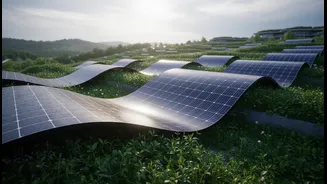
Cloud-tolerant materials represent a paradigm shift in how we think about solar power. The goal is no longer just to capture the sun at its brightest, but to harvest energy from the entire sky, under all conditions. As the technology matures, we can imagine a future where solar energy is far more integrated into our lives. Think flexible, lightweight solar cells integrated into windows, vehicle roofs, or even clothing, all capable of generating power from ambient light. For India, this technology is more than just a novelty; it is a critical tool for achieving energy security and its ambitious renewable energy goals. By making solar power more reliable and versatile, these advanced materials are paving the way for a truly sustainable energy future.