




Why is Kolkata often called the 'London of India'? This label is more than just a catchy phrase; it’s a direct link to a time when the city was the jewel of the British Empire, shaped by colonial ambitions, architecture, and culture.
The Empire's Second City
The story begins with
Kolkata, then Calcutta, becoming the capital of British India in 1772. For nearly 140 years, until the capital shifted to Delhi in 1911, it was the administrative, commercial, and political epicentre of British rule in the subcontinent. During this era, it was often considered the second most important city in the British Empire, surpassed only by London itself. The British East India Company and later the Crown invested heavily in developing the city's infrastructure to mirror the grandeur of their own capital, establishing it as a powerhouse of trade and governance.
An Architectural Mirror Image
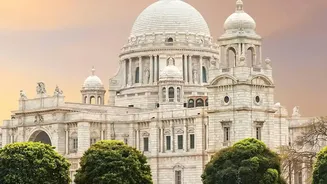
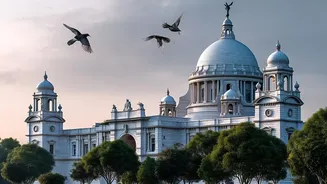
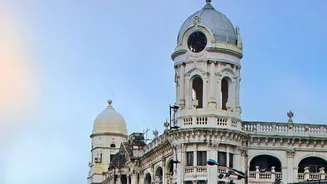
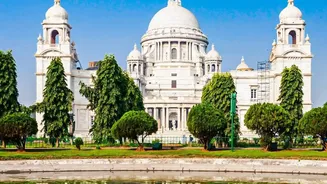
The most visible reason for the comparison lies in the city's stunning colonial architecture. The British designed and constructed a multitude of grand public buildings, monuments, and wide avenues in prevailing European styles, particularly Victorian, Neoclassical, and Gothic Revival. Landmarks like the magnificent Victoria Memorial, the Gothic-inspired Calcutta High Court, the stately General Post Office (GPO), and the former administrative hub of the Writers' Building were all intended to project imperial power and permanence. Strolling through the city's central districts, one can still see these structures, which strongly evoke the architectural feel of London.
Life Along the Hooghly
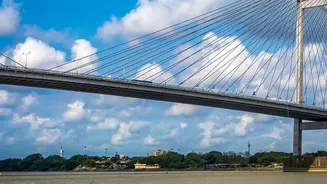
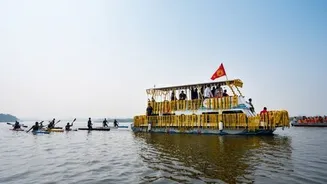
The geographical settings of both cities also draw a strong parallel. London famously developed along the banks of the River Thames, which was crucial for its growth as a centre of global trade. Similarly, Kolkata's development is intrinsically linked to the Hooghly River, a major distributary of the Ganges. The Hooghly served as a vital artery for commerce during the colonial era, with its bustling port connecting the hinterland's resources, like jute and tea, to the rest of the world. This riverside similarity, with its ghats and promenades, reinforces the visual and economic connection between the two metropolises.
A Cultural and Intellectual Hub
Beyond buildings and rivers, the nickname also touches upon a shared intellectual and cultural vibrancy. For over a century, Kolkata was the undisputed artistic and intellectual capital of India, led by towering figures like Nobel laureate Rabindranath Tagore and filmmaker Satyajit Ray. This 'Baboo culture', a unique fusion of English liberalism and indigenous revivalism, fostered a rich environment for literature, arts, and education. The city's deep appreciation for intellectual pursuits drew comparisons to London's own status as a global cultural centre. Kolkata is home to the first modern university in South Asia, the University of Calcutta, and India's largest and oldest museum, the Indian Museum.
A Label for Today?
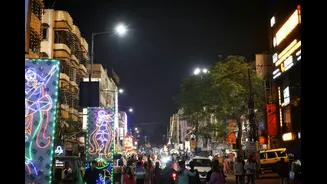
While the historical foundations of the 'London of India' nickname are clear, its modern relevance is a topic of discussion. In recent years, there have been beautification projects aimed at revitalizing the city's colonial-era feel, including plans for a 'Kolkata Eye' ferris wheel inspired by the London Eye. However, many argue that while the architectural legacy is undeniable, Kolkata has forged its own unique and vibrant identity. It is the only Indian city that still operates a tram network, a charming relic of a bygone era that adds to its distinct character. Modern Kolkata is a bustling metropolis where historical monuments stand beside new infrastructure, a city that cherishes its past while forging a dynamic future entirely its own.