



The Universe’s Original Building Blocks
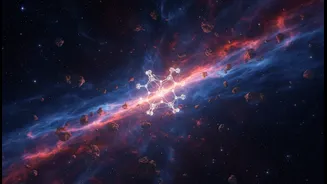
First, let's be clear: this isn't the dust on your bookshelf. Interstellar dust consists of microscopic grains of carbon, silicates, and other elements, often coated in ice. These particles are born in the violent atmospheres of dying stars and are scattered
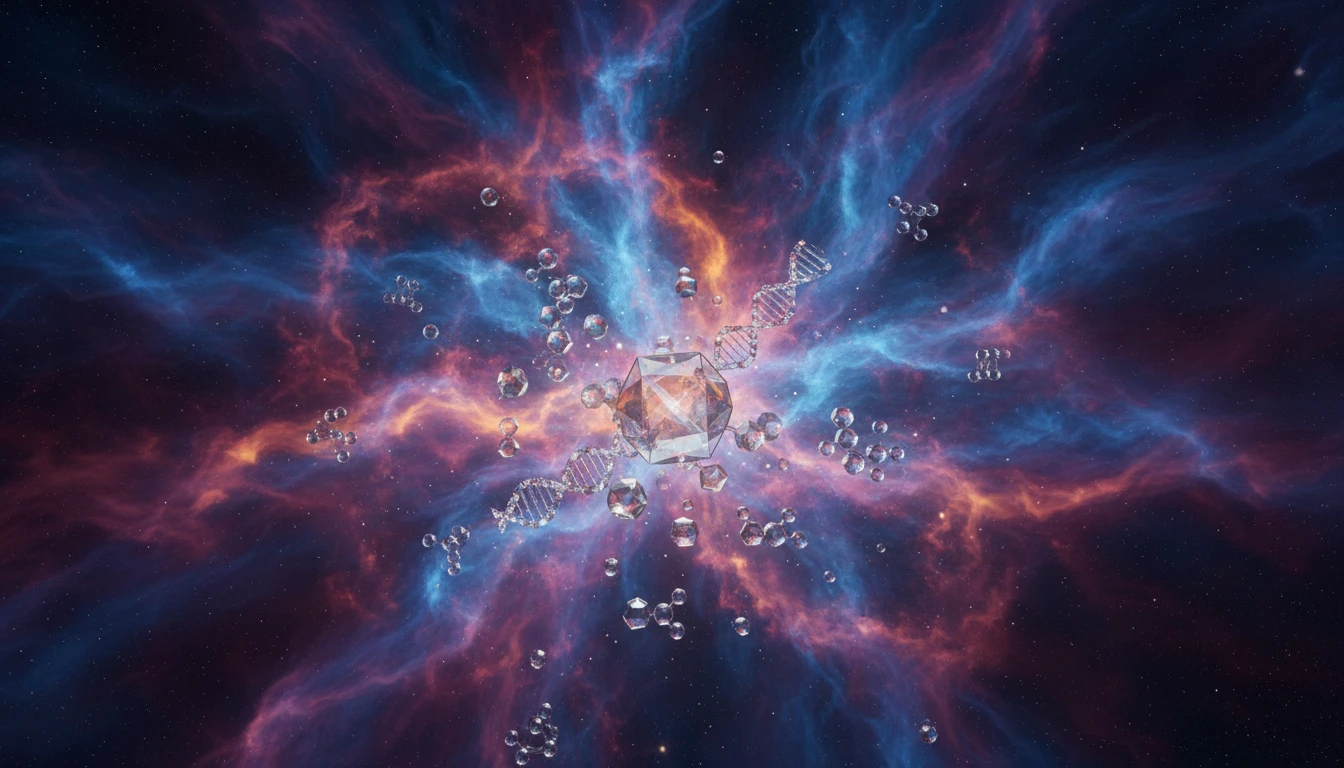
across the cosmos. Though they make up only about one percent of the mass between stars, they are profoundly important. These grains are the raw material for new stars and planets, and their surfaces act as tiny chemical factories where the first complex molecules—the precursors to life—are formed. They are, in essence, the fundamental construction material of the universe.
A Recipe for Stardust
If space is full of this dust, why not just collect it? While missions like NASA's Stardust have successfully captured a few precious grains, the process is incredibly difficult, and the samples are infinitesimal and can be altered on collection. Creating it in a lab offers a controlled, repeatable way to study its properties. Scientists do this by mimicking the harsh environment of space. In a vacuum chamber, they introduce a cocktail of simple gases and use energy—like plasma from an electrical charge—to break them down and force them to recombine into solid dust particles. The results are then analysed to see if their chemical and physical 'fingerprints' match what telescopes observe in distant nebulae.
Unlocking Our Cosmic Origins
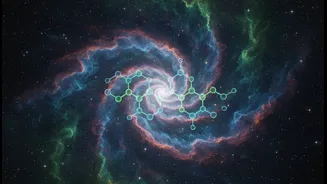
One of the primary drivers for this research is answering one of humanity's biggest questions: how did life begin? Recent discoveries have shown that the building blocks of life can form in space. In July 2026, astronomers detected a sugar molecule called erythrulose for the first time in a dust cloud near the center of the Milky Way. Studies also suggest that amino acids, the foundation of proteins, can hitch a ride on these dust grains. By recreating these cosmic chemical factories on Earth, scientists can test theories about how these life-critical molecules formed and were delivered to a young Earth via comets and asteroids, potentially kick-starting biology.
Blueprints for Next-Generation Materials
For the advanced aerospace industry, the motivation is also deeply practical. The structures that form under the extreme conditions of space have properties we can't easily replicate on Earth. Synthesizing these nano-scale dust grains is not just about understanding the past; it's about reverse-engineering nature's most resilient materials for the future. Studying how these particles self-assemble could provide blueprints for novel materials with extraordinary strength-to-weight ratios, radiation resistance, or thermal properties. While still in its early stages, this research represents a long-term investment in a new paradigm of materials science, moving beyond alloys and composites to materials designed atom by atom.
The Urgency of Now
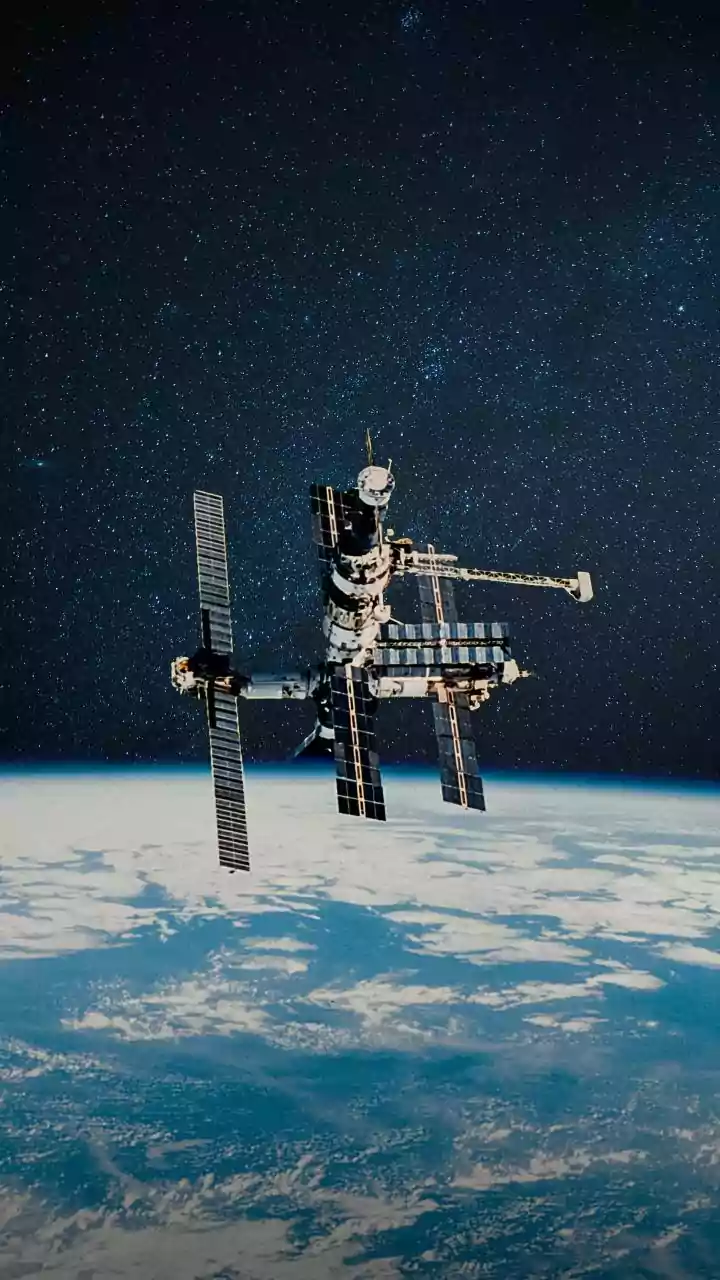
The recent surge in this field is driven by a convergence of factors. Our analytical tools, from electron microscopes to synchrotron light sources, have become powerful enough to study these minuscule man-made particles in exquisite detail. Furthermore, creating dust analogues is essential for calibrating the sensitive instruments on current and future space probes, ensuring the data they send back is accurate. This allows scientists to better interpret information from missions exploring comets, asteroids, and the space between planets. As private and public investment in space exploration grows, understanding the fundamental environment of space—including its most granular components—has become a pressing commercial and scientific priority.