





The Daily Gold Rate Isn't So Simple
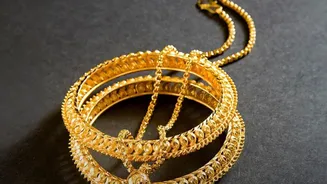
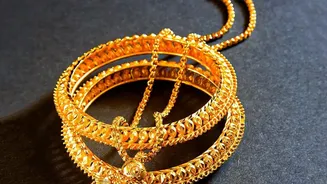
The foundation of your bill is, of course, the price of gold itself. However, it's crucial to know which rate is being applied. Jewellers display rates for both 24-karat (99.9% pure) and 22-karat (91.6% pure) gold. Since pure 24K gold is too soft for most
jewellery, ornaments are typically made from 22K gold, where alloys are mixed in for durability. The price of 22K gold is proportionally lower than 24K gold. Before anything else, confirm the jeweller is using the correct rate for the purity of your chosen piece. The price is calculated by multiplying the gold rate per gram by the weight of the gold in your item.
Understanding Making Charges
Making charges are the costs of craftsmanship required to turn raw gold into a piece of jewellery. This is a significant component of the final bill and can vary widely, typically ranging from 5% to as high as 25% of the gold's value. These charges are applied in two main ways: as a percentage of the gold's value or as a flat rate per gram of gold. Machine-made items like simple chains often have lower making charges, while intricate, handcrafted designs command higher fees. This charge is often negotiable, especially during festive seasons or if you are a regular customer. It pays to ask if there’s any flexibility, as this is one area where you can achieve significant savings.
The Murky Waters of Wastage Charges
Often a confusing line item for buyers, 'wastage' or 'Value Addition (VA)' is a charge jewellers levy to account for the small amount of gold lost during the manufacturing process. When gold is cut, soldered, and polished, a fraction of it is lost. Jewellers pass this cost on to the customer, typically as a percentage of the ornament's weight, which can range from around 5% to 15%. For very complex designs, this can be even higher. Some jewellers combine making and wastage charges into a single 'VA' figure. It's important to ask for a clear breakdown of this cost, as it can be inflated and is another potential area for negotiation.
The Unavoidable Goods and Services Tax (GST)
The final price of your gold jewellery is also increased by the Goods and Services Tax (GST). A 3% GST is levied on the total value of the gold, which includes the price of the gold itself plus the making and wastage charges. Furthermore, a separate 5% GST is applicable specifically on the making charges if they are billed as a separate service. This tax is uniform across the country, replacing the varied state-level taxes of the pre-GST era. Always ensure your bill clearly shows the GST components calculated correctly on the taxable value of your purchase.
Hallmarking Fees: A Small Price for Purity
To ensure the purity of the gold you're buying, the Bureau of Indian Standards (BIS) mandates hallmarking for gold jewellery. This certification guarantees that the gold meets the stated purity standard, such as 916 for 22K gold. For this service, a nominal, fixed fee is charged per item, not based on weight. As of recent revisions, the fee is ₹45 per gold article. While it's a small amount, this charge is your assurance against being sold lower-purity gold. Always insist on buying only BIS-hallmarked jewellery and check for the fee on your invoice.
Don't Forget the Extras
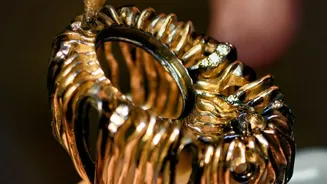
If your jewellery is studded with precious or semi-precious stones, their cost will be added to the bill separately. Be cautious here: some jewellers weigh the entire piece, including the stones, and charge the gold rate for the total weight. However, during a buy-back or exchange, they will often deduct the weight of the stones. Clarify how the net gold weight is calculated. Also, inquire about the jeweller's buy-back or exchange policy. Understanding these terms upfront can save you from disappointment later, as making charges are typically not recovered upon resale.