





What Exactly Is Lotus Stem?
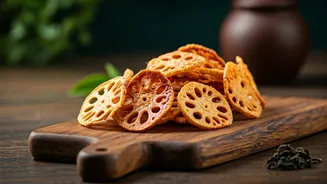
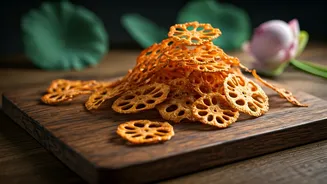
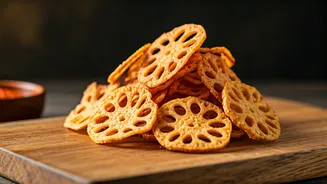
Known as *kamal kakdi* in India, the lotus stem (or more accurately, rhizome) is the edible part of the lotus plant that grows underwater. When sliced, it reveals a beautiful, lace-like pattern of hollow tubes, making it one of the most aesthetically
pleasing vegetables. Popular in various Asian cuisines, it has a mild, slightly sweet, and nutty flavour, often compared to a water chestnut. Its most defining characteristic is its delightful crunch, which it manages to retain even after being cooked. Traditionally used in curries, stir-fries, and pickles, lotus stem is now gaining recognition as a fantastic base for snacks. It's a versatile ingredient that readily absorbs the flavours of whatever it's cooked with, making it a perfect canvas for spices.
Why Baked is Better
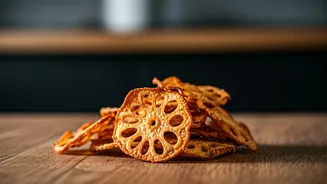
While deep-fried lotus stem chips are delicious, baking offers a healthier alternative without sacrificing the crunch. By using the oven, you can control the amount of oil, creating a lighter snack that you can feel good about enjoying any time. Baking also provides a more even, golden-brown finish. The key is to get the temperature and timing just right. Furthermore, the nutritional benefits of the lotus stem shine through when baked. It's a good source of dietary fibre, which aids digestion, and is packed with essential nutrients like Vitamin C, an antioxidant that boosts immunity, and potassium, which is important for heart health. So, by choosing to bake, you're not just making a tasty snack; you're also making a nutritious one.
Your Step-by-Step Guide to Crispy Chips
Ready to make your own? Here's a simple, reliable recipe synthesized from the best techniques. **Ingredients:** * 2 fresh lotus stems (*kamal kakdi*) * 1 tablespoon olive oil or vegetable oil * 1/2 teaspoon salt (or to taste) * 1/2 teaspoon red chilli powder (or paprika for less heat) * 1/4 teaspoon turmeric powder (optional, for colour) * 1/2 teaspoon chaat masala (for serving) **Instructions:** 1. **Prep the Lotus Stem:** The most crucial step is cleaning. Peel the brown skin off the lotus stems using a vegetable peeler. Cut off the ends and slice the stem into very thin, uniform rounds, about 1/16th of an inch thick. A mandoline slicer is highly recommended for even slices, which is key to uniform crisping. Rinse the slices thoroughly under running water, using a chopstick or small brush to clean out any dirt from the channels. 2. **Dry the Slices:** This is a non-negotiable step for crispiness. After washing, soak the slices in a bowl of water with a little salt or vinegar for a few minutes to prevent browning. Then, drain them completely and pat each slice thoroughly dry with a clean kitchen towel or paper towels. Any excess moisture will steam the chips instead of crisping them. 3. **Season:** In a large bowl, toss the dry lotus stem slices with olive oil, salt, red chilli powder, and turmeric until every slice is lightly and evenly coated. Be gentle to avoid breaking the delicate slices. 4. **Bake to Perfection:** Preheat your oven to 200°C (400°F). Arrange the seasoned slices in a single layer on a baking sheet lined with parchment paper. Do not overcrowd the pan, as this will cause them to steam. Use two trays if necessary. Bake for 10 minutes, then carefully remove the tray, flip each chip with tongs, and bake for another 7-10 minutes. Keep a close eye on them in the final minutes, as they can go from golden to burnt very quickly. They will crisp up further as they cool. 5. **Serve:** Once out of the oven, sprinkle the hot chips with a dash of chaat masala for that classic Indian snack flavour. Let them cool on a wire rack for maximum crispiness.
Flavour Twists and Serving Ideas
The beauty of these chips lies in their versatility. While a simple salt and chilli combination is classic, don't hesitate to experiment. Try a mix of garlic powder and dried rosemary, or a sprinkle of smoky paprika. For a different flavour profile, you could toss them with peri-peri seasoning, onion powder, or even a light dusting of garam masala before baking. These chips are fantastic on their own as an evening snack with tea or coffee. They also make an excellent, crunchy topping for soups and salads, or can be served alongside your favourite dips like hummus, yogurt-based dips, or a spicy Schezwan sauce. Store any leftovers in an airtight container, and they should stay crispy for a couple of days.