




Why is Kolkata often called 'The London of India'? The comparison is more than a casual observation; it's a legacy written in stone and culture, rooted in a time when the city was the jewel of the British Empire.
The Empire's Second City
To understand the nickname, one must first
travel back in time. For nearly 140 years, from 1772 to 1911, Kolkata—then known as Calcutta—served as the capital of British India. Its strategic location on the Hooghly River made it a bustling port and the commercial heart of the British East India Company's operations. During this period, it grew to become the second most important city in the British Empire, surpassed only by London itself. The British administration invested heavily in constructing a capital that would project imperial power and prestige, modeling its infrastructure and architecture on European, and specifically London's, standards.
An Architectural Echo
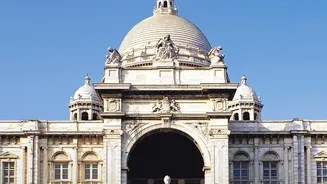
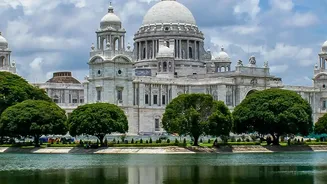
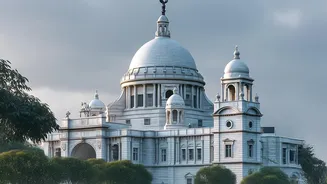
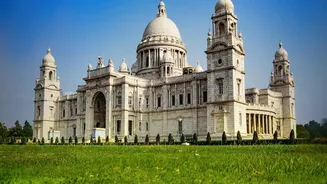
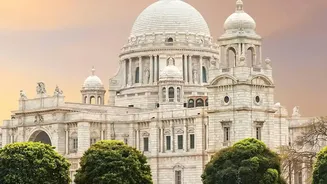
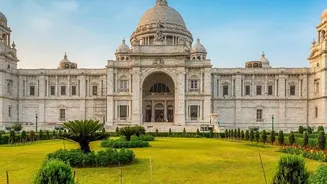
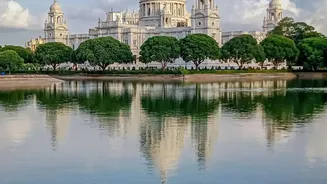
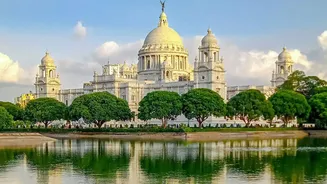
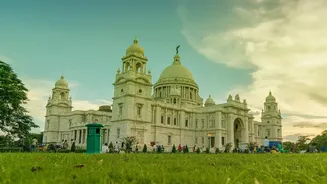
The most visible evidence of this London connection lies in Kolkata's stunning colonial architecture. Grand buildings designed in Neo-Gothic, Neoclassical, and Victorian styles still dominate parts of the city. The most iconic of these is the Victoria Memorial, a magnificent white marble monument built to honour Queen Victoria, which blends Indo-Saracenic styles with a central dome reminiscent of London's St. Paul's Cathedral. Other significant structures include the Calcutta High Court, designed in a Gothic Revival style, the stately Raj Bhavan, which was once the residence of British Viceroys, and the Writers' Building, the former administrative hub. These buildings created a cityscape that felt distinctly European, cementing its reputation as a British-designed metropolis.
Life on the Hooghly
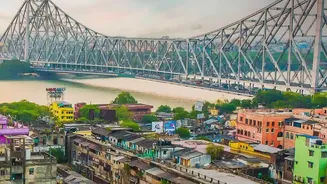
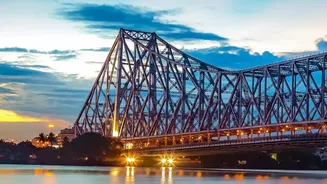
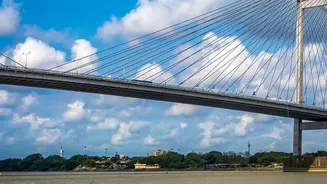
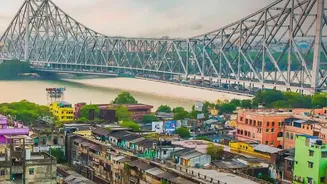
The resemblance extends beyond grand monuments to the very fabric of urban life. Just as London developed along the River Thames, Kolkata's growth was intrinsically linked to the Hooghly River. This shared identity as a riverside city shaped trade, transport, and culture. Another striking parallel is Kolkata's tram system. Introduced in the 19th century, it is the only remaining tram network in India. The sight of these slow-moving vehicles navigating busy streets evokes a distinct old-world European charm that has faded from most other Indian cities. Even the Howrah Bridge, an engineering marvel from the 1940s, serves as a powerful symbol connecting the city, much like London's own iconic bridges over the Thames.
A Tale of Two Cultures
The connection wasn't purely physical. As the capital, Kolkata became a crucible for cultural and intellectual exchange. The 19th century saw the Bengal Renaissance, a period of profound social, cultural, and artistic awakening. The city became a centre for education and intellectualism, home to literary figures, philosophers, and revolutionaries. Institutions like the Asiatic Society of Bengal, established in 1784, fostered a unique environment where British officials and Bengali scholars interacted, creating a new 'Bhadralok' or educated elite. This vibrant intellectual scene, with its clubs, societies, and universities, mirrored the cultural life of London, establishing Kolkata as a hub of progressive thought and artistic expression.