


Mambazha Pulissery (Ripe Mango Curry)
As summer arrives in Kerala, it brings with it an abundance of sweet, ripe mangoes. This seasonal bounty is the star of Mambazha Pulissery, a quintessential summer curry. The dish is a beautiful balancing act of flavours, combining the sweetness of ripe mangoes with the subtle
tang of yoghurt and the creaminess of a ground coconut paste. It’s a light, comforting curry often enjoyed with steamed rice, embodying the taste of a Keralan summer in every spoonful. Traditionally, small, fragrant local mango varieties are used, cooked whole in the fragrant, spiced gravy.
Avial (Mixed Vegetable Stew)
Avial is a cornerstone of the Onam Sadya, the grand vegetarian feast served during the harvest festival. It is a testament to seasonal eating, traditionally made with a mix of vegetables that are abundant during the harvest period. This can include everything from drumsticks, raw banana, and pumpkin to ash gourd and carrots, all cut into uniform batons. The vegetables are gently cooked to retain a slight bite and then enveloped in a coarse paste of fresh coconut, green chillies, and cumin. A final swirl of sour curd and a drizzle of fragrant coconut oil complete this harmonious and nutritious stew.
Mathanga Erissery (Pumpkin and Lentil Curry)
Another star of the Onam Sadya, Mathanga Erissery celebrates the humble pumpkin, which is in season during the festival. This mild and comforting curry combines soft-cooked pumpkin and black-eyed peas in a creamy coconut gravy. What sets Erissery apart is its final tempering: mustard seeds, red chillies, and curry leaves are sizzled in coconut oil and, most importantly, finished with a generous amount of toasted grated coconut. This final touch adds a delightful texture and a nutty aroma that beautifully complements the sweetness of the pumpkin.
Chakka Pradhaman (Jackfruit Payasam)
When jackfruit season arrives in Kerala, the air is filled with its unique, sweet aroma. Chakka Pradhaman is a beloved dessert that makes the most of this seasonal giant. It's a rich and luscious payasam (pudding) made by slow-cooking ripe jackfruit pulp with jaggery and coconut milk. Often, households prepare a jackfruit preserve called Chakka Varattiyathu during the season, which allows them to make this delightful dessert all year round. Finished with ghee-roasted coconut bits and cashews, this pradhaman is a true festive indulgence.
Ila Ada (Steamed Rice Parcels)
Ila Ada is a traditional tea-time snack, especially popular during the monsoon season. These delicate parcels are made by spreading a thin layer of rice flour dough onto a piece of banana leaf. The dough is then filled with a sweet mixture of freshly grated coconut and melted jaggery, often scented with cardamom. The leaf is folded and the entire parcel is steamed. The steaming process infuses the Ada with the subtle, earthy fragrance of the banana leaf, creating a wholesome and aromatic treat that is both healthy and delicious.
Puttu and Kadala Curry (Steamed Rice Cake and Black Chickpea Curry)
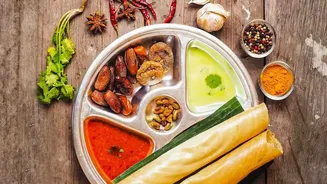
A quintessential Kerala breakfast, Puttu and Kadala Curry is a comforting and nutritious way to start the day. Puttu is a unique steamed cylinder of ground rice layered with grated coconut. While available year-round, its warm, hearty nature is especially welcome during the cooler monsoon months. It is perfectly paired with Kadala Curry, a robust and spicy gravy made from black chickpeas (kala chana). The curry is simmered in a fragrant blend of roasted spices and coconut, creating a perfect foil for the soft, subtle Puttu.
Parippu Curry (Moong Dal Curry)
Often the first dish to be served during a traditional Sadya, Parippu Curry is the epitome of simple, soulful food. It is a gentle, nourishing curry made from split yellow moong dal, cooked until soft and creamy. The dal is then lightly seasoned with turmeric and simmered with a simple coconut paste. The final touch is a tempering of mustard seeds and curry leaves in ghee or coconut oil, which adds a layer of aroma and flavour. Served with hot rice and a dollop of ghee, it is a humble but essential part of Kerala's culinary tradition, representing comfort and wholesomeness.