




The Martian Air Problem
Landing on Mars and stepping out without a helmet is a quick route to disaster. The Martian atmosphere is incredibly thin, less than 1% the density of Earth's, and composed of about 95% carbon dioxide (CO2). This is not only unbreathable but also offers
little protection from solar radiation. For humans to survive, let alone establish a long-term presence, they need a reliable source of oxygen. Carting all the necessary oxygen from Earth is prohibitively expensive and logistically nightmarish. To make a Mars mission sustainable, astronauts must be able to 'live off the land' by generating oxygen from local resources, a concept known as In-Situ Resource Utilization (ISRU).
Electrolysis: A Breath of Fresh Air
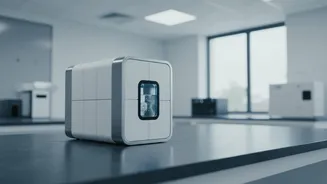
This is where electrolysis comes in. In simple terms, it's a process that uses electricity to split chemical compounds. On Mars, the target is the abundant carbon dioxide. A process called solid oxide electrolysis heats CO2 to very high temperatures (around 800°C) and passes it over specialized ceramic materials. An electrical current then splits the CO2 molecule (one carbon atom, two oxygen atoms) into breathable oxygen (O2) and carbon monoxide (CO), which is treated as waste. This isn't just a theory; it's a proven concept, thanks to a toaster-sized instrument on Mars right now.
A Real-World Test: The MOXIE Experiment
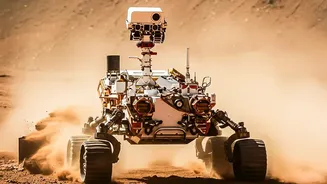
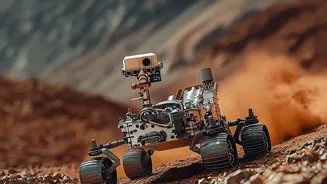
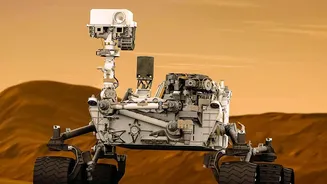
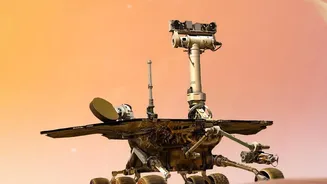
NASA's Perseverance rover, which landed on Mars in 2021, carries the Mars Oxygen In-Situ Resource Utilization Experiment, or MOXIE. Over its mission, MOXIE has successfully and repeatedly pulled in the Martian atmosphere and churned out pure oxygen. On its final run in 2023, it generated nearly 10 grams of oxygen in an hour, and in total produced 122 grams over 16 runs—enough to keep a small dog alive for about 10 hours. MOXIE has been hailed as a resounding success, proving that the fundamental technology works in the harsh Martian environment, through different seasons and times of day. It is the first time a natural resource has been extracted from another planet for human use.
The Immense Challenge of Scaling Up
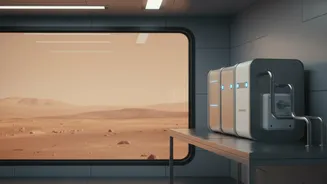
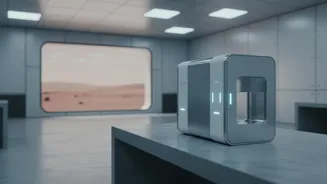
While MOXIE is a groundbreaking success, it is only a small-scale demonstration. The amount of oxygen needed for a human mission is staggering. A crew of four astronauts would require about one metric ton of oxygen just for breathing over the course of a year. But the real driver is rocket propellant; launching a Mars Ascent Vehicle to bring those astronauts back to Earth could require around 25 metric tons of oxygen to burn just 7 tons of fuel. A scaled-up system would need to produce 2-3 kilograms of oxygen per hour, running continuously for thousands of hours before the crew even arrives. MOXIE's peak production was 12 grams per hour. This leap from grams to kilograms per hour is the central challenge. The successor to MOXIE needs to be hundreds of times larger and more efficient.
What 'Improved' Systems Must Deliver
Improving electrolysis systems for Mars means tackling several key issues. First is efficiency. A significant portion of MOXIE's power went to its compressor and heating elements, not the electrolysis itself. Future systems must be optimized to convert more power directly into oxygen production. Second is longevity and durability. A mission-scale plant must run reliably for over 10,000 hours, enduring the thermal stress of cycling on and off and the abrasive Martian dust. This requires more robust materials and designs that can tolerate these conditions without significant degradation. Finally, automation and autonomy are crucial. These plants will need to operate for more than a year without human intervention, diagnosing and fixing their own problems. Research is also exploring alternative methods, like plasma technology or electrolysis of salty Martian water (brine), which could potentially produce oxygen and hydrogen fuel far more efficiently than CO2 electrolysis.