





Beyond the Cucumber Roll
For years, vegetarian sushi was an afterthought on most menus—a predictable lineup of cucumber, avocado, and asparagus rolls designed to placate, not excite. While perfectly fine, it rarely captured the artistry and complexity that makes traditional sushi a celebrated
cuisine. But a dramatic shift is underway. A new wave of chefs is dedicating their craft to elevating plant-based sushi into a standalone art form, creating dishes that are as ambitious and flavourful as their seafood counterparts. This isn't about substitution; it's about innovation. The goal is no longer just to offer a 'veg option' but to create a complete sensory experience that rivals, and sometimes even surpasses, the original.
The Art of Plant-Based Alchemy
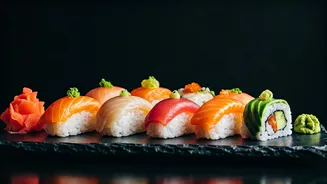
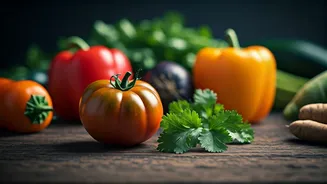
So, how does a tomato mimic the rich, fatty texture of tuna? It comes down to a blend of classical techniques and modern creativity. Chefs are treating vegetables with the same reverence once reserved for premium seafood. Tomatoes are blanched, peeled, and marinated in concoctions of soy sauce, ginger, and sesame oil to create a convincing 'ahi' substitute. Eggplant is grilled and glazed with a sweet and savoury sauce to replicate the smoky depth of 'unagi' (eel). Mushrooms, particularly varieties like king oyster and shiitake, are being seared, smoked, or cured to achieve textures ranging from tender scallop to firm fish. Other ingredients like konjac, a root vegetable, are used to create surprisingly realistic shrimp and squid analogues. It’s a form of culinary alchemy, transforming humble produce into something extraordinary through technique and a deep understanding of umami.
A Feast for the Eyes (and the Algorithm)
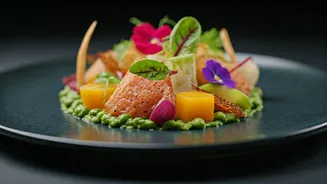
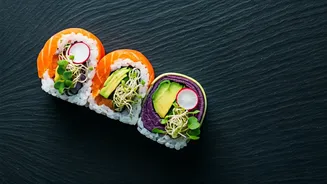
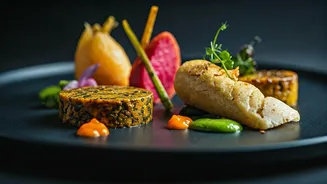
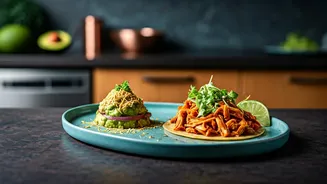
A key reason for this trend’s visibility—its so-called domination of food feeds—is its stunning visual appeal. Freed from the traditional palette of pink and white fish, chefs are playing with a rainbow of natural colours. You'll see rolls with vibrant beetroot, bright orange bell peppers, deep purple cabbage, and creamy yellow squash. The presentation is meticulous, often involving edible flowers, microgreens, and colourful sauces painted onto the plate. This inherent beauty makes high-end veg sushi incredibly photogenic. In an age where 'eating with your eyes' often begins on Instagram, a dish's visual appeal is crucial to its success. Every intricate roll and colourful platter is a shareable moment, fuelling a cycle of discovery and desire that has helped propel the trend into the mainstream.
Driven by Modern Values
The rise of high-end veg sushi isn't happening in a vacuum. It's perfectly aligned with a broader cultural shift towards more conscious consumption. Diners in India and around the world are increasingly interested in plant-based diets for a variety of reasons. Health is a major driver, with many seeking lighter, nutrient-dense meals. Environmental concerns are another; the sustainability of our oceans and the impact of commercial fishing are pushing consumers towards plant-based alternatives. And for a growing population of vegetarians and vegans, this trend finally offers an opportunity to participate fully in a sophisticated dining experience that was previously inaccessible. Restaurants from Mumbai to Bengaluru are now featuring dedicated plant-based omakase menus, signalling that this is no longer a niche market but a core part of modern fine dining.