




The Root of the Problem
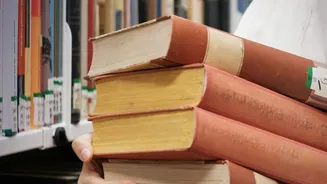
The controversy erupted after writer Perumal Murugan flagged major irregularities with nearly 1,800 books from a publisher named Agal Vilakku Pathippagam at a new library in Coimbatore. This was not an isolated incident. For years, there have been allegations
of deep-rooted issues in how Tamil Nadu's public libraries procure books. A 2019 petition, which led to a significant court order in June 2024, highlighted practices like republishing old, out-of-copyright works with new titles and authors, and repeatedly purchasing the same book in violation of rules. Investigations revealed books with fictitious author names, some suspiciously similar to celebrities, and others falsely attributed to renowned economists and even the poet Subramania Bharati. In some cases, ISBNs were fake or belonged to other books entirely.
Why the High Court Intervened
The Madras High Court took a strong stand, viewing the situation as a 'scam' that undermined public trust and the right to information. The court's intervention is based on a contempt petition, which argued that the state failed to comply with a June 2024 order mandating a transparent procurement policy. The bench, comprising Justices G.R. Swaminathan and M.D. Sumathi, noted that a fraud of this scale, involving crores of public rupees, could not happen without the involvement of government officials. The court stated that stocking libraries with bogus books breaches the Tamil Nadu Public Libraries Act and infringes on the citizen's constitutional right to receive accurate information.
What is the 'AI' Connection?
The 'AI' aspect of the case adds a modern twist to an old problem of fraud. Suspicions arose that some of the bogus books, filled with factual errors and historical inaccuracies, were generated using artificial intelligence. While not definitively proven that AI was used to write the books, the court has acknowledged that AI-generated and plagiarised works would fall under the category of books with 'doubtful taste', which are barred from procurement under library rules. This case highlights a new challenge for public institutions: how to verify the authenticity of content when generative AI can create superficially polished but entirely fabricated material.
The Court's Sweeping Directives
In response to the scandal, the court has issued a series of powerful directives. It has ordered the Directorate of Vigilance and Anti-Corruption (DVAC) to register an FIR and launch a criminal investigation into the matter. The court also ordered the freezing of bank accounts linked to the suspect publisher, Agal Vilakku Publications, and its proprietor. It has demanded that the government identify and suspend all officials involved, from top to bottom. All existing book procurement orders have been cancelled. Furthermore, librarians have been instructed to identify and remove all suspect books from shelves to make them unavailable to the public while the investigation proceeds.
What Happens Next?
The state's School Education Minister, A Rajmohan, has announced that the government will formulate a new, transparent book procurement policy in consultation with scholars and publisher associations like the Booksellers and Publishers Association of South India (BAPASI). A new committee, comprising writers and publishers but no political representatives, is expected to be formed to oversee book selection. The court is actively monitoring the case's progress, demanding a detailed affidavit from the Director of Public Libraries explaining the entire sequence of events and naming those responsible. This judicial oversight aims to not only punish the wrongdoers but also to fundamentally reform a system that has failed both writers and readers for years.