




The Unseen Danger
Living on the Moon isn't as simple as planting a flag and building a habitat. Unlike Earth, which is shielded by a magnetic field and a thick atmosphere, the Moon is completely exposed to the harshness of space. This includes a constant shower of galactic
cosmic rays and intense bursts of solar radiation. Prolonged exposure to this radiation can damage human DNA and pose significant health risks, making long-term surface missions incredibly dangerous. On top of the radiation, the surface experiences wild temperature swings, from scorching hot to unimaginably cold, and is constantly at risk from micrometeorite impacts. For humanity to truly establish a foothold, we need a way to escape these perils.
Nature's Underground Shelter
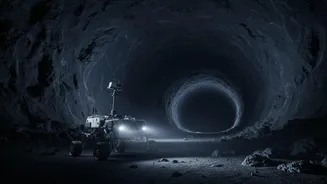
The most promising solution may have been waiting for billions of years. Scientists believe the Moon is riddled with lava tubes—vast, hollow tunnels left behind by ancient volcanic activity. Much like caves on Earth, these subterranean networks could provide natural, robust shielding from the dangers on the surface. Covered by thick layers of rock and cooled magma, these tubes would protect future astronauts from radiation and meteorite strikes, while also offering stable temperatures. Lunar orbiters have already identified numerous deep pits on the surface, believed to be 'skylights' or collapsed ceilings that serve as gateways into these enormous cavern systems, some of which could be a thousand times larger than their terrestrial counterparts.
Enter the Robotic Spelunkers
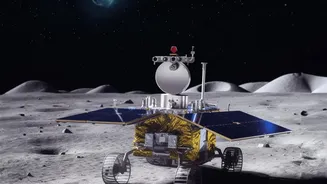
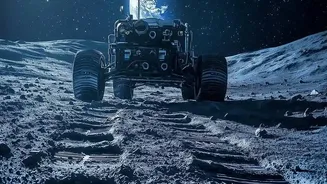
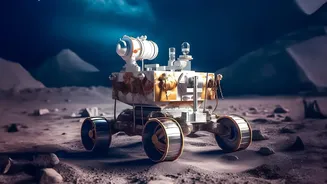
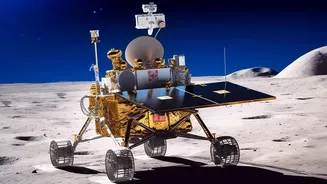
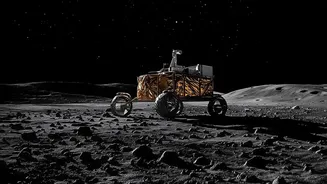
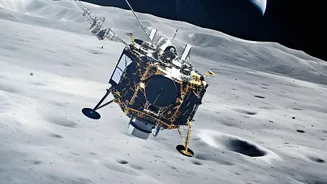
Before we can move in, we need to know what we're getting into. That's where a new generation of subterranean rovers comes in. Sending a lander directly into a 100-meter-deep pit is not feasible, so space agencies and private companies are developing innovative robotic explorers to do the reconnaissance for us. These missions often involve a multi-robot approach. For example, a European consortium has tested a system where one robot maps the entrance, another deploys sensors, and a third is lowered into the cave to explore autonomously. This division of labor allows for a comprehensive survey of these challenging, unknown environments.
Mapping the Unseen World
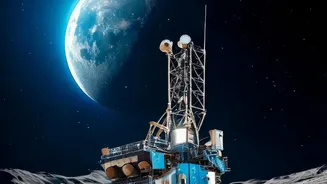
The primary job of these robotic explorers is to create detailed 3D maps. Since sunlight can't reach these depths, rovers are equipped with advanced technology like LiDAR (Light Detection and Ranging), which uses lasers to scan the surroundings and build a precise map of the cave's structure. They also carry scientific instruments to analyze the composition of the cave walls, search for water ice deposits, and assess the overall stability and suitability of the tube for a habitat. Communication is another major hurdle. To solve this, some concepts involve a 'breadcrumb' system, where rovers drop a series of communication nodes as they venture deeper, ensuring a constant data link back to the surface.
From Blueprint to Homestead
Several exciting projects are underway. A European team has successfully tested a three-robot system in the volcanic caves of Lanzarote, Spain, as a precursor to a lunar mission. In the US, NASA is funding research into a unique laser-powered drone designed to be tethered to a surface rover. This drone, part of the Lunar Underground eXplorer (LUX) mission, would be lowered into a massive pit in the Sea of Tranquility to conduct the first-ever off-world cave exploration. These pioneering missions are no longer science fiction; they are the critical next steps in turning lunar lava tubes from a scientific curiosity into a viable home for the next generation of astronauts, paving the way for a sustained human presence on the Moon and, eventually, Mars.