









The Rise of Urban Burnout
In India's bustling metropolises like Mumbai, Delhi, and Bengaluru, ambition is in the air. For the country's vast population of young professionals, life is a high-stakes race of career ladders, social obligations, and digital connectivity. But this
relentless pace comes at a cost. Surveys show a significant number of Indians under 35 report high levels of stress and burnout, pushing them to seek restorative experiences far from their daily routines. The culture of 'hustle' is being met with a counter-movement focused on 'harmony,' as a generation realizes that success cannot come at the expense of well-being. This isn't about a lack of ambition, but a redefinition of it to include mental and physical health as core pillars of a successful life.
Answering the Mountain's Call
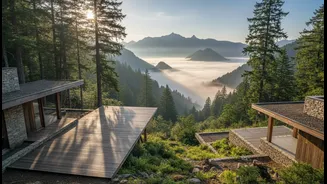
When the need to escape becomes overwhelming, many are looking up—to the mountains. The Himalayas, in particular, have long held a spiritual and symbolic significance in Indian culture, representing purity, solitude, and transcendence. For today’s burnt-out urbanites, these ancient peaks offer a powerful psychological and physical retreat from the flat, concrete grid of the city. The appeal lies in the profound contrast: the chaos of urban life is replaced by the tranquil grandeur of nature. It’s a journey not just of distance, but of dimension, promising a space where the mind can expand, and the constant inner monologue can finally quiet down.
Inside the Modern Sanctuary
So, what actually happens in one of these secluded wellness sanctuaries? It’s far more than just a hotel with a good view. The core of the experience is often a 'digital detox,' where guests surrender their devices to truly disconnect from the outside world. Days are structured around a rhythm that is both calming and restorative. Mornings might begin with guided yoga or meditation sessions overlooking misty valleys, followed by nutritious, locally sourced meals. Activities often include nature walks, a practice known as 'forest bathing' (Shinrin-yoku), sound healing, and Ayurvedic treatments. Some retreats even incorporate periods of complete silence (mauna) to deepen the introspective journey, allowing the nervous system a rare chance to reset completely.
The Science of Stillness
This trend is backed by a growing body of science. The practice of using nature for healing, known as ecotherapy, has been shown to have measurable benefits for mental health. Spending time in natural environments can reduce levels of the stress hormone cortisol, lower blood pressure, and improve mood and concentration. By disconnecting from the constant stimulation of urban life and digital devices, the brain's prefrontal cortex—the 'command center' responsible for decision-making and focus—gets a much-needed rest. This allows for mental restoration, reduces anxiety, and fosters a sense of positive emotion and mindfulness. It’s not just a feeling of being relaxed; it's a physiological shift towards a state of balance.
Bringing the Mountain Home
The ultimate goal of these retreats is not permanent escape but sustainable change. The question is whether the profound calm experienced in the mountains can survive the return to city life. For many, the answer is yes. These sanctuaries equip visitors with tools—like meditation, breathwork, and a greater awareness of their own mental state—that they can integrate into their daily urban routines. The experience often serves as a powerful reset, helping individuals re-evaluate their priorities and build healthier habits. It fosters a realisation that wellness isn't a week-long vacation, but a daily practice of finding moments of stillness, even amidst the noise. The memory of that silence becomes a new internal resource to draw upon.