





An Astronaut Forged by Global Experience
Anil Menon’s journey to becoming a NASA astronaut is a story of remarkable breadth. The son of Indian and Ukrainian immigrants, he was raised in Minneapolis, Minnesota, and his career has woven together medicine, military service, and aerospace engineering.
He is a practicing emergency medicine physician with specialized training in wilderness and aerospace medicine. This expertise isn't just academic; he has applied it in some of the world's most extreme environments, from treating wounded soldiers in Afghanistan to caring for climbers on Mount Everest with the Himalayan Rescue Association. His connection to India is also personal and professional; he spent a year in the country as a Rotary Ambassadorial Scholar supporting polio vaccination efforts. Before being selected as an astronaut in 2021, Menon served as a NASA flight surgeon and was later SpaceX's first flight surgeon, helping launch the first private crewed mission and building the company's medical program.
What Exactly Is Space Medicine?
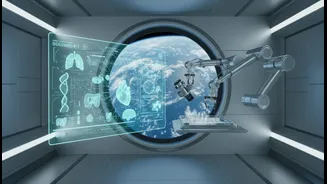
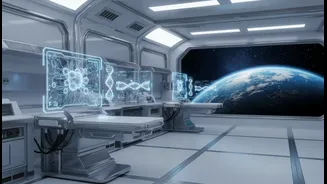
Space medicine is a specialized field dedicated to keeping humans healthy in the hostile environment of space. Without Earth's gravity, the human body undergoes significant changes. Astronauts experience muscle atrophy, bone density loss similar to osteoporosis, and shifts in cardiovascular function because their hearts don't have to work as hard. Fluids shift towards the head, the immune system can become impaired, and radiation exposure is a constant concern. This field is essentially the ultimate form of remote healthcare. On the ISS, there is no hospital down the hall; medical emergencies must be managed with limited equipment by crew who have medical training but may not be specialists for every possible scenario. Researchers in space medicine study these effects to develop countermeasures, from exercise regimes and nutritional plans to advanced medical technologies that can operate in zero gravity.
The Surprising Connection to Healthcare on Earth
The problems space medicine aims to solve are surprisingly similar to major health challenges on Earth. Studying muscle and bone loss in astronauts provides direct insights into osteoporosis and the effects of aging or prolonged bedrest in hospital patients. Research on the weakened immune systems of astronauts helps us understand age-related immune decline. Furthermore, the need to provide healthcare in isolated, resource-limited environments like the ISS has driven innovation in telemedicine, remote diagnostics, and compact medical devices. Technologies developed for space, like AI-assisted ultrasounds that Menon will be testing, could revolutionize how medical care is delivered in rural or disaster-stricken areas on Earth where specialists are not readily available. In essence, space acts as a laboratory where the human aging process is accelerated, allowing scientists to study conditions that take decades to develop on Earth.
Why This Research Is Crucial for India
The innovations from space medicine are particularly relevant to India's unique healthcare landscape. The challenges of providing consistent medical care to remote and rural populations mirror the challenges of treating astronauts in orbit. Telemedicine technologies, refined for space, can connect specialists in urban centers with patients in villages hundreds of kilometers away, a crucial need across India. Insights into managing chronic conditions like bone density loss and cardiovascular deconditioning are directly applicable to India's large and aging population. As India advances its own human spaceflight program, Gaganyaan, building domestic expertise in space medicine is a national priority. Collaborations are already underway, with ISRO signing agreements with institutions like AIIMS to expand research into how space affects the human body and develop medical systems for future Indian astronauts, or 'Vyomanauts'. Menon's work aboard the ISS will provide invaluable data that can inform and accelerate these national efforts.