



A Mysterious Object on a Collision Course
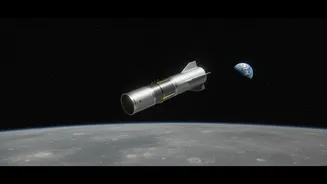
In early 2022, the astronomical community was buzzing with the news of an uncontrolled, human-made object hurtling towards the Moon. Bill Gray, an independent researcher and creator of the Project Pluto software used to track near-Earth objects, was the first
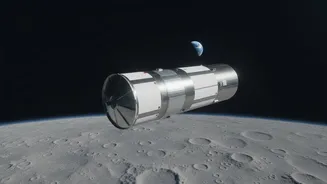
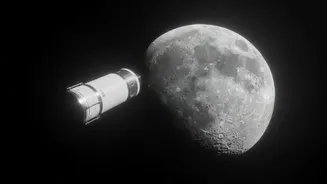
to raise the alarm. He had identified a spent rocket stage in a chaotic orbit that was projected to impact the lunar surface on March 4, 2022. Initially, the object was thought to be a SpaceX Falcon 9 upper stage, but further analysis and collaboration from astronomers worldwide led to a correction: it was likely the booster from a 2014 Chinese lunar mission, Chang'e 5-T1. This initial case of mistaken identity highlighted the profound challenges of keeping tabs on objects so far from Earth.
The Detective Work of Trajectory Prediction
Predicting the path of a piece of space junk across millions of kilometres is a monumental task. Unlike in Low Earth Orbit, where military radar can track debris, objects in deep space are too far away for such methods. Instead, astronomers rely on optical observations from ground-based telescopes. These observations, sometimes just faint points of light, are fed into sophisticated software like Gray's Project Pluto. The software uses these positions to calculate the object's orbit, factoring in the gravitational pull of the Earth, Moon, and Sun. By running these orbital models forward in time, scientists can forecast the object’s future path with remarkable precision, ultimately predicting the time and general location of an impact.
Why It's Harder Than It Looks
While gravity is the main force at play, it isn’t the only one, which makes perfect predictions difficult. One of the biggest variables is solar radiation pressure—the tiny but constant push exerted by sunlight. For a large, light, and hollow object like a spent rocket stage, this gentle push can significantly alter its trajectory over weeks and months. Another challenge is that these objects are often tumbling unpredictably, changing how they catch the light and making them harder to track. Furthermore, residual fuel or other materials can vent from the rocket stage, acting like tiny, random thrusters that nudge the object off its purely gravity-driven path. These uncertainties are why the exact point of impact can only be narrowed down as the collision gets closer.
From Prediction to Confirmation
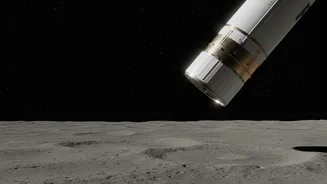
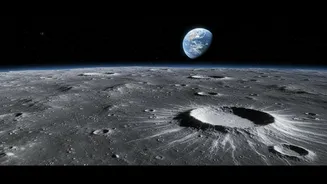
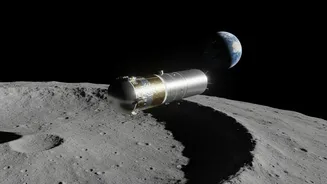
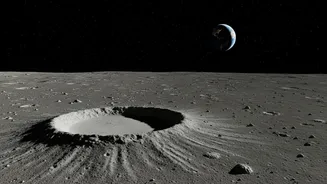
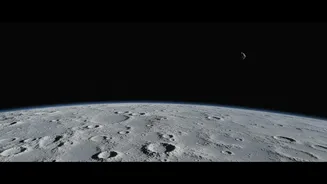
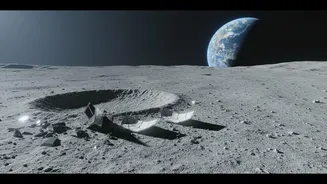
Despite the challenges, astronomers correctly predicted the March 4, 2022, impact. As it happened on the far side of the Moon, it was not visible from Earth. Confirmation had to wait. Months later, NASA’s Lunar Reconnaissance Orbiter (LRO) was tasked with scanning the predicted impact zone. In June 2022, the LRO team announced they had found it: a new crater had appeared right where expected. But there was another surprise. Instead of a single, typical crater, the impact had created a strange double crater, with two overlapping pits. This suggested the rocket body had significant mass at both ends, unlike a typical spent booster, deepening the mystery of its exact configuration and origin.
The Bigger Picture: A Crowded Cosmos
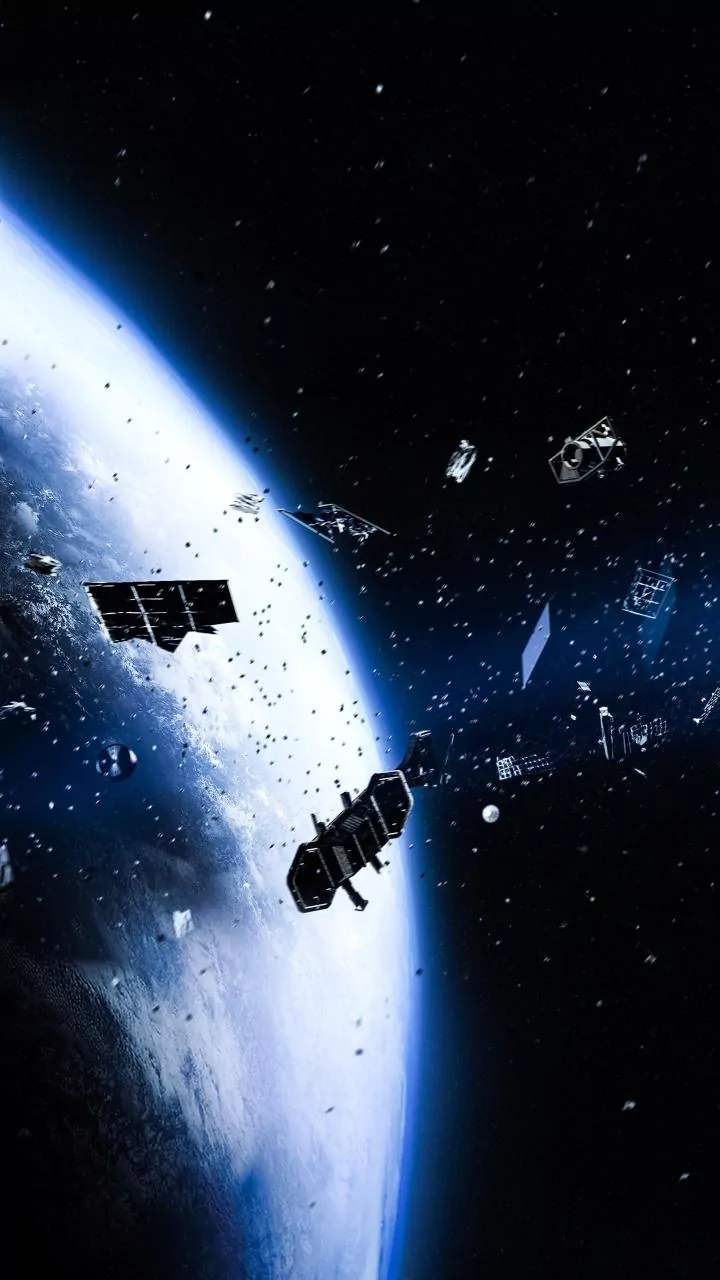
This lunar collision was more than just a cosmic curiosity; it served as a stark reminder that our presence in space extends far beyond Earth's orbit. The region between Earth and the Moon, known as cislunar space, is becoming increasingly busy with scientific missions and commercial ventures. Events like this highlight the growing need for a more comprehensive system for tracking deep space debris. Unlike near Earth, there are no formal international regulations for managing traffic and debris this far out. As nations and private companies set their sights on returning to the Moon, understanding and managing our cosmic footprint is not just an academic exercise—it is a critical aspect of ensuring the safety and sustainability of all future space exploration.