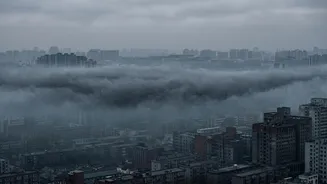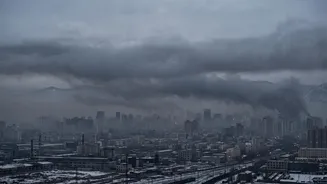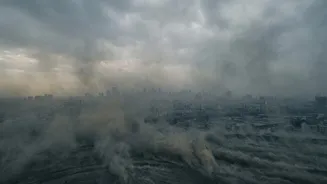









The familiar haze of a winter morning in many Indian cities is more than just fog. It’s a sign of a trapped layer of pollution, intensified by a weather event known as a ground inversion, which poses a serious, often underestimated, health risk.
The Atmosphere's Invisible Lid
Normally,
the air near the ground is warmer than the air above it. This warm air rises, carrying pollutants away from where we breathe. A temperature inversion flips this script. During an inversion, a layer of warmer air sits on top of a layer of cooler, denser air near the ground, acting like an atmospheric lid. This phenomenon prevents vertical air movement, trapping everything from vehicle exhaust and industrial emissions to construction dust close to the surface. What is emitted near the ground stays near the ground, accumulating over time.
Why Winter Worsens the Problem
Inversions are particularly common and stubborn during India's winter months, especially across the vast Indo-Gangetic Plain. Clear, calm nights allow the ground to rapidly lose heat, cooling the air closest to it and creating the initial inversion layer. The low angle of the winter sun struggles to burn through this stable setup the next day. This natural process is dramatically compounded by geography and human activity. The Himalayan range to the north can block wind flow, creating stagnant conditions. This trapped air becomes a receptacle for pollutants from vehicles, industries, and biomass burning for heating and cooking, which increases in colder weather. The residue from post-monsoon stubble burning also contributes significantly to the particulate load that gets trapped.
The Body Under Siege
When pollutants are trapped, their concentration skyrockets, posing a severe threat to public health. The primary culprit is PM2.5—fine particulate matter so small it can penetrate deep into the lungs and enter the bloodstream. Short-term exposure can trigger coughing, chest tightness, and worsen conditions like asthma and bronchitis. Studies show a significant increase in hospital visits for respiratory and cardiovascular diseases during inversion events. The health risks are not distributed equally; children, the elderly, pregnant women, and individuals with pre-existing heart or lung conditions are especially vulnerable. Long-term, repeated exposure is linked to chronic diseases, including lung cancer, strokes, and adverse birth outcomes.
Beyond General Pollution Warnings
Simply issuing a general 'high pollution' alert is insufficient during an inversion. The meteorological conditions demand a more specific and urgent response. Because inversions are often strongest overnight and in the early morning, pollutant concentrations can be dangerously high at the very time people are commuting to work or school. Generic advice to 'reduce outdoor activity' needs to be timed and targeted. Furthermore, the persistence of an inversion means pollution can build up for days, creating a prolonged public health emergency that requires a proactive, tiered response rather than a reactive one. Without specific measures, a city can be locked in a cycle of accumulating toxicity.
A Targeted Public Health Playbook
Tackling inversion-driven pollution requires a healthcentric approach and a framework of escalating measures. India's Graded Response Action Plan (GRAP), implemented in Delhi - NCR, is an example of such a system. Based on air quality forecasts, specific actions are triggered at different stages of severity. These include halting non - essential construction, restricting the use of diesel generators, and implementing traffic controls like the 'odd - even' scheme for vehicles. Crucial public health measures also involve issuing timely and location - specific advisories, recommending people , especially vulnerable groups , to stay indoors during peak pollution hours. Other strategies include considering temporary school closures and encouraging work - from - home policies to reduce overall exposure. These actions aim to cut emissions at the source and reduce the number of people exposed to the toxic air trapped by the inversion.